CNN Political Briefing Podcast Delivers In-Depth Analysis of Shifting American Political Landscapes and High-Stakes Washington Showdowns

Navigating the labyrinth of modern American politics requires a keen eye for subtle shifts in power, legislative standoffs, and the evolving dynamics between party leadership and their respective grassroots bases. The CNN Political Briefing podcast, hosted by CNN Political Director David Chalian, has established itself as an essential audio destination for political observers seeking rigorous analysis. By bringing key players, seasoned journalists, and strategists directly to the microphone, the podcast unpacks the complex policy battles and electoral maneuvers shaping the United States Congress, local mayoral races, and the broader horizon toward the 2026 midterm elections.
From congressional rebellions and high-stakes government shutdowns to the reshaping of urban politics and historic legal battles, the episodes released through the autumn and winter of 2025 paint a vivid picture of a political system under intense pressure. This comprehensive review examines the major themes, key interviews, and underlying implications of the discussions featured on the program during this tumultuous period.
The House Republican Rift: Leadership Struggles and the 2026 Horizon
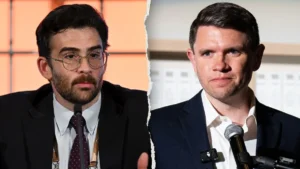
As the Republican conference prepares for the upcoming 2026 midterm elections and contemplates a future beyond the immediate shadow of President Donald Trump, internal friction has begun to bubble to the surface. A prime example of this intra-party discontent was highlighted when California Republican Representative Kevin Kiley joined David Chalian on the podcast. Rep. Kiley did not mince words regarding House leadership, explicitly stating that Speaker Mike Johnson had “failed to lead” during critical legislative moments.
Beyond his critiques of national leadership, Kiley’s political reality underscores the volatile nature of contemporary redistricting. Following new district lines passed by California voters at the urging of Democratic Governor Gavin Newsom, Kiley finds his current political standing upended, illustrating the high-stakes chess match playing out at the state level.
This vibe shift within the GOP conference reflects a broader identity crisis. While the party commands significant influence, lawmakers from swing districts and traditional conservative enclaves are increasingly divided over legislative strategy, communication priorities, and the long-term vision of the party. The tension between maintaining allegiance to the MAGA base and appealing to broader, moderate electorates remains a central dilemma for House Republicans as they look toward defending their majority.
Is President Trump Losing Control of the MAGA Base?
The relationship between Donald Trump and his core political movement has long been viewed as unbreakable. However, late 2025 testing of this dynamic revealed rare, yet perceptible, fractures. POLITICO’s Jonathan Martin joined the podcast to analyze whether the administration was entering a de facto lame-duck period, examining notable friction points that tested the loyalty of the MAGA base.
One such flashpoint involved a high-profile reversal by President Trump regarding the Epstein files—a pivot engineered to align more closely with party demands but which nonetheless exposed underlying mistrust among purists. Furthermore, the administration faced mounting criticism from grassroots supporters over its messaging priorities. While the White House frequently placed foreign affairs front and center, a vocal segment of the base expressed frustration over a perceived lack of focus on domestic economic pressures, specifically the cost of living and everyday affordability.
Martin’s analysis delved into the strategic implications of these cracks, raising critical questions about succession within the conservative movement. As different factions vie to define the post-Trump era of the Republican Party, these early disagreements offer a preview of the ideological battles to come.
The Anatomy of a Historic Government Shutdown
Washington, D.C., spent much of the autumn of 2025 paralyzed by one of the longest government shutdowns in U.S. history. The crisis brought governance to a grinding halt and ignited a fierce public relations war between Democrats and Republicans over who bore responsibility for the impasse.
The podcast provided a platform for key legislative architects from both sides of the aisle to articulate their strategies. Representative Ro Khanna, a prominent progressive Democrat from California, appeared on the program to outline what his caucus deemed negotiable and what remained strictly off the table. Khanna offered listeners a window into the progressive wing’s calculus during the third week of the shutdown, emphasizing the party’s determination to protect core social and economic programs.

Conversely, Republican lawmakers mounted an aggressive counter-offensive. Representative Mike Lawler—representing a fiercely contested battleground district in New York that had previously voted for Kamala Harris—argued that Democrats had committed a critical strategic error in their shutdown calculations. Lawler contended that the public would ultimately hold Democrats accountable for the legislative gridlock.
Adding an organizational perspective, Representative Suzan DelBene (D-WA), Chair of the Democratic Congressional Campaign Committee (DCCC), laid out the Democratic roadmap for capitalizing on the shutdown to recapture the House majority in 2026. DelBene’s strategy underscored the symbiotic relationship between current legislative battles and long-term electoral ambitions, as both parties sought to weaponize the budget impasse ahead of the midterms.
The resolution of the shutdown eventually brought its own political fallout. Former Virginia Governor and veteran party strategist Terry McAuliffe visited the studio to assess the aftermath. McAuliffe, whose extensive resume includes leading the Democratic National Committee and chairing Hillary Clinton’s 2008 presidential campaign, offered a frank prescription for the Democrats. He argued that despite intra-party disagreements over how the shutdown ended, the opposition could effectively leverage ongoing conservative divisions to build a winning coalition for the 2026 midterms.
Rewriting the Urban Playbook: The 2025 Elections in New York City, New Jersey, and Virginia
While Washington was consumed by fiscal paralysis, the rest of the nation focused heavily on off-year elections in November 2025, particularly high-stakes races in New York City, New Jersey, and Virginia. CNN correspondents Jeff Zeleny and Eva McKend provided extensive reporting from the campaign trail, tracking the sprint to the finish line in these bellwether contests.
Nowhere was the political transformation more pronounced than in New York City. The mayoral race became a national spectacle, fundamentally upending conventional wisdom in municipal politics. Errol Louis, Political Anchor for Spectrum News NY1, joined the podcast to break down how Zohran Mamdani, a little-known state assemblyman representing the progressive wing of the party, executed a stunning campaign to capture the city’s highest office. Mamdani’s victory signaled a significant shift in urban politics, rewriting the traditional playbook in America’s largest metropolis.
The race also featured a complex multi-way dynamic. Curtis Sliwa, the standard-bearer for the Republican Party in a city where registered Democrats outnumber Republicans six to one, discussed his unconventional path forward. Competing against both a surging progressive star in Mamdani and former New York Governor Andrew Cuomo—who was attempting a political comeback four years after resigning in disgrace—Sliwa navigated immense pressure while trying to chart a viable path to victory. The juxtaposition of these candidacies highlighted the deep ideological diversity and volatility within urban electorates.
Extraordinary Moments in American Justice: The Prosecution of James Comey
Beyond legislative and electoral politics, the American legal system entered uncharted territory in late 2025 with the federal prosecution of former FBI Director James Comey. This unprecedented development marked a profound chapter in the history of the Department of Justice and executive-branch accountability.
To place this event in proper historical perspective, Elie Honig, a former federal and state prosecutor and author of When You Come at the King: Inside DOJ’s Pursuit of the President, From Nixon to Trump, appeared on the program. Honig analyzed the extraordinary nature of the Comey prosecution, comparing it to past executive conflicts with the justice system from the Nixon era to the present day. The discussion provided listeners with a sober, fact-based framework for understanding the constitutional and institutional implications of prosecuting a former top law enforcement official.
Broader Implications and Future Outlook
The episodes produced by the CNN Political Briefing team through the final months of 2025 capture a nation in transition. Several overarching themes emerge from these discussions:
- Intra-Party Volatility: Both major political parties are grappling with internal rebellions. Republicans are managing friction between traditional conservatives, the MAGA base, and frustrated rank-and-file members questioning congressional leadership. Democrats are similarly debating the most effective legislative tactics, balancing progressive demands with pragmatic electoral strategies.
- The Primacy of Local and State Politics: From Governor Newsom’s aggressive redistricting push in California to Zohran Mamdani’s progressive breakthrough in New York City, local elections continue to serve as crucibles for national political trends. These outcomes demonstrate that grassroots movements can rapidly ascend to the national conversation.
- Institutional Strain: The historic government shutdown and unprecedented legal proceedings, such as the Comey prosecution, highlight the mounting pressure on core American institutions. The reliance on brinkmanship as a standard legislative tool points to a deeply polarized governance structure.
- The Road to 2026: Every political calculation made in late 2025—from congressional messaging during budget standoffs to off-year gubernatorial and mayoral campaigns—serves as a precursor to the 2026 midterm elections. As parties vie for control of Congress, the ability to address voter anxieties regarding the cost of living, economic stability, and institutional trust will likely determine which side successfully mobilizes the electorate.
Through expert commentary, rigorous interviews, and on-the-ground reporting, the CNN Political Briefing podcast continues to serve as an invaluable archive of this pivotal era in American governance. As the political landscape evolves toward future legislative battles and electoral showdowns, the insights provided by David Chalian and his guests offer a clear, unvarnished look at the forces shaping the nation’s future.
Related posts: