The Dismantling of American Science: Trump Administration Fires Entire National Science Board Amid Broad Research Funding Cuts and Policy Shifts

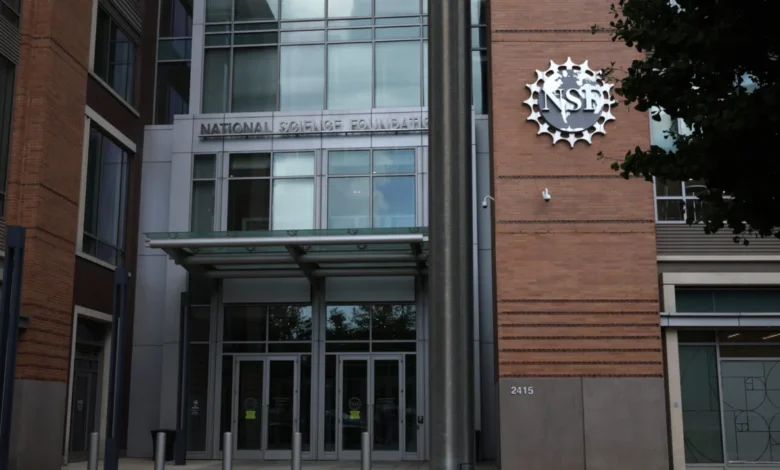
The landscape of American scientific research underwent a seismic shift last week as the Trump administration took the unprecedented step of firing all 22 active members of the National Science Board (NSB). This move, which effectively decapitated the oversight body of the National Science Foundation (NSF), has been described by members of the scientific community as a definitive blow to the independence of federal research. Since the beginning of the administration’s second term in early 2025, the executive branch has engaged in a systematic effort to reshape the federal scientific apparatus, but the total dissolution of the NSB marks a significant escalation in the struggle between political authority and academic autonomy.
The National Science Board serves as the governing body for the NSF, an agency with an annual budget that typically exceeds $9 billion and provides approximately 25 percent of all federally supported basic research at American colleges and universities. By dismissing the entire board in a single stroke, the administration has removed the primary layer of accountability that ensures research funding is awarded based on scientific merit rather than political alignment. Jacquelyn Gill, a prominent paleoecologist and biogeographer at the University of Maine, characterized the event as one of the darkest moments of the current political era, noting that a vital bastion of transparency and expertise was dismantled overnight.
The Mandate and History of the National Science Board
To understand the gravity of the mass firing, it is necessary to examine the historical and statutory role of the National Science Board. Established by the National Science Foundation Act of 1950, the NSB was designed to be an independent body of advisors who would guide the nation’s scientific progress. The board is traditionally composed of 24 members, each serving staggered six-year terms. These members are selected for their eminence in fields ranging from engineering and physics to biology and social sciences.
The staggered nature of the terms was a deliberate legislative safeguard intended to prevent any single administration from exerting undue influence over the board. By ensuring that only a portion of the board is replaced every two years, the statute sought to maintain a continuity of expertise that transcended partisan shifts in the White House. The sudden termination of all 22 sitting members—leaving the board entirely vacant—bypasses this historical norm and creates a vacuum that critics fear will be filled by appointees chosen for their ideological loyalty to the administration’s "America First" agenda.
The board’s responsibilities are twofold: it establishes the policies of the NSF within the framework of applicable federal laws and serves as an independent advisory body to both the President and Congress on policy matters related to science and engineering. Without this body, the NSF, which funds critical research in artificial intelligence, quantum computing, climate modeling, and public health, lacks its statutory steering committee.
Chronology of a Scientific Retreat
The dismissal of the NSB is not an isolated event but rather the culmination of a series of actions taken since January 2025. This chronology illustrates a broader trend of reducing the federal footprint in scientific inquiry:
- January–March 2025: The administration announced a series of "efficiency reviews" for federal grants, resulting in the immediate suspension of several hundred climate-related research projects.
- April–June 2025: A significant "brain drain" began as the administration reclassified thousands of civil service roles, leading to the departure of an estimated 10,000 STEM Ph.D. holders from federal agencies including the EPA, NOAA, and the Department of Energy.
- Late 2025: Several regional research facilities, particularly those focused on forestry and agricultural science, were shuttered or relocated to areas with lower operating costs, often resulting in the loss of long-term longitudinal data sets.
- April 2026: The White House issued an executive order terminating all current members of the National Science Board, effective immediately.
On the Friday of the firing, board members reportedly received a brief email stating that their services were no longer required. Shortly thereafter, the official NSF website was updated, removing the names of the distinguished scientists and replacing the roster with a notice stating that appointments were "pending."
Legal Justifications and Constitutional Controversies
In response to inquiries regarding the legality of the mass firing, White House officials have pointed to a 2021 U.S. Supreme Court case, United States v. Arthrex, Inc., which dealt with the appointment of administrative patent judges. The administration argues that this ruling raised constitutional questions regarding the authority of non-Senate-confirmed appointees. The White House official stated that the move was necessary to ensure that the NSB can perform its duties as Congress intended and that they look forward to working with "the Hill" to update the statute.
However, legal experts and scientific advocates have challenged this reasoning. Lauren Kurtz, executive director of the Climate Science Legal Defense Fund, argued that the Arthrex case is factually and legally distinct from the structure of the NSB. She noted that the statute governing the board was specifically updated in 2022 to address modern administrative needs and that the administration’s use of a five-year-old court case as a pretext for the firing is "disingenuous."
Carlos Javier Martinez, a senior climate scientist at the Union of Concerned Scientists and a former NSF employee, echoed these concerns. He suggested that the legal argument serves as a "smoke screen" for a political takeover of the agency. By removing the board, the administration has effectively placed the NSF under the direct control of the executive branch, removing the buffer that has protected American science from political interference for over seven decades.
The Shift Toward Industry and Applied Science
A significant concern among researchers is that the new board, once appointed, will pivot the NSF’s mission away from "curiosity-driven" basic research and toward projects with immediate industrial or military applications. Basic research—the study of fundamental principles without immediate commercial goals—has historically been the bedrock of American innovation.
Jacquelyn Gill noted that many of the most important technological breakthroughs in human history, including the development of the internet and modern medical imaging, began as basic research projects that had no clear "practical" purpose at their inception. She warned that if the NSF becomes an arm of industrial policy, the United States may lose its competitive edge in long-term innovation.
There are also indications that the administration is seeking to align federal science funding with the interests of major tech companies in Silicon Valley. Reports suggest that industry leaders have lobbied for a greater share of federal R&D dollars to be directed toward artificial intelligence and semiconductor manufacturing, often at the expense of environmental science, biodiversity studies, and sociology. While these technological fields are vital, the scientific community argues that a balanced portfolio is necessary for a healthy society.
Broader Impact and Global Implications
The dismissal of the NSB has implications that extend far beyond the halls of the NSF headquarters in Alexandria, Virginia. The move threatens to undermine the "pipeline" of American scientific talent. The NSF provides thousands of graduate research fellowships and supports STEM education initiatives at every level. If the agency’s mission becomes politicized, there is a risk that the next generation of scientists will seek opportunities in other countries, leading to a permanent decline in American scientific leadership.
Furthermore, the loss of trust in public science could have devastating effects on national policy. The NSB has historically provided objective data to Congress on issues such as global warming, public health crises, and technological ethics. Without an independent board, the data provided by the NSF may be viewed through a partisan lens, making it more difficult for lawmakers to reach consensus on critical issues.
From a global perspective, the instability within the American scientific establishment provides an opportunity for international competitors. Countries such as China and members of the European Union have been steadily increasing their investments in basic research. If the United States continues to dismantle its scientific infrastructure, it risks ceding its role as the global hub for innovation.
Conclusion and Future Outlook
The firing of the National Science Board represents a watershed moment in the relationship between the federal government and the scientific community. While the White House maintains that the move is a necessary legal correction to ensure constitutional compliance, the consensus among experts is that it is a strategic effort to centralize control over the nation’s research agenda.
As the administration prepares to appoint a new board, the scientific community remains on high alert. The caliber and background of the new appointees will serve as the ultimate litmus test for the administration’s intentions. If the new board consists of partisan operatives rather than eminent scientists, the era of independent, peer-reviewed federal science in the United States may be drawing to a close. For now, the "wrecking ball" described by legal experts has done its work, leaving one of the nation’s most prestigious institutions in a state of unprecedented uncertainty.
Related posts: