Proposed Justice Department Settlement in Colony Ridge Case Prioritizes Immigration Enforcement Over Victim Restitution

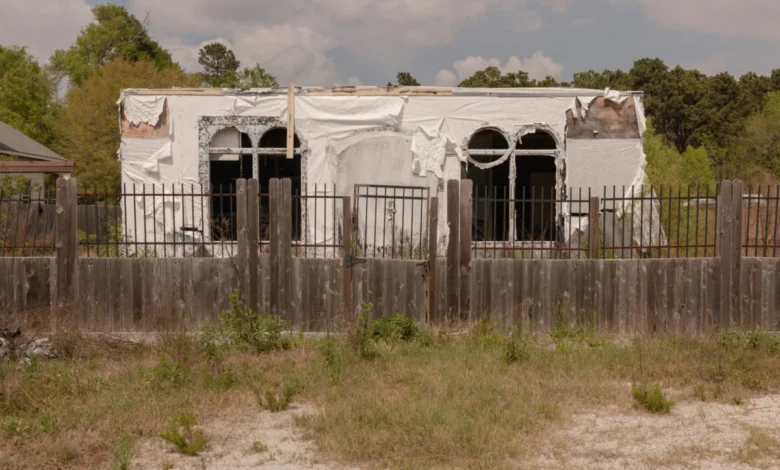
A landmark civil rights case brought by the United States government against a massive Texas land development is nearing a resolution that has stunned legal experts and left thousands of alleged victims without financial recourse. In December 2023, the U.S. Department of Justice (DOJ) filed a high-profile lawsuit against Colony Ridge, a sprawling residential development north of Houston, accusing the company of operating a "one-stop shop" for predatory lending and discriminatory practices targeting Hispanic homebuyers. At the time, the Biden administration’s Assistant Attorney General for Civil Rights, Kristen Clarke, explicitly stated that the government’s primary objective was to ensure victims were compensated for their financial losses.
However, three years into the legal battle and following a change in presidential administrations, the proposed $68 million settlement currently before a federal judge contains a provision that has no precedent in modern fair-lending enforcement. Despite the government’s original claims that tens of thousands of residents were duped into unaffordable mortgages and subsequently foreclosed upon, the settlement allocates zero dollars for victim restitution. Instead, it directs $20 million toward local law enforcement and immigration enforcement initiatives—a move critics argue could be used to target the very community the lawsuit was designed to protect.
The Genesis of the Colony Ridge Controversy
Colony Ridge, located in Liberty County, Texas, began its rapid expansion in 2011. Spanning more than 33,000 acres, the development marketed itself as a rare opportunity for low-income families and immigrants to achieve the American dream of land ownership. By offering mortgages with down payments as low as 1% and requiring no credit checks or traditional income verification, the developer, John Harris, grew the subdivision into one of the largest of its kind in the United States.

The Justice Department’s 2023 complaint alleged that this "flexibility" was actually a calculated predatory scheme. Prosecutors argued that Colony Ridge used Spanish-language advertising to lure Hispanic applicants into high-interest loans for lots that lacked essential infrastructure. Buyers often discovered after the sale that the land required tens of thousands of dollars in drainage improvements and utility connections—costs they were never informed of during the high-pressure sales process. When families inevitably defaulted on the loans, the lawsuit alleged, Colony Ridge would foreclose on the property, keep the improvements made by the owners, and resell the lot at a higher price to a new victim.
A Chronology of Legal and Political Escalation
The trajectory of the Colony Ridge case reflects the shifting priorities of federal and state leadership. To understand the current settlement, one must examine the timeline of the investigation and the subsequent political firestorm:
- 2011–2022: Colony Ridge expands rapidly, eventually housing an estimated 40,000 to 50,000 residents. A 2023 investigation by Houston Landing found the developer had repossessed more than 15,000 lots over eight years, indicating a foreclosure rate far exceeding national averages.
- December 2023: The DOJ and the Consumer Financial Protection Bureau (CFPB) file a joint lawsuit against Colony Ridge, alleging violations of the Fair Housing Act and the Equal Credit Opportunity Act.
- Early 2024: Conservative media outlets and Texas politicians, including Governor Greg Abbott and Attorney General Ken Paxton, begin characterizing the development as a "no-go zone" for police and a "haven for cartels." While local law enforcement officials disputed these claims, the narrative shifted the public focus from consumer protection to border security.
- February 2025: Following the inauguration of the Trump administration, the DOJ and the Texas Attorney General’s office announce a proposed settlement with Colony Ridge.
- April 2025: Former DOJ and CFPB officials go public with their concerns, noting that the settlement’s focus on immigration enforcement is a radical departure from civil rights law.
Statistical Analysis of DOJ Housing Settlements
The exclusion of victim compensation in the Colony Ridge settlement is statistically anomalous. An analysis of 183 housing and civil enforcement settlements reached by the Justice Department since 2018 reveals that only 6% did not include monetary damages for victims. In those rare instances, the cases were significantly smaller in scale—often involving a single landlord or a single car dealership with a handful of affected individuals.
By contrast, the Colony Ridge case involves tens of thousands of potential victims and a settlement amount of $68 million. It is the largest DOJ civil rights settlement in at least seven years to provide no direct financial relief to the harmed parties. Furthermore, none of the other 182 settlements analyzed contained provisions for law enforcement or immigration funding. The $20 million earmarked for the Liberty County Sheriff’s Office and local constables is specifically designated for "delegated immigration enforcement authority," a provision that legal experts say is entirely unrelated to the underlying charges of lending discrimination.

Official Responses and Defensive Arguments
In defending the settlement, the current leadership at the Justice Department and the Texas Attorney General’s office have reframed the developer’s actions as a national security issue. Harmeet K. Dhillon, the current head of the DOJ’s Civil Rights Division, argued that by targeting Hispanic consumers with affordable homeownership opportunities, Colony Ridge was effectively encouraging illegal immigration. "This DOJ will go after all lenders, financiers, and land developers who participate in schemes which ultimately encourage illegal immigration," Dhillon stated.
Texas Attorney General Ken Paxton echoed this sentiment, focusing almost exclusively on the $20 million in enforcement funding. "Under my watch, Texas will never be a sanctuary for illegals," Paxton said in a news release.
John Harris, the CEO of Colony Ridge, has consistently denied any wrongdoing. Through a spokesperson, the company maintained that it provides a vital service to "unbanked" individuals who are rejected by traditional financial institutions. The company argued in court that its success is a testament to the demand for flexible financing, not a result of predatory behavior. The proposed settlement does not include an admission of liability or guilt by Colony Ridge.
The Human Impact: Betrayal of Witnesses
For the residents who cooperated with federal investigators, the settlement feels like a betrayal. Maria Acevedo, a U.S. citizen and lifelong Republican, provided testimony to the government after losing a $40,000 investment and a half-acre lot she intended for retirement. Acevedo told investigators that Colony Ridge foreclosed on her property despite her consistent payments, a move she claims was facilitated by an undisclosed lien from a previous owner.

"I decided to become a team player because the investigators pledged to help us recover what we lost," Acevedo said. "Now, I feel like they used us to build a case, only to give the money to the police to harass our community."
Similarly, sisters SuEllen and Keilah Sanchez, who launched a website to document the experiences of scammed residents, expressed dismay. SuEllen, a Puerto Rican-born U.S. citizen, spent over $10,000 to clear land that was sold as "ready-to-build" but lacked basic drainage. "There is no way a company with these many violations should still be operating without paying back the people they hurt," she said.
Broader Implications for Consumer Protection
The Colony Ridge settlement occurs amidst a broader retrenchment of federal consumer protection agencies. The Trump administration and White House budget director Russell Vought have frequently criticized the CFPB as an example of "government overreach." Recent actions by the administration include abandoning an $80 million settlement with Navy Federal Credit Union and halting investigations into student loan fraud.
Legal analysts suggest that the Colony Ridge case sets a dangerous precedent for future civil rights litigation. By diverting settlement funds from victims to unrelated government programs like immigration enforcement, the DOJ may discourage victims of discrimination from coming forward in the future. Elena Babinecz, a former lead investigator at the CFPB, described the settlement as a "complete misjustice."

"Civil rights laws were passed to protect individuals from systemic harm," Babinecz said. "To use a civil rights settlement to fund the policing of those same individuals is a slap in the face to the law itself."
Judicial Review and the Path Forward
The proposed settlement is not yet final. It must be approved by U.S. District Judge Alfred H. Bennett, who has scheduled a hearing to evaluate the fairness of the agreement. A coalition of fair housing and civil rights organizations has formally urged the court to reject the proposal, arguing that it fails to meet the basic legal standards for victim restitution.
For individuals like Maria Acevedo, the hearing represents a final chance for justice. Acevedo has filed a pro se legal brief demanding that the court hear her testimony directly. Because the statute of limitations for private lawsuits has expired for many of the residents, the DOJ case was their only realistic hope for financial recovery. As the hearing approaches, the residents of Colony Ridge find themselves at the center of a national debate over the purpose of civil rights enforcement and the role of the federal government in protecting vulnerable consumers.