The Resilience of the Big Bear Bald Eagles A Digital Window into Avian Conservation and Public Engagement

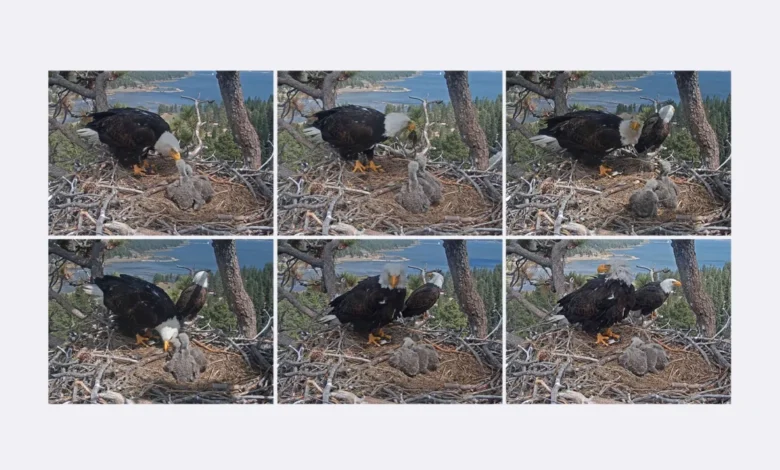
The natural world has found an unlikely sanctuary in the digital realm as millions of viewers tune in to witness the daily lives of Jackie and Shadow, a pair of bald eagles residing in the San Bernardino National Forest. Located in Big Bear Valley, California, this avian family has become the subject of intense public interest, facilitated by a high-definition, live-streaming camera system maintained by the Friends of Big Bear Valley (FOBBV). The livestream, which broadcasts 24 hours a day on YouTube, offers an unfiltered look at the complexities of raptor life, from the meticulous maintenance of a stick-built nest to the harrowing defense of offspring against local predators. As of late April 2024, the nest is occupied by two young chicks, whose development is being tracked by a global audience of scientists, enthusiasts, and casual observers alike.
The Ecological Context of Big Bear Valley
The Big Bear Valley provides a unique high-altitude habitat for the bald eagle (Haliaeetus leucocephalus), a species that serves as a poignant symbol of American conservation success. The nest itself is situated approximately 145 feet above the ground in a towering Jeffrey pine tree. This elevation is critical for the eagles, providing a vantage point to survey the surrounding territory and the nearby lake, which serves as their primary hunting ground.
The environmental conditions in Big Bear are often extreme. At an elevation of over 6,700 feet, the region experiences significant snowfall, high winds, and freezing temperatures. These factors play a decisive role in the survival of eagle clutches. Jackie, the resident female, and Shadow, her mate, have demonstrated remarkable physiological and behavioral adaptations to these conditions. During winter storms, Jackie has been observed remaining motionless for hours, using her own body and wings as a thermal shield to protect eggs or young chicks from accumulating snow and sub-zero temperatures.
A Chronology of the 2024 Nesting Season
The 2024 nesting season has been a period of both tension and triumph for the Big Bear eagles. The timeline of the current brood began in early January when the pair began the "nest-bolstering" phase, adding large sticks and soft materials like moss and fur to the structure.
- Egg Laying (Late January 2024): Jackie laid her first egg of the season on January 25, followed by a second egg several days later. This period marked the beginning of a rigorous incubation cycle, where Jackie and Shadow shared duties to ensure the eggs remained at a constant temperature of approximately 105 degrees Fahrenheit.
- The Incubation Period: For 35 to 38 days, the pair rotated shifts. Shadow, known for his dedication, often brought "nest gifts"—sticks or prey—to Jackie to encourage her to take a break and hunt.
- Hatching (Early March 2024): The arrival of the "pip"—the first hole made by a chick in its shell—occurred in early March. Two healthy chicks emerged, initially covered in light grey down.
- Current Status (April 2024): The chicks are currently in a phase of rapid growth. At approximately two to three weeks old, they are transitioning from their initial down to a thicker, darker secondary down. They are expected to fledge, or take their first flight, approximately 10 to 12 weeks after hatching.
Behavioral Observations and Interspecies Conflict
The livestream has provided invaluable data on the behavioral patterns of bald eagles in the wild. One of the most documented aspects of the 2024 season has been the territorial defense strategies employed by Jackie and Shadow. The nest is frequently targeted by American ravens (Corvus brachyrhynchos), which are highly intelligent and opportunistic predators.
In several documented instances, Jackie and Shadow have had to perform coordinated aerial maneuvers to drive away ravens attempting to steal food or threaten the chicks. These interactions highlight the "high-stakes" nature of the wild, where even an apex predator must remain hyper-vigilant. Observers have noted that while Jackie often stays with the chicks to provide direct protection, Shadow takes on the role of the primary provider and external sentry, though these roles are fluid and can reverse based on the immediate needs of the family.
The Technological Infrastructure of Friends of Big Bear Valley
The ability to monitor these birds is the result of sophisticated environmental engineering. The Friends of Big Bear Valley, a 501(c)(3) nonprofit organization, operates the camera system using solar power. The setup includes multiple camera angles and high-sensitivity microphones that capture the "chittering" of the chicks and the distinctive "screaming" calls of the adults.
The organization’s mission extends beyond mere observation. According to executive director Sandy Steers, the goal is to provide education and foster a connection between the public and the natural world. The livestream serves as a primary tool for this, allowing people who may never visit a National Forest to develop an "ecological conscience." In a unique community engagement initiative, the names of the two current chicks will be chosen by local third-grade students in Big Bear, a move designed to invest the next generation in local wildlife preservation.
Supporting Data: The Recovery of the Bald Eagle
The presence of Jackie and Shadow in Big Bear is a testament to the broader recovery of the species in California and the United States. In the mid-20th century, bald eagle populations plummeted due to the use of the pesticide DDT, which caused eggshell thinning, as well as habitat loss and illegal shooting. By 1963, only 417 nesting pairs were known to exist in the lower 48 states.
Following the ban on DDT in 1972 and the protections afforded by the Endangered Species Act of 1973, the population began a robust recovery.
- 1990: The species was reclassified from "endangered" to "threatened."
- 2007: The bald eagle was officially removed from the federal list of endangered and threatened species.
- Current Estimates: The U.S. Fish and Wildlife Service now estimates there are over 316,000 individual bald eagles in the lower 48 states, including more than 71,400 nesting pairs.
In California specifically, the population has expanded from fewer than 30 breeding pairs in the 1970s to hundreds of pairs today, with eagles now nesting in areas where they had been absent for decades, including Southern California’s urban fringes.
Broader Impact and Implications of Nature Livestreams
The "parasocial" relationship mentioned by viewers—where an audience feels a deep, one-sided emotional connection to a media figure or, in this case, an animal—has significant implications for modern conservation. Psychologists and environmental scientists suggest that these digital windows into nature provide several benefits:
- Stress Reduction: Studies have shown that watching "slow media" or nature-based content can lower cortisol levels and improve mental well-being for urban dwellers.
- Civic Engagement: High-profile eagle nests often become focal points for local environmental advocacy. When a nest tree is threatened by development or a chick is injured by lead poisoning (often from discarded ammunition), the established digital audience provides a ready-made base for fundraising and political pressure.
- Scientific Literacy: By watching the raw, unedited reality of nature—including the loss of chicks or the brutality of predation—the public gains a more sophisticated understanding of ecology that moves beyond "Disneyfied" versions of wildlife.
The case of Jackie and Shadow also highlights the intersection of professional life and digital nature. For many who work in high-stress environments, such as journalism or legal fact-checking, the livestream offers a grounding perspective. While human professionals navigate the complexities of misinformation, court documents, and digital communication, the eagles navigate the fundamental realities of survival. This contrast serves as a reminder of the objective, physical world that exists outside of human social constructs.
Future Outlook for the Big Bear Nest
As the 2024 season progresses, the focus will shift from brooding to fledging. The chicks will soon begin "wingercizing," a behavior where they flap their wings vigorously while gripping the nest to build the pectoral muscles necessary for flight. This phase is often the most anxiety-inducing for viewers, as the young birds balance on the edge of the 145-foot drop.
Once the chicks fledge, they will remain dependent on Jackie and Shadow for several weeks as they learn to hunt for fish and waterfowl. Eventually, they will disperse from Big Bear Valley to find their own territories. Their survival is not guaranteed; the first year of life is the most perilous for bald eagles, with high mortality rates due to starvation, accidents, and disease.
However, the legacy of Jackie and Shadow continues to grow. Each year they successfully fledge a brood, they contribute to the genetic diversity and stability of the Southern California eagle population. For the thousands of people watching through their screens, the Big Bear eagles represent more than just a biological success story; they are a symbol of resilience in an increasingly volatile world, providing a rare moment of shared, objective reality in the digital age.