Nebraska’s New Wildfire Era: Historic Blazes Threaten the Heartland’s Cattle Industry and Ranching Heritage

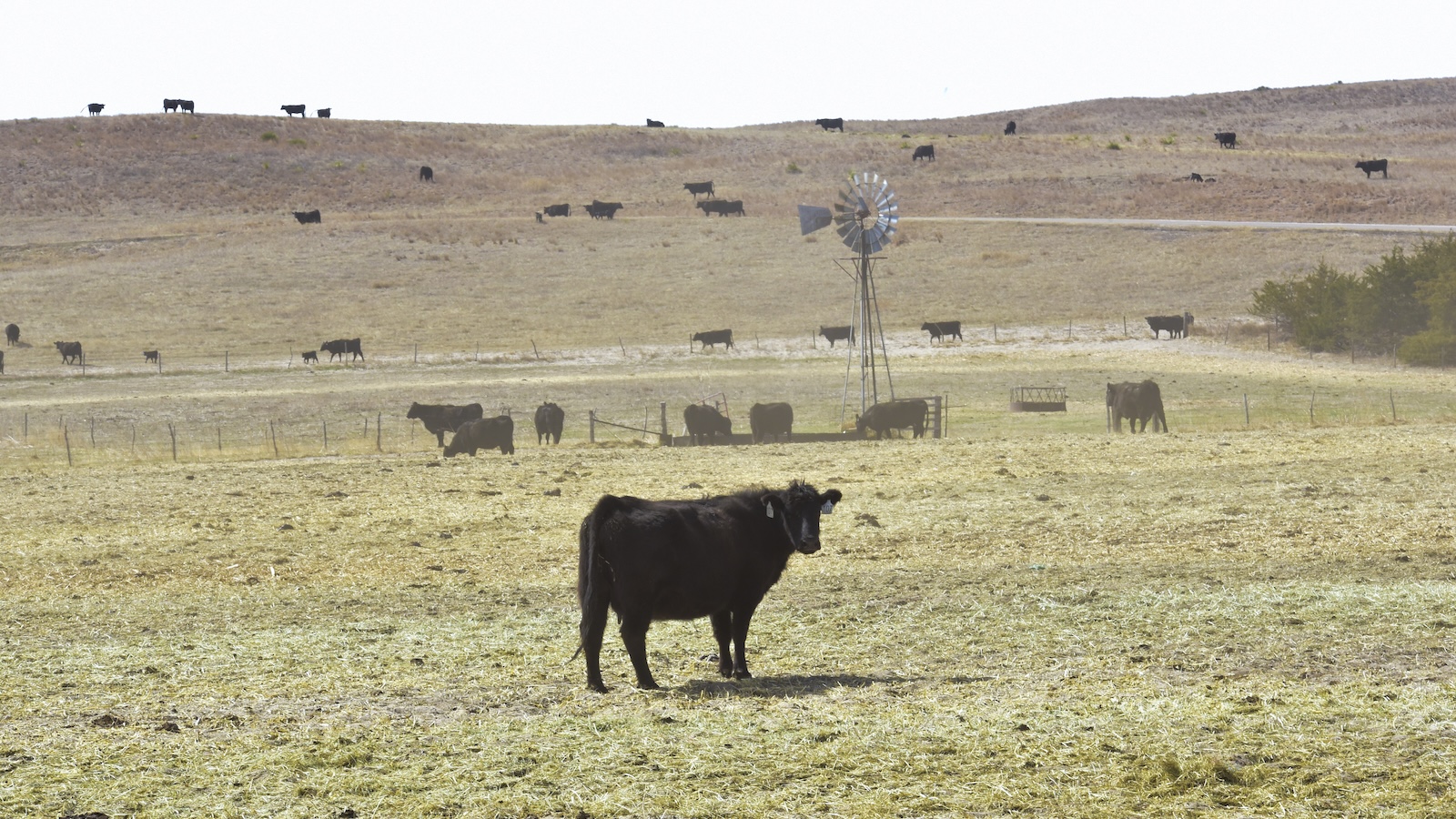
The 11,000-acre ranch near Bingham, Nebraska, represents more than just a business for Mike and Kayla Wintz; it is a generational legacy. For 21 years, the couple has managed the cow-calf operation, following in the footsteps of Kayla’s parents, who spent a quarter-century building the foundation of the ranch. However, the stability of that legacy was upended in less than six hours when a catastrophic wildfire swept across the landscape, consuming nearly every acre of their grazing land. The Wintz family’s experience is not an isolated tragedy but a stark illustration of a record-breaking wildfire season that has transformed the Nebraska Sandhills into a high-stakes battleground between agricultural tradition and a changing climate.
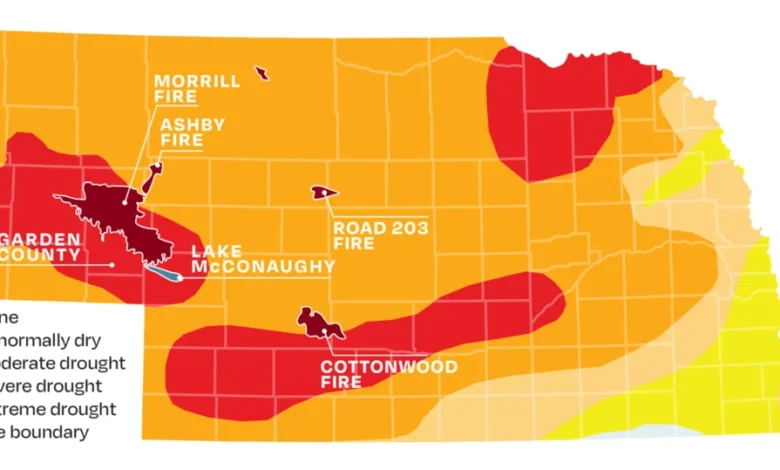
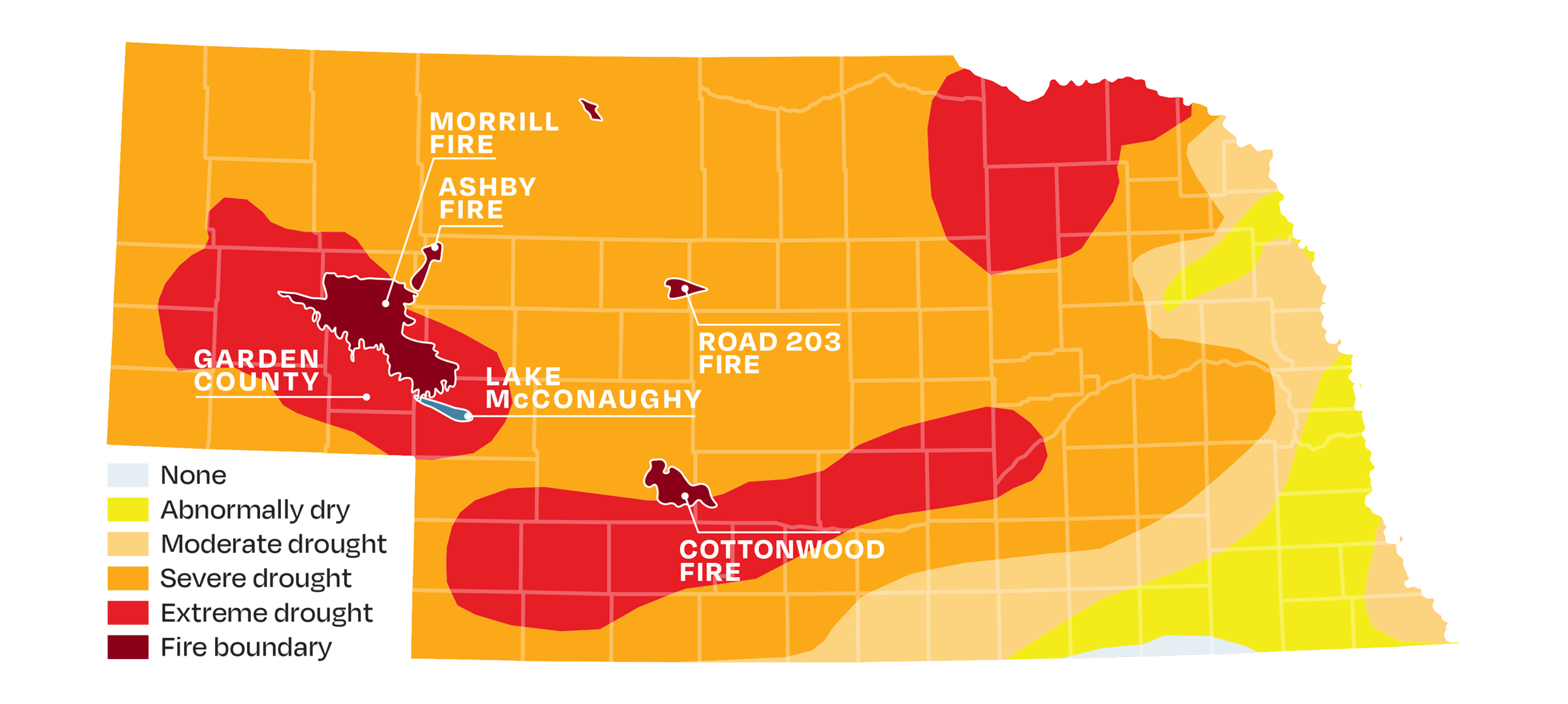
As of late March 2026, the state of Nebraska has witnessed an unprecedented surge in fire activity. Following a winter that ranked as the second warmest and fourth driest in the state’s recorded history, the landscape was primed for disaster. The Morrill, Cottonwood, Anderson Bridge, and Road 203 wildfires erupted in rapid succession across central and western Nebraska, fueled by low humidity and gale-force winds. Data from the Nebraska Emergency Management Agency (NEMA) indicates that by March 30, approximately 945,381 acres had been scorched. This figure marks 2026 as the most destructive wildfire year in Nebraska’s history, surpassing the previous record set during the drought-stricken summer of 2012.
A Chronology of Crisis: The March 2026 Fire Siege
The 2026 fire season did not begin with a single spark but rather with a convergence of environmental anomalies. The lack of snowpack during the winter months left the dormant prairie grasses exposed and desiccated. By early March, the Nebraska State Climate Office began issuing warnings regarding "fire weather fundamentals," noting that the fuel moisture levels in the Sandhills were at historic lows.
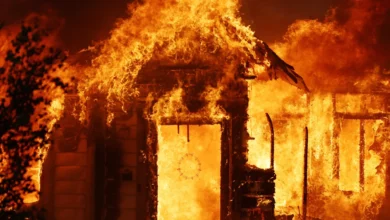
On March 12, the Morrill Fire was first reported. It quickly escalated from a localized brush fire into a fast-moving inferno. Within days, three other major blazes—the Cottonwood, Anderson Bridge, and Road 203 fires—ignited, stretching the state’s firefighting resources to their breaking point. The Morrill Fire, in particular, would go down as the largest documented blaze in Nebraska’s history, cutting a path of destruction through some of the most productive rangeland in the country.
For Mike Wintz, the crisis was both professional and personal. Like many residents in rural Nebraska, where 92 percent of fire departments are staffed by volunteers, Wintz serves as a first responder. When the Morrill Fire broke out, he was four miles away from his own property, working alongside neighbors to contain the flames. It was through his radio that he heard the news every rancher fears: the fire had turned and was heading directly for his home.
In a display of the communal reliance that defines Nebraska ranching, Wintz remained at his post on the fire line, trusting his fellow firefighters to protect his homestead. A specialized crew managed to intercept the flames before they reached the house, but the victory was temporary. The following day, a shift in wind direction brought the fire back toward the Wintz residence for a second time. Firefighters and neighboring ranchers worked in tandem to saturate the home and outbuildings with water, successfully sparing the structures a second time, even as the surrounding pastures were reduced to ash.
The Ecological Transformation of the Sandhills
The scale of the 2026 fires has prompted a deeper examination of the ecological health of the Nebraska Sandhills. Spanning roughly 13 million acres, the Sandhills represent the most intact temperate grassland ecosystem on Earth. Historically, this landscape was maintained by a cycle of fire and grazing, a practice utilized by Indigenous populations for thousands of years to promote biodiversity and control woody encroachment.
However, over the last 150 years, the culture surrounding fire in Nebraska has shifted toward total suppression. Dirac Twidwell, a rangeland and fire ecologist at the University of Nebraska-Lincoln (UNL), notes that the state has entered a "new kind of wildfire era." According to Twidwell, the long-term removal of fire from the landscape has allowed for the proliferation of invasive species, most notably the Eastern Red Cedar. These trees are highly flammable and act as "ladder fuels," allowing ground fires to leap into the canopy and create intense, fast-moving "crown fires" that are nearly impossible to contain under high-wind conditions.
Mitchell Stephenson, a rangeland management specialist at the UNL-Extension, explains that the lack of regular, controlled burns has created a "uniform fuel load" across the region. In a healthy ecosystem, fire creates a "shifting mosaic"—a patchwork of areas at different stages of regrowth that provides diverse habitats and acts as natural firebreaks. Without this mosaic, the 2026 wildfires found a continuous path of dry fuel, allowing them to grow to sizes previously unseen in the state.
Economic Implications for the Beef Industry
The timing of the 2026 wildfires could not have been more catastrophic for Nebraska’s agricultural sector. The fires peaked just as the spring calving season began. Calving is the most sensitive period in a rancher’s calendar; moving pregnant cows or newborn calves causes immense stress, often leading to illness or death for the animals.
Mike Wintz reported that the stress of the evacuation and the loss of grazing land resulted in the death of at least six calves. Other yearlings were left with singe marks on their backs, and bulls lost their hair to the heat. Beyond the immediate loss of livestock, the destruction of infrastructure—including miles of fencing and roughly 900 bales of hay—represents a massive capital loss for the Wintz operation.
The impact on individual ranchers like the Wintzes ripples through the broader state economy. In 2024, Nebraska led the United States in beef and veal exports, totaling $1.66 billion. The state’s economy is fundamentally built on the "corn-cattle" connection, where much of the state’s second-most valuable commodity, corn, is utilized as feed for the livestock industry.
Elliott Dennis, an associate professor of agricultural economics at UNL, warns that the cumulative effect of the 2026 fires and ongoing drought will likely force ranchers to further reduce their herd sizes. This trend has been building for several years as water scarcity and rising feed costs squeeze profit margins. As ranchers "liquidate" their herds to survive the immediate crisis, the long-term supply of beef is constrained, which in turn drives up prices for consumers across the nation. The 2026 wildfires are expected to accelerate this trend, potentially leading to a multi-year contraction in the Nebraska cattle industry.
Official Responses and the Path to Resilience
In response to the record-breaking season, the Nebraska legislature has pointed to the 2024 state climate change impact assessment, which warned that rising temperatures and erratic precipitation trends would threaten rangeland productivity. State officials and emergency management agencies are now grappling with the reality that traditional firefighting methods may no longer be sufficient for the "megafires" of the 21st century.
Ecologists like Twidwell argue that the state must pivot toward proactive management. This includes a controversial but increasingly necessary return to prescribed burning. By intentionally burning sections of the Sandhills under controlled conditions, ranchers can reduce the buildup of cedar trees and create the "shifting mosaic" needed to slow future wildfires. However, such practices require a cultural shift and a robust support system for producers who fear the liability of a controlled burn escaping.
Furthermore, there is a growing movement to make rural infrastructure more fire-resilient. This includes creating defensible spaces around ranch homes, utilizing fire-resistant building materials, and improving the communication networks used by volunteer fire departments.
Conclusion: Waiting for the Rain
Despite the devastation, the spirit of the Sandhills remains rooted in resilience. For Mike and Kayla Wintz, the path forward is marked by uncertainty but also by a deep connection to the land. The Morrill Fire may have taken their grass and their hay, but it did not take their resolve.
"The Sandhills are resilient. The grass is there. It just needs a little bit of moisture to pop up, and they’ll be back," Mike Wintz said, reflecting on the charred horizon. "It’s just going to be a different year for me: calving different and haying different, summer range different… you gotta let the land come back, I guess. We need the rain."
As Nebraska looks toward the summer of 2026, the state remains on high alert. The record-breaking March fires have served as a wake-up call for a state that defines itself by its agricultural prowess. The recovery will be measured not just in the regrowth of the prairie grass, but in the ability of Nebraska’s ranching communities to adapt to an era where the threat of fire is no longer a rare occurrence, but a permanent feature of the Great Plains landscape. The future of the American beef industry may well depend on how successfully the "Beef State" navigates this new, more volatile reality.
Related posts: