The Economic Mirage of Climate Inaction Analyzing the False Dichotomy Between Environment and Growth

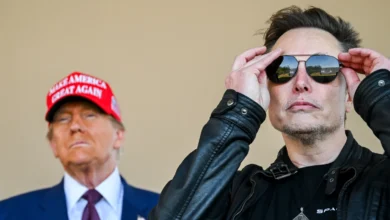
Throughout his political career, President Donald Trump has consistently relied on a specific economic narrative to frame his opposition to environmental regulation: the argument that climate action is a recipe for financial ruin. This rhetoric, which characterizes international agreements and domestic green initiatives as "scams" or "economic destruction," has served as the foundation for a sweeping overhaul of federal environmental policy. From the withdrawal from the Paris Climate Agreement to the systematic dismantling of fuel efficiency standards, the administration’s strategy has centered on the premise that the United States cannot afford to protect its environment without sacrificing its prosperity.
However, a growing body of economic research, historical data, and recent climate events suggests that the true financial disaster lies not in action, but in the escalating costs of inaction. As extreme weather events become more frequent and severe, the perceived trade-off between the economy and the environment is increasingly being recognized as a false dichotomy. Economists and public health experts argue that the administration’s cost-benefit analyses often ignore the profound economic benefits of a cleaner environment while downplaying the multi-trillion-dollar risks of a warming planet.
The Rhetoric of Financial Disaster
President Trump’s messaging on climate change has remained remarkably consistent. Upon withdrawing the U.S. from the Paris Climate Agreement, he claimed the accord would cost the nation "trillions of dollars" while allowing other countries to continue polluting. More recently, he has targeted the transition to electric vehicles (EVs), asserting that President Joe Biden’s mandates would lead to the "economic destruction" of the American auto industry—a sector Trump claims to have "saved" during his first term.
During addresses to world leaders, the President has warned that a commitment to "green" policies is a precursor to national failure. "If you don’t get away from this green scam, your country is going to fail," he stated in a 2023 address, reinforcing the idea that environmentalism is an indulgence of the wealthy that leads to the impoverishment of the working class.
The Rising Cost of Inaction
While the administration focuses on the upfront costs of regulation, the costs of climate change itself are already manifesting in the American economy. A September 2023 analysis by the Brookings Institution highlighted the immediate financial burden on the average citizen. The study found that the effects of climate change—ranging from surging insurance premiums to the health costs associated with wildfire smoke—now cost the average American household between $219 and $571 annually. In regions most susceptible to extreme weather, these costs can exceed $1,000 per year.
The physical manifestations of these costs were evident in March 2024, when a record-breaking spring heatwave scorched the Western United States. This event not only worsened wildfire forecasts for the coming summer but also threatened the critical mountain snowpacks that provide water for millions of residents and vast agricultural territories. When these natural systems fail, the resulting economic shocks to the food supply and urban infrastructure far outweigh the costs of carbon mitigation strategies.
A History of Manufactured Economic Doubt
The narrative that environmental protection is "too expensive" did not emerge in a vacuum. Gernot Wagner, a climate economist at Columbia Business School, notes that this perspective has been carefully cultivated by the fossil fuel industry for decades. In the early 1990s, the American Petroleum Institute (API) began commissioning economic studies designed to make carbon reduction appear prohibitively expensive.
One landmark study from 1991 calculated that a carbon tax of $200 per ton would shrink the U.S. economy by 1.7 percent by 2020. However, like many industry-funded models, this research conspicuously ignored the economic benefits of avoiding climate-driven disasters. By framing the conversation solely around the cost of the tax rather than the cost of the damage the tax was intended to prevent, the industry successfully shifted the public and political focus toward the "burden" of regulation.
The Transformation of Federal Cost-Benefit Analysis
Under the current administration, the Environmental Protection Agency (EPA) has institutionalized this narrow economic view. For decades, the EPA utilized a metric known as the "social cost of carbon" to estimate the long-term economic damage caused by a ton of carbon dioxide emissions—including impacts on agricultural productivity, human health, and property damage from increased flooding. While the Biden administration had set this value at approximately $190 per ton, the Trump administration moved to drastically lower or eliminate this figure in its internal calculations.
Furthermore, the EPA recently revamped its methods for calculating the health benefits of air pollution reduction. Historically, the agency accounted for "co-benefits," such as the thousands of avoided asthma attacks and premature deaths that occur when power plants reduce carbon emissions alongside other pollutants. Under new directives, the value of these saved lives has been effectively treated as $0 in some regulatory impact analyses.
An investigation by The Associated Press in mid-2024 found that for 17 out of 20 major environmental rules examined, the EPA consistently emphasized the compliance costs for industries while omitting or minimizing the public benefits. This statistical weighting allows the administration to justify repealing regulations by making them appear economically irrational, even when independent data suggests the benefits to society far outweigh the costs to industry.
The Case of Vehicle Fuel Standards
The disconnect between administration projections and economic reality was perhaps most visible in the February 2024 decision to rescind fuel efficiency standards. The EPA promised that the move would save Americans $1.3 trillion in car payments by 2055. However, independent analysts pointed to a chart buried deep within the EPA’s own regulatory impact analysis that told a different story.
The analysis revealed that when factoring in higher fuel purchases, increased vehicle repair costs, and rising insurance premiums, the total cost to consumers would actually reach $1.5 trillion over the same period. This effectively nullified any savings from the repeal. Additionally, the administration’s estimates relied on the assumption that gasoline prices would remain stable at around $3 per gallon for the next 30 years. This assumption was shattered when geopolitical tensions, including the conflict between Israel and Iran, pushed U.S. gas prices above $4 per gallon, further burdening the very consumers the repeal was supposed to protect.
The Clean Air Act as an Economic Stimulus
Contrary to the "economic destruction" narrative, historical data suggests that environmental regulation can be a powerful driver of growth. The Clean Air Act of 1970 is a prime example. While industry groups at the time warned of shuttered factories and lost jobs, the long-term results were overwhelmingly positive.
Research has shown that the United States’ Gross Domestic Product (GDP) was approximately 1.5 percent higher in 2010 than it would have been without the Clean Air Act. The primary driver was human capital: by reducing lead and particulate matter in the air, the law prevented millions of cases of respiratory illness and cognitive impairment in children. These children grew up to be more productive workers, contributing more to the economy than the cost of the pollution-control technology ever subtracted from it.
Gernot Wagner argues that modern "green" investments function in much the same way. When a homeowner spends $100,000 to renovate a property with heat pumps, induction stoves, and high-grade insulation, that money does not disappear; it flows into the pockets of contractors, manufacturers, and engineers, stimulating the local economy. While the upfront cost is significant, the resulting reduction in utility bills—often dropping from $450 to $100 a month—increases the household’s long-term disposable income.
Global Perspectives and Fiscal Stability
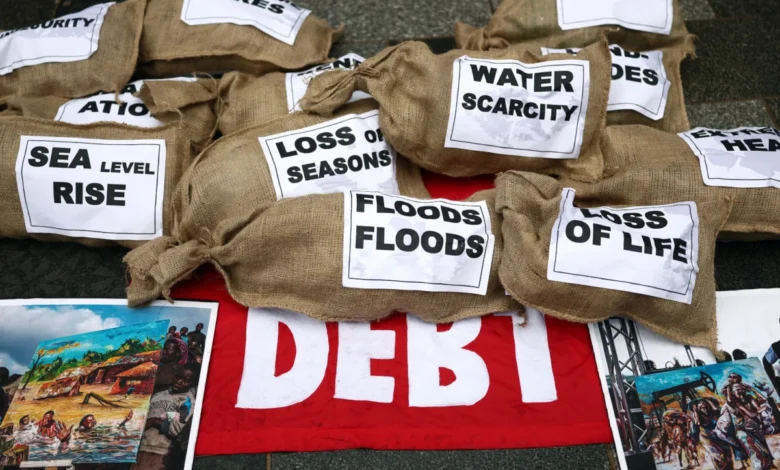
The debate over the cost of climate action is not limited to the United States. In the Global South, where many nations face historically high debt levels, the "climate versus economy" argument is particularly acute. However, a recent study published in the European Journal of Political Economy challenges the idea of an inherent trade-off.
The study, which analyzed data from 172 countries over several decades, found that investing in climate adaptation—such as improving shelter, flood defenses, and resilient infrastructure—actually contributes to fiscal stability in the long run. Jorge M. Uribe, a professor at the Universitat Oberta de Catalunya and co-author of the study, notes that better-prepared countries experience fewer economic shocks following natural disasters, which protects their public finances and credit ratings. "There are ways to invest in better preparation for climate change that not only do not endanger fiscal stability, but over the long term can actually contribute towards it," Uribe stated.
Public Perception and the "Forced Choice"
Despite the political rhetoric, American public opinion appears to be shifting. For years, polling organizations like Pew Research have presented voters with a forced choice: "Do environmental laws cost too many jobs, or are they worth the cost?" Anthony Leiserowitz, director of the Yale Program on Climate Change Communication, argues that this framing is fundamentally flawed.
"It’s a forced trade-off, when we know that environmental protection often has positive economic benefits," Leiserowitz said. Yale’s own surveys found that 59 percent of U.S. voters believe that protecting the environment improves economic growth and provides new jobs. Only 18 percent believe it hurts the economy. This suggests that the majority of the electorate views "green" policy not as a luxury or a scam, but as a viable economic strategy.
Conclusion: The Path Forward
The argument that the economy and the environment are at odds remains a powerful political tool, but it is one that is increasingly detached from empirical data. As the Trump administration continues to prioritize the immediate profit margins of fossil fuel industries, the broader economy faces a mounting "climate debt."
The evidence from historical successes like the Clean Air Act, coupled with modern economic modeling and global fiscal studies, points to a singular conclusion: the most expensive path forward is the one that ignores the changing climate. While the transition to a low-carbon economy requires significant capital and structural shifts, the alternative—a future defined by unmitigated extreme weather, rising health costs, and crumbling infrastructure—carries a price tag that no nation can afford. For economists like Wagner and Uribe, the choice is clear: the economy doesn’t just need the environment to survive; it needs environmental protection to thrive.
Related posts: