The Rise of Mass Timber Skyscrapers Engineering a Sustainable and Resilient Urban Future

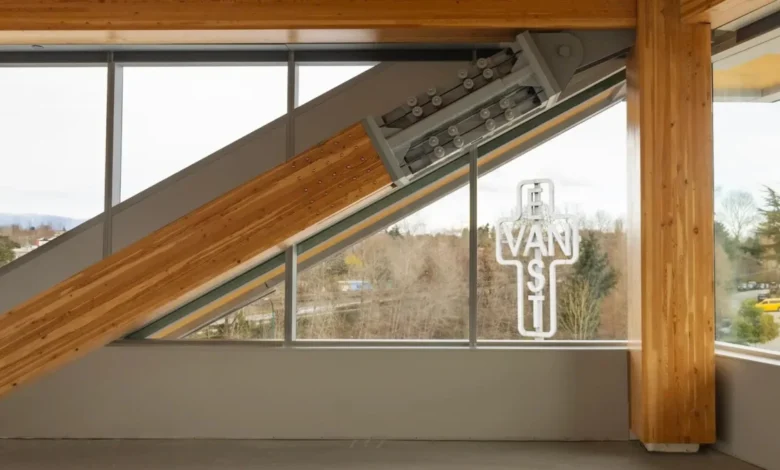
The global construction industry is currently undergoing a paradigm shift as architects and engineers move away from the carbon-heavy reliance on steel and concrete toward an ancient yet modernized building material: wood. In Vancouver, British Columbia, the recent completion of the 10-story building known as the Hive marks a significant milestone in this evolution. As North America’s tallest brace-framed, seismic-force-resisting timber structure, the Hive represents more than just a feat of engineering; it serves as a blueprint for a future where cities are built to sequester carbon rather than emit it. By utilizing engineered mass timber, designers are proving that high-rise structures can be sustainable, fire-resistant, and capable of withstanding the planet’s most violent seismic events.
The Technological Leap: From Raw Logs to Engineered Timber
The resurgence of wood in high-rise construction is driven by the development of mass timber—a category of engineered wood products that includes Cross-Laminated Timber (CLT) and Glue-Laminated Timber (Glulam). Unlike traditional light-frame wood construction used in residential housing, mass timber involves laminating layers of wood together with structural adhesives. This process creates panels and beams that possess a strength-to-weight ratio comparable to steel and concrete, yet are significantly lighter.
The Hive, designed by the architectural firm Dialog, utilizes these materials to achieve structural heights that were previously deemed impossible for wood. The building stands as a testament to the versatility of CLT, where layers of lumber are stacked crosswise and bonded together. This "cross-graining" provides the panels with exceptional dimensional stability and strength in two directions, allowing them to function as floors, roofs, and walls in large-scale commercial buildings.
Lindsay Duthie, an architect at Dialog, notes that the industry is essentially returning to its roots while incorporating modern precision. "I think we’re going back to how we used to build, which was with more wood," Duthie stated, emphasizing that the integration of modern engineering allows for the safety and scale required by 21st-century urban environments.

A Chronology of the Mass Timber Movement
The journey toward mass timber skyscrapers has been a gradual climb, facilitated by changes in international building codes and successful pilot projects.
- Early 1990s: Engineered wood products like CLT are developed in Austria and Germany, gaining traction in Europe for low-to-mid-rise buildings.
- 2017: The completion of Brock Commons Tallwood House at the University of British Columbia. At 18 stories, it was briefly the world’s tallest mass timber building, proving that wood could be used for student housing at scale.
- 2019: Mjøstårnet in Norway is completed, reaching 280 feet (85.4 meters), setting a new global record and demonstrating the viability of timber in extreme northern climates.
- 2021: The International Building Code (IBC) is updated to allow mass timber buildings up to 18 stories in the United States, a regulatory shift that cleared the path for dozens of new projects.
- 2022: The Ascent MKE building in Milwaukee, Wisconsin, opens its doors. Standing at 284 feet, it currently holds the title of the world’s tallest timber-concrete hybrid building.
- 2024: The completion of the Hive in Vancouver introduces advanced seismic damping technology to the mass timber framework, pushing the boundaries of structural resilience.
Engineering Resilience: Surviving Earthquakes and High Winds
One of the primary challenges of building tall with wood is managing the "sway" caused by wind and the lateral forces generated by earthquakes. Historically, the flexibility of wood was seen as a disadvantage for skyscrapers, but modern engineering has turned this into a strength. Just as trees in a forest flex to avoid snapping during a storm, mass timber buildings are designed to dissipate energy.
The Hive incorporates Tectonus dampers—mechanical shock absorbers designed to protect the building’s structural integrity during a seismic event. These devices dissipate energy and ensure the building "recenters" itself after the shaking stops. This technology is crucial in Vancouver, a city located in a high-risk seismic zone.
Further evidence of timber’s resilience was demonstrated at the University of California, San Diego, where researchers conducted tests on a 10-story mass timber building using a massive shake table. The structure featured a "rocking wall" system—a mass timber core anchored by high-strength steel rods. After being subjected to 88 simulated earthquakes, the building remained undamaged. Shiling Pei, a professor of civil and environmental engineering at the Colorado School of Mines, observed that the structure "performed phenomenally," suggesting that timber buildings might actually be more durable than their concrete counterparts in earthquake-prone regions.
The Carbon Math: Construction as a Climate Solution
The environmental impetus for mass timber is rooted in the urgent need to decarbonize the construction industry. Concrete and steel production are responsible for approximately 8% and 7% of global CO2 emissions, respectively. In contrast, wood is a carbon-sequestering material. As trees grow, they absorb CO2 from the atmosphere; when they are harvested and turned into mass timber, that carbon is "locked" into the building’s frame for decades or even centuries.

According to data from the Yale School of the Environment, replacing traditional materials with mass timber could reduce the global CO2 emissions of the construction sector by 14% to 31%. This "embodied carbon" advantage is a primary reason why municipalities are beginning to offer incentives for timber projects.
Furthermore, mass timber can be sourced from smaller-diameter trees or trees salvaged from forests at risk of wildfire. By utilizing "thinned" wood from overcrowded forests, the construction industry can support forest health and biodiversity. Proper forest management, as practiced by agencies like the U.S. Forest Service, involves removing excess vegetation that would otherwise fuel catastrophic blazes. Converting this material into high-value building components provides an economic incentive for sustainable forestry.
Safety and Fire Resistance: The Charring Paradox
The most common concern regarding wooden skyscrapers is fire safety. However, mass timber behaves very differently than the dimensional lumber used in stick-frame houses. When exposed to fire, the outer layer of a thick mass timber beam chars in a predictable manner. This "char layer" acts as an insulating barrier, protecting the inner core of the wood from heat and maintaining the beam’s structural integrity.
In contrast, steel begins to lose its structural strength and can buckle at high temperatures, while concrete can spall and crack. Building regulators in North America require rigorous fire testing for mass timber, and buildings like the Hive are designed to meet or exceed the fire ratings of steel and concrete structures. "If you have a campfire, you end up at the end of the night with black logs," explained Duthie. "That’s the char layer that actually acts as a protective coating that prevents it from burning further."
Economic and Human Impact: Biophilia and Speed
Beyond the environmental and structural benefits, mass timber offers significant economic advantages. Because mass timber components are prefabricated in factories using precision CNC (Computer Numerical Control) machines, they can be assembled on-site with remarkable speed. This reduces construction timelines, minimizes neighborhood noise, and requires smaller crews.

There is also a psychological component known as biophilia—the innate human tendency to seek connections with nature. Architects are increasingly leaving timber beams exposed in interior spaces to create a warm, tactile environment. Katie Mesia, a design resilience leader at the architecture firm Gensler, notes that wood has a "tactile quality" that people naturally gravitate toward. Studies have shown that wood-centric interiors can lower stress levels and improve productivity for office workers, making timber buildings highly desirable in the commercial real estate market.
Broader Implications and Future Outlook
The success of projects like the Hive and Ascent MKE signals the beginning of a "Timber Age" in urban architecture. However, challenges remain. The supply chain for mass timber is still maturing in North America, and the initial costs can be higher than traditional methods, though these are often offset by faster construction times.
As the industry scales, the focus will likely shift toward "hybrid" structures that combine the best properties of various materials—using timber for the primary frame, steel for specialized connections, and low-carbon concrete for foundations. Alessandro Palermo, a structural engineer at the University of California, San Diego, emphasizes that the goal is to build structures that are both sustainable and resilient.
The rise of mass timber skyscrapers represents a rare alignment of environmental necessity, technological innovation, and human-centric design. By looking back to the forest to build the cities of the future, humanity may have found a way to balance the demands of urban density with the urgent need to protect the planet’s climate. As more of these wooden giants rise above city skylines, they serve as a reminder that the most advanced engineering solutions are sometimes found in the natural world.
Related posts: