The Expansion of Texas Education Agency Takeovers and the Rise of the Mike Miles Model

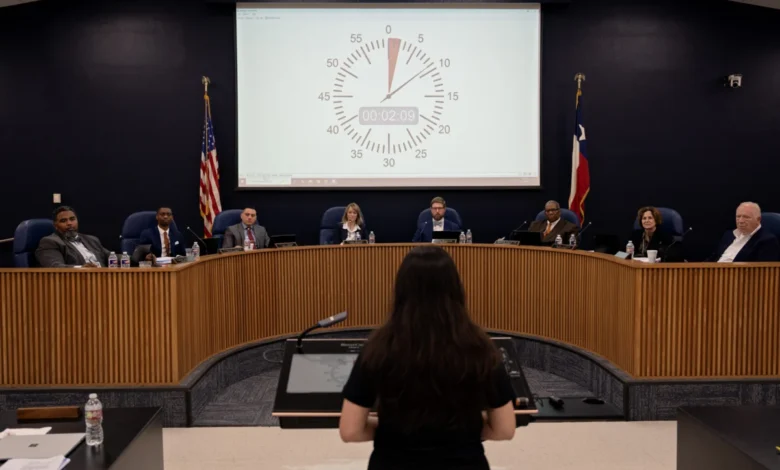
The landscape of public education in Texas is undergoing a systemic transformation as the Texas Education Agency (TEA) accelerates its use of state takeovers to overhaul local school districts. Texas now leads the nation in the frequency and scale of state-mandated interventions, a trend that has intensified significantly since 2020. In the first half of 2024 alone, the TEA installed hand-picked leadership in four districts, bringing the total to eight takeovers in just four years. With at least ten more districts currently under the threat of seizure—including the Austin Independent School District—critics and observers are identifying a clear pattern: the installation of a specific cadre of administrators loyal to the methods of Houston Independent School District (HISD) Superintendent Mike Miles.
This centralized movement, orchestrated under the tenure of TEA Commissioner Mike Morath, represents a fundamental shift in how the state manages struggling or "non-compliant" school systems. By replacing elected boards and local superintendents with state-appointed "boards of managers" and executive leaders, the TEA is effectively bypassing local democratic control to implement a rigorous, data-driven, and often controversial educational model.
The Houston Blueprint: A Prototype for State Control
The current wave of takeovers finds its ideological and operational roots in the 2023 seizure of Houston ISD, the largest school district in Texas. To lead this massive intervention, Commissioner Morath selected Mike Miles, a former Dallas ISD superintendent and founder of the charter network Third Future Schools. Miles immediately implemented his "New Education System" (NES), a radical restructuring of school operations characterized by high-stakes testing, scripted curricula, and the reassignment of campus resources.

The results in Houston have been a polarizing mix of academic gains and community upheaval. According to TEA data, Houston ISD saw a notable improvement in campus ratings, with the elimination of F-rated schools and a significant reduction in D-rated campuses. The district reported that a majority of its schools are now rated A or B. However, these metrics have come at a steep cost to traditional school environments. Under Miles, Houston ISD has closed numerous libraries, converting them into "Team Centers" or discipline areas that critics have dubbed "detention centers." The district has also seen mass resignations and terminations of principals and veteran teachers, alongside the conversion of some campuses into charter-style operations.
The Houston model is defined by its "rigid adherence" to instructional consistency. Lessons are often delivered via scripted slides, and student progress is measured through daily "Demonstrations of Learning" (DOLs), which are distilled into data points for administrative review. While proponents argue this ensures quality control in underperforming schools, opponents argue it stifles creativity and drives away experienced educators.
The Rise of the Miles Cadre: Exporting the Model
The TEA is no longer treating the Houston takeover as an isolated event. Instead, it is increasingly appointing leaders with direct ties to Mike Miles to oversee other seized districts. This "cadre" of officials often shares a professional lineage involving Dallas ISD, Houston ISD, or Miles’ private charter network, Third Future Schools.
In Beaumont Independent School District, the TEA appointed Sandi Massey as superintendent. Massey previously served as the Chief of Schools under Miles in Houston and worked within the Third Future Schools network. Similarly, Ena Meyers, the new state-appointed leader for Lake Worth Independent School District, served as Houston ISD’s deputy chief of strategic initiatives. In Fort Worth ISD, one of the state’s largest systems, the new administration chose Daniel Soliz as second-in-command—another veteran of the Miles administration in Houston.

The appointment of these associates has led to the immediate implementation of "Houston-style" reforms in smaller districts. In Beaumont, Massey has explicitly cited the Houston model as her blueprint, stating that the success seen in HISD justifies the replication of its systems. This replication includes the suspension of local governance policies, the cutting of student mental health positions, and the closure of campuses—actions that mirror the early months of the Houston takeover.
Legislative Evolution: Lowering the Threshold for Seizure
The acceleration of takeovers is the direct result of a series of legislative maneuvers designed to empower the TEA. Historically, state takeovers were rare and reserved for extreme cases of financial insolvency or years of academic failure. However, Texas law has evolved to make these interventions easier to trigger and harder to challenge.
In 2015, the Texas Legislature passed a law stating that five consecutive years of failing ratings at just one single school could trigger a takeover of an entire district, regardless of how the other dozens or hundreds of schools in that district were performing. This was the specific mechanism used to seize Houston ISD, despite the district as a whole maintaining a "B" rating.
Subsequent laws have further entrenched the TEA’s power:

- Senate Bill 1365 (2021): This law restricted school districts from using public funds to challenge the education commissioner’s decisions in court, labeling such decisions "final and unappealable."
- Accountability Rating Restrictions (2025): The state passed legislation preventing districts from suing the state to challenge the validity or fairness of their accountability ratings, effectively making the TEA the "player, referee, and scorekeeper" of the system.
Experts, including political science professor Domingo Morel of New York University, note that Texas now has the lowest bar for state intervention in the country. Morel’s research suggests that these takeovers disproportionately target districts with high populations of Black and Hispanic students, leading to what he describes as the "systemic disenfranchisement" of minority communities.
Financial Controversies and the "Moonlighting" Scandal
The expansion of state control has not been without ethical scrutiny. In April 2024, an investigation revealed that Mike Miles held an ongoing $120,000 annual consulting contract with his former charter network, Third Future Schools, while serving as the state-appointed superintendent of Houston ISD. This arrangement appeared to violate a new statewide ban on public school administrators "moonlighting" for private educational entities.
While Miles eventually canceled the contract following public pressure, the link between the TEA-appointed leaders and the Third Future Schools network remains strong. Several newly appointed superintendents in other districts also have histories with the charter network. Critics argue this creates a "revolving door" between state oversight and private charter expansion, as Third Future Schools has been expanding its footprint in Texas, often taking over campuses in districts that are attempting to avoid a full state takeover.
The Broader Impact: Vouchers and the Future of Public Education
The timing of these takeovers is viewed by many as part of a broader political strategy. As the TEA increases pressure on public school districts through stringent rating systems and takeovers, the state is also rolling out a massive school voucher program. This program provides parents with approximately $10,000 in state funds to move their children to private schools.

This creates a "pincer movement" on public education:
- State Rating Pressure: Public schools are held to increasingly difficult standardized testing metrics.
- Takeover Trigger: Low performance leads to state takeover and the implementation of the Miles model.
- Voucher Exit: Families dissatisfied with the "upheaval and chaos" of takeovers or the "rigid instruction" of the NES model use state vouchers to leave the public system entirely.
Crucially, private schools receiving voucher funds are not required to follow the same state accountability standards or standardized testing regimes that triggered the public school takeovers in the first place. This disparity has led educational advocates to argue that the state is intentionally destabilizing public districts to build a case for privatization.
Community Reaction and Future Outlook
The response from local communities has been one of fierce resistance. In Houston, students have organized walkouts, and parents have held recurring protests against the "detention center" libraries and the loss of local representation. In Fort Worth, parent organizers like Zach Leonard have described the new "Elevate" instructional model as a "franchise being handed to our children without a vote."
The human cost is also becoming apparent. Houston ISD has reported a significant loss of students as families flee the "New Education System." This enrollment drop has, in turn, triggered further school closures, creating a cycle of contraction.

As the TEA eyes more districts for intervention, the "Texas Model" of state takeovers is becoming a national case study in centralized educational authority. Whether these interventions will lead to long-term academic success or the permanent erosion of the public school system remains a subject of intense debate. For now, the "Miles Cadre" continues to expand its influence, reshaping the education of hundreds of thousands of Texas children through a top-down, state-mandated philosophy that prioritizes data points over local autonomy.