Thirst and Inequality: How Century-Old Laws and Rapid Development are Drying Out Oregon’s Productive Farmland

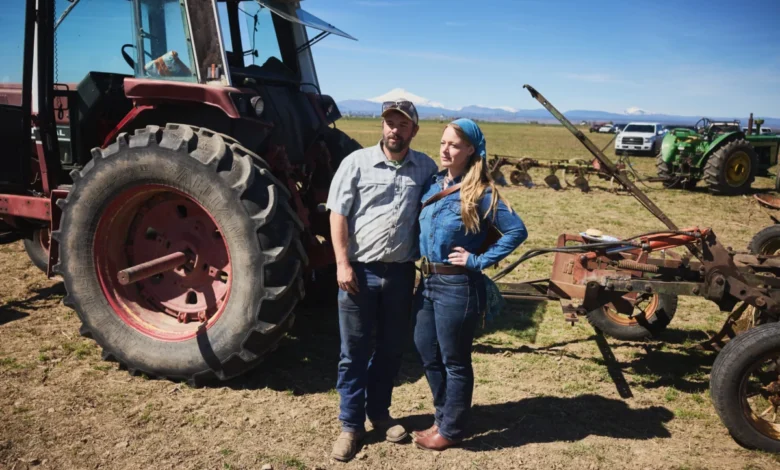
Chris Casad awakens each day before the first light of dawn breaks over the horizon of Central Oregon. He stands on the 85-acre property he purchased nine years ago—a stretch of land that once yielded tons of organic potatoes. Today, those fields lie fallow, victims of a systemic water shortage that has redefined his life. To keep his family afloat, Casad has been forced to take a job feeding cattle on another man’s ranch, a humbling shift for a 38-year-old who invested his future in the soil. With two children under the age of five, a wife working two jobs, and a fleet of tractors older than himself, Casad is the face of a burgeoning agricultural crisis in the American West.

The crisis is rooted in a brutal combination of climate change and antiquated legal frameworks. Over the last three summers, Central Oregon has been besieged by drought. Starving grasshoppers have descended upon the few remaining green crops, toxic algae has bloomed in tepid reservoirs, and nearly 1,000 wells across the state have run dry. Most alarmingly, the springs that feed the iconic Deschutes River have shriveled to their lowest recorded flows. However, for farmers like Casad, the environmental toll is only half the story. The true "death knell" for his livelihood is Oregon’s century-old water law, a rigid doctrine of "prior appropriation" that protects a specific class of water users at the absolute expense of others.
The Doctrine of Prior Appropriation: A Legacy of Inequality
To understand the current conflict, one must look back to the early 1900s, when Oregon first began formalizing water rights. The legal principle adopted was "first in time, first in right." This meant that the first entities to claim water from a source held "senior rights," which must be satisfied in full before any "junior" rights holders receive a single drop. In the Deschutes Basin, this has created a stark divide between those who settled the land early and those who arrived later to develop the region’s most fertile agricultural zones.

The Central Oregon Irrigation District (COID) sits at the front of this line. A quasi-municipal corporation that functions as part public utility and part homeowners association, COID manages the lion’s share of the Deschutes’ water. According to an investigation by ProPublica and Oregon Public Broadcasting (OPB), six irrigation districts divert more than 90% of the river’s flow in Bend during the peak months of May through September. COID alone claims more than half of the river’s total volume. Because their rights are senior, their supply remains largely untouched even as the river reaches catastrophic lows, while junior districts downstream—where the state’s most productive farming actually occurs—are cut off entirely.
The Efficiency Gap: Lawns vs. Livelihoods
The most controversial finding of recent state-commissioned satellite data is the sheer inefficiency of water use within the COID. While the law mandates that water be put to "beneficial use" and forbids "waste," the definitions of these terms are notoriously loose. The ProPublica/OPB analysis revealed that during the recent drought, only one out of every four gallons diverted by COID was actually absorbed by crops.

The remaining 75% of the water is lost to the environment before it can serve a productive purpose. Records indicate that much of this water percolates into the porous volcanic soil, evaporates into the arid desert air, or simply drains off fields into scrubland. While some of this water eventually re-enters the aquifer or returns to the river downstream, the immediate impact is devastating. For a 40-mile stretch below Bend, the river is sucked nearly dry, destroying fish habitats and warming the remaining water to levels that are toxic for native species.
Perhaps more jarring is what the "efficient" 25% of the water is actually growing. In the COID, more than 90% of the irrigated acreage is dedicated to grass—pasture for livestock, hay for hobby farms, and lush landscaping for multimillion-dollar estates. This stands in sharp contrast to the North Unit Irrigation District (NUID) in Jefferson County, where farmers like Casad produce half of the world’s carrot seed supply and massive quantities of organic vegetables on a fraction of the water.

A Playground for Ambition
As Bend has transformed from a timber and mill town into a high-end destination for tourism and recreation, the use of irrigation water has shifted from survival to aesthetics. The canals of the Deschutes now wind through neighborhoods of single-family homes and lead to "exclusive compound paradises."
One such property, an 80-acre estate previously owned by cinematographer Byron Garth, features a 6,300-square-foot mansion, guest houses, and a swimming pool, all surrounded by a carpet of vibrant green grass. Garth admitted that while he initially used his water rights to grow hay for alpacas and goats, it eventually became "cheaper to just mow it." The water was maintained primarily for "aesthetic value." Similarly, the Nike-affiliated Knight family operates a ranch in the district that raises high-end horses and sells hay, ranking among the largest consumers of COID water.

The marketing of these properties highlights the disconnect. Real estate listings for multimillion-dollar "ranches" in the district promise the "peaceful rhythm of agricultural life—without the work." For these landowners, the water is a tool for property valuation and visual pleasure, secured by a legal priority that prevents it from being moved to the professional farmers downstream who are currently facing bankruptcy.
The "Use It or Lose It" Trap
The legal system doesn’t just allow this disparity; it actively encourages it through a "use it or lose it" policy. If a landowner fails to put their water to "beneficial use" at least once every five years, the state can cancel their rights. This creates a perverse incentive for landowners to drench unproductive land simply to maintain the value of their property.

COID is aggressive in enforcing this. Every summer, the district hires planes to fly over its 70 square miles of territory, looking for brown patches that might indicate non-use. Since 2021, more than 1,000 warning letters have been sent to landowners. This pressure led the Casads, during their time leasing land in the COID, to water a compost pile and equipment yard just to satisfy inspectors. Other residents reported being in "panic mode," turning on sprinklers to water rocky soil and weeds to protect their legal claims.
"We don’t get to decide whether we like somebody growing carrot seed or somebody having two llamas and a Prius in the driveway," said Craig Horrell, COID’s Managing Director. Under current law, his job is to deliver the water to anyone with a valid right, regardless of the economic or social value of what they are growing.

The Human Toll in Jefferson County
The consequences of this rigid hierarchy are measured in more than just lost bushels of potatoes; they are measured in human lives. In Jefferson County, the junior rights holders have seen their water allocations slashed to the point of impossibility. Farmers have been forced to fallow a third of the county’s irrigated land.
The psychological pressure has been immense. During the height of the recent drought, the suicide rate in Jefferson County nearly doubled. Kelly Simmelink, a Jefferson County Commissioner, testified before the legislature about the "immense pressure" facing producers who see their life’s work evaporating while upstream neighbors water lawns.

For the Casad family, the stress became a constant companion. Cate Havstad-Casad recalled sitting in a bathtub having contractions with their first child, watching the lights of her husband’s tractor out the window as he worked through the night to save a dying crop. "It doesn’t have to be this way," she lamented in a video diary. "It is Oregon water law which will give a very wealthy person with a hayfield that they literally mow… twice as much water as any professional farmer."
Chronology of the Deschutes Water Crisis
- Early 1900s: Oregon establishes the "Prior Appropriation" doctrine, granting senior rights to early settlers and irrigation districts like COID.
- 1950s: Central Oregon becomes a potato powerhouse, with the "Potato Show" in Redmond celebrating a harvest that filled 20 rail cars a day.
- 1990s-2010s: Bend undergoes a massive population boom, shifting the economy from agriculture to tourism and high-end real estate.
- 2015-2022: A series of severe droughts hits the region. Snowpack levels drop, and the Deschutes River flow reaches historic lows.
- 2016: Aerial surveillance by COID begins flagging "dry spots," forcing landowners to water unproductive ground to keep rights.
- 2020-2022: Jefferson County farmers see water allocations cut by more than 75%. Suicide rates in the county spike.
- 2023: Oregon Legislature funds a suicide prevention hotline specifically for agricultural producers. COID begins seeking $700 million for canal piping projects.
- 2024: Oregon records one of its lowest snowpacks in history, signaling another year of "junior" water cutoffs.
Broader Implications and the Path Forward
The struggle in the Deschutes Basin is a microcosm of a larger conflict playing out across the American West. As climate change reduces the reliable "water tower" of mountain snowpack, the legal structures built in the 19th century are failing the needs of the 21st.

Republican State Representative Mark Owens, a hay farmer himself, has become a leading voice for reform. He argues that the "beneficial use" rule was designed to build rural economies, not to maintain "playgrounds for ambition." Owens has questioned how the state can justify a system where groups that "employ nobody and harvest nothing" hold the most power over a public resource.
The proposed solution from irrigation districts is "piping"—replacing open, leaky canals with pressurized pipes. This would significantly reduce the 75% loss currently seen in the COID. However, the cost is staggering, estimated at over $700 million. While the federal and state governments have already contributed over $65 million, the pace of infrastructure improvement is being outrun by the pace of environmental decline.

For Chris Casad, the empty potato bins in his barn are a silent testament to a broken system. He has transitioned to growing hay and grass because they require less water, but the debt from the drought years remains. As he drives a school bus to make ends meet, the "whale" of a potato harvester—once the pride of his farm—has become nothing more than a slide for his children. The future of farming in Central Oregon now depends on whether the state can modernize a legal code that currently prizes the greenness of a lawn over the survival of a food supply.