Trump Administration Challenges EPA Scientific Assessments Opening Door to Weakened Chemical Regulations


The Environmental Protection Agency’s foundational system for determining the health risks of toxic chemicals is facing an unprecedented internal challenge that could destabilize decades of environmental safety standards. In a move that has alarmed the scientific and public health communities, the Trump administration has issued a formal directive questioning the validity of more than 500 chemical assessments produced by the Integrated Risk Information System, a program commonly known as IRIS. This shift, articulated in an internal agency memorandum, effectively invites industry groups and state regulators to ignore long-standing toxicity data, potentially rolling back protections governing everything from the lead content in household paint to the levels of arsenic permitted in municipal drinking water.
For nearly 40 years, IRIS has served as the "gold standard" for chemical toxicity assessments, providing the rigorous scientific calculations necessary to determine the highest "safe" level of human exposure to hazardous substances. These assessments are not regulations themselves, but they provide the essential data upon which the EPA, state governments, and international regulatory bodies build their environmental laws, discharge permits, and cleanup requirements. By challenging the integrity of this library, the current administration is signaling a fundamental shift in how the federal government evaluates the dangers posed by industrial pollutants.
The Fotouhi Directive and the Internal Memo
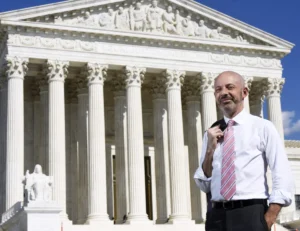
The catalyst for this shift is a six-page internal memo authored by David Fotouhi, the EPA’s deputy administrator. In the document, obtained by ProPublica, Fotouhi sharply criticized the methodologies employed by IRIS scientists, characterizing their findings as overly "conservative." He directed EPA offices to review any existing regulations or permits that rely on IRIS assessments and advised "external entities"—a term encompassing state agencies and private corporations—to reconsider their reliance on the program’s data.
Crucially, the memo announced that the EPA would be adding a formal "disclaimer" to the IRIS website. This language will state that the program’s toxicity findings are not necessarily intended for use in formal regulation. This move is seen by legal experts as a strategic maneuver to provide a legal basis for companies to challenge environmental mandates in court.
Robert Sussman, an attorney who has served in high-level positions at the EPA and worked for both chemical companies and environmental advocacy groups, noted that the memo creates a significant loophole. "Anybody who wants to ignore a regulation, permit or enforcement action can now just point to this memo and say the IRIS number it was based on wasn’t valid," Sussman stated. He described the move as a "huge setback" for the process of safeguarding the public from chemical exposure.
A History of Scientific Impartiality Under Pressure
The Integrated Risk Information System was established in 1985 to solve a recurring problem within the EPA: different offices within the agency were using different toxicity values for the same chemicals, leading to inconsistent and confusing regulations. IRIS was designed to be a centralized clearinghouse where career scientists could conduct exhaustive reviews of medical and toxicological literature to determine "reference doses"—levels of exposure likely to be without an appreciable risk of deleterious effects over a lifetime.
To ensure impartiality, the EPA intentionally structured IRIS to be separate from the agency’s program offices, such as the Office of Water or the Office of Air and Radiation, which are responsible for writing and enforcing specific regulations. This "firewall" was intended to prevent the scientific findings from being influenced by the political or economic pressures associated with rulemaking.
However, the Fotouhi memo effectively dismantles this separation. By tasking individual program offices with conducting their own toxicity assessments, the administration is moving toward a model where the officials writing the rules also control the science used to justify them. This transition has led to accusations that the agency is prioritizing industrial convenience over public health.
The Conflict of Interest and the Ethylene Oxide Case
The background of the memo’s author has become a focal point of the controversy. Before his appointment as the second-highest official at the EPA, David Fotouhi was a lawyer at the firm Gibson, Dunn & Crutcher. In that role, he represented various industrial clients, including Medline, a company that utilizes ethylene oxide to sterilize medical equipment.
Ethylene oxide is a colorless gas that IRIS scientists classified as a "known human carcinogen" in a landmark 2016 assessment. That review concluded the chemical was significantly more dangerous than previously thought, particularly regarding its link to breast cancer and lymphoid cancers. The IRIS findings triggered a wave of concern in communities near sterilization plants, leading to dozens of lawsuits and eventually prompting the Biden administration to implement stricter emission standards in early 2024.
In his memo, Fotouhi specifically cited ethylene oxide as an example of IRIS’s "conservative assumptions." He argued that when scientists layer multiple cautious estimates on top of one another, they produce "safe" exposure levels that are "orders of magnitude below naturally occurring levels in the environment." Industry groups have echoed these sentiments, claiming that the 2016 IRIS assessment was flawed and has imposed billions of dollars in unnecessary compliance costs.
Chronology of the Challenge to IRIS
The current directive is the culmination of a multi-year effort to diminish the influence of IRIS. The following timeline illustrates the escalating pressure on the program:
- 1985: IRIS is established as the EPA’s central database for toxicity information.
- 2011: The National Academies of Sciences, Engineering, and Medicine issues a report criticizing the clarity and organization of IRIS reviews, while affirming the need for the program.
- 2016: IRIS publishes its updated assessment on ethylene oxide, significantly lowering the "safe" exposure threshold.
- 2018-2020: During the first Trump term, the administration attempts to cut IRIS funding and reduce the number of chemical reviews.
- 2023: Congressional Republicans introduce legislation backed by the chemical industry to prevent the EPA from using IRIS assessments in permits and enforcement actions. The bills fail to reach a vote.
- April 2024: IRIS completes a report on PFNA (a "forever chemical"), but the administration refuses to release it to the public.
- Late 2024: The Heritage Foundation’s "Project 2025" explicitly calls for the elimination of IRIS, citing "questionable science" and high economic costs.
- Current Week: The Fotouhi memo is issued, officially challenging the validity of the entire IRIS library and reassigning many of its scientists to other departments.
Broader Implications for State and International Standards
The impact of delegitimizing IRIS extends far beyond the federal EPA. Because few state governments have the budget or scientific expertise to conduct their own primary toxicological research, the vast majority rely on IRIS data to set their own environmental standards. States like Illinois, Georgia, and Pennsylvania have used IRIS values to determine the cleanup levels for "brownfield" industrial sites and to set limits on factory emissions.
International impact is also expected. Many developing nations and smaller industrialized countries use IRIS assessments as the basis for their own national health standards. By casting doubt on the reliability of this data, the U.S. government is effectively undermining global efforts to manage chemical risks.
Maria Doa, a scientist at the Environmental Defense Fund who spent more than two decades at the EPA, characterized the move as a wholesale adoption of industry rhetoric. "This is the EPA adopting the industry’s talking points," Doa said. "And it’s going to leave a lot of people at risk."
Official Responses and Fact-Based Analysis
The EPA’s press office has defended the memo, asserting that Fotouhi has met all ethical obligations and that the directive is intended to strengthen, not weaken, the agency’s scientific rigor. In an emailed statement, the office claimed that "Science is at the heart of the Agency’s work, and this memo reaffirms that point clearly and unequivocally." The agency also noted that any changes to existing permits or regulations would require a public comment period and a formal administrative process.
However, scientific organizations point out that industry-funded studies—which the memo suggests should be given more weight—often suffer from inherent biases. A 2018 meta-analysis of toxicological research published in the journal Environmental Health found that studies sponsored by chemical manufacturers were significantly more likely to conclude that a substance was safe compared to studies funded by government or independent academic sources.
The administration’s argument rests on the concept of "over-conservatism." In toxicological modeling, when data is uncertain, scientists typically use "uncertainty factors" to ensure that the final safe level is low enough to protect the most vulnerable populations, such as children and the elderly. The Fotouhi memo argues these factors are being misapplied to create "unrealistic" risk profiles. Critics of the memo argue that this "precautionary principle" is exactly what is required to prevent public health crises, citing historical delays in regulating substances like lead and asbestos as evidence of what happens when the government is not conservative enough.
As the EPA moves to implement these changes, the legal and scientific landscape of American environmental protection enters a period of profound uncertainty. With the "gold standard" of toxicity data now under official suspicion, the burden of proof for the safety of industrial chemicals may shift away from the manufacturers and onto the public.
Related posts: