Colorado Regulators Launch Crackdown on Illegal Hemp Substitution and Tax Evasion within the Marijuana Industry

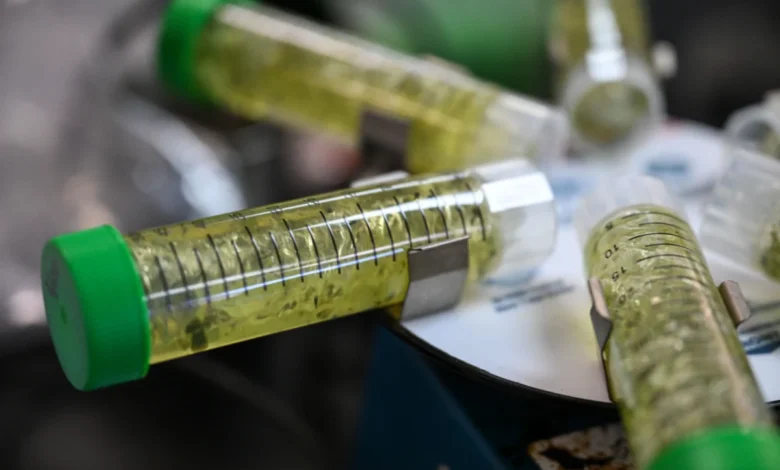
Colorado’s Marijuana Enforcement Division (MED) issued a sweeping industry bulletin on Monday, signaling a rigorous new enforcement era aimed at curbing the illicit use of hemp-derived compounds in the state’s regulated marijuana market. The announcement follows a series of investigations revealing that some licensed operators have been bypassing state safety standards and tax obligations by substituting cheaper, chemically synthesized hemp products for natural marijuana. This regulatory pivot marks a critical juncture for Colorado, which became the first state in the nation to launch a legal retail marijuana market more than a decade ago. According to the MED, the identified "regulatory compliance issues" represent a multi-pronged threat to public health, the economic stability of legitimate businesses, and the tax revenue streams that fund essential state services.
The agency’s bulletin characterized the current situation as a risk to "market integrity and the tax revenue framework," suggesting that the very foundation of the state’s regulated cannabis industry is being undermined by bad actors. For months, industry insiders and investigative journalists have warned that a lack of oversight has allowed a "shadow market" to flourish within the walls of licensed dispensaries. By using hemp-derived distillates instead of marijuana-derived THC, unscrupulous manufacturers have been able to undercut competitors, though often at a significant cost to consumer safety.
The Chemistry of Deception: From CBD to Synthetic THC
The core of the controversy lies in the chemical difference between marijuana and hemp, as well as the economic incentives that drive substitution. Under federal and state law, hemp is defined as cannabis containing less than 0.3% Delta-9 THC. Marijuana, conversely, contains higher concentrations of the psychoactive compound. However, hemp is rich in Cannabidiol (CBD). Through a process known as chemical synthesis or isomerization, manufacturers can use acids and solvents to convert CBD into various forms of THC, including Delta-8, Delta-9, and Delta-10.
This synthetic conversion is significantly cheaper than cultivating and extracting THC from high-potency marijuana plants. Because hemp can be grown on a massive industrial scale with fewer regulatory hurdles and lower taxes, the resulting liquid distillate is a fraction of the cost of traditional marijuana oil. While this provides a competitive advantage to manufacturers of vapes and edibles, Colorado regulators have long maintained that such chemical synthesis is prohibited. The primary concern is that the conversion process often utilizes toxic chemicals that may not be fully purged from the final product.
The dangers of this practice were highlighted in a 2024 investigation into Ware Hause, a popular brand of marijuana vapes. State investigators discovered that the company’s products were not only derived from hemp but were also contaminated with methylene chloride. Methylene chloride is a volatile solvent used in industrial processes such as paint stripping and laboratory chemical extraction. It is strictly prohibited by the MED and was recently banned for most consumer uses by the U.S. Environmental Protection Agency (EPA) due to its links to liver cancer, lung cancer, and severe damage to the nervous and reproductive systems. Following the investigation, Ware Hause surrendered its marijuana license, though its leadership has declined to comment on the findings.
A Chronology of Regulatory Gaps and Legislative Oversight
To understand the current crisis, one must look at the timeline of cannabis regulation in both Colorado and the United States. The 2018 Federal Farm Bill effectively legalized hemp nationwide, inadvertently creating a massive loophole for "intoxicating hemp" products. While Colorado was among the first states to attempt to ban these products, the implementation of those bans has been uneven.
- 2012: Colorado voters pass Amendment 64, legalizing recreational marijuana.
- 2014: The first legal retail sales begin, establishing a "seed-to-sale" tracking system.
- 2018: The U.S. Farm Bill legalizes industrial hemp, leading to a surge in CBD production and the discovery of THC synthesis methods.
- 2021-2023: Colorado regulators begin noticing the influx of synthetic cannabinoids. Despite early bans on Delta-8 THC, enforcement remains difficult due to testing limitations.
- January 2024: A joint investigation by the Denver Gazette and ProPublica reveals that Colorado failed to adopt stringent regulations used by other states to prevent hemp from entering the marijuana supply chain.
- May 2024: The MED identifies widespread "anomalous transactions" in the state’s tracking system, leading to the current crackdown.
The Gazette and ProPublica investigation specifically pointed out that while other states implemented mandatory testing for specific chemical residues associated with hemp conversion, Colorado’s testing protocols remained focused on traditional contaminants like mold, pesticides, and heavy metals. This oversight allowed manufacturers to exploit gaps in the system for years.
Economic Sabotage and the $1-a-Pound Fraud
Beyond the immediate health risks, the MED bulletin detailed a sophisticated scheme of tax evasion and market manipulation. Colorado’s marijuana industry relies on a "seed-to-sale" tracking system known as METRC, which is designed to follow every gram of cannabis from the moment it is planted to the moment it is sold to a consumer. This system is the backbone of the state’s tax collection efforts.
However, investigators have detected a "pattern of noncompliance" regarding how bulk marijuana sales are reported. Some cultivators and manufacturers have been recording sales of unprocessed marijuana at nominal prices—in some instances as low as $1 per pound. In a legitimate market, these products typically command prices between $500 and $600 per pound. By reporting these artificially low prices, companies can drastically reduce their tax liability, as marijuana excise taxes are often based on the value of the transfer.
Industry insiders suggest that these fraudulent transactions are often used to "wash" illicit hemp-derived products into the regulated system. By reporting a large purchase of marijuana at a near-zero price, a manufacturer can create a paper trail that appears to account for the volume of THC they are producing, while actually filling their vapes and edibles with cheap, illegal hemp distillate. This practice has reportedly robbed state and local governments of millions of dollars in revenue, though the MED has yet to release an official estimate of the total loss.
Official Responses and Industry Reactions
The reaction from the legitimate cannabis industry has been one of frustrated relief. For years, law-abiding cultivators and manufacturers have complained that they cannot compete with the "race to the bottom" pricing driven by synthetic hemp products. In a meeting with MED regulators in late April, industry representatives argued that the state’s inaction was punishing those who follow the rules while rewarding bad actors.
The MED’s Monday bulletin appears to be a direct response to these concerns. The agency warned that any company caught using hemp or illicit materials will face "immediate product embargo, license suspension or revocation, and significant monetary penalties." Furthermore, the agency indicated it would refer egregious cases to law enforcement for criminal prosecution.
While the Colorado Hemp Association and the Colorado Hemp Education Association have not yet provided formal comments, the hemp industry at large has historically pushed for more inclusive regulations. Many hemp advocates argue that naturally derived cannabinoids should be part of a unified cannabis market, though they generally distance themselves from the use of hazardous chemicals like methylene chloride.
Broader Implications and the Path Forward
The fallout from Colorado’s crackdown is likely to have national implications. As the "pioneer" state for legalization, Colorado’s regulatory successes and failures often serve as a blueprint for other states. The revelation that its vaunted "seed-to-sale" system could be so easily manipulated by hemp substitution is a wake-up call for regulators in California, Oregon, and Washington, where similar issues have been reported.
On a federal level, the legal landscape remains volatile. Congress recently signaled an intent to close the "hemp loophole" in the upcoming iteration of the Farm Bill, which could ban nearly all intoxicating hemp products nationwide. However, the implementation of such a ban would be complex, and hemp lobbyists are currently mounting a significant campaign to protect their industry. Former President Donald Trump has also weighed in, recently suggesting that he would work with Congress to develop regulations that might allow for some hemp-derived products, further complicating the political outlook.
For Colorado, the immediate future involves a transition to emergency rulemaking. The MED has stated it is exploring "additional modifications to its testing and screening protocols" to specifically detect the chemical signatures of synthetic THC. This may include mandatory testing for a wider array of solvents and catalysts used in the isomerization process.
As the state moves to reclaim its market integrity, the cost of compliance is expected to rise. Increased testing and stricter reporting requirements may further squeeze the margins of small-scale operators. However, for a state that prides itself on a "gold standard" of regulation, the crackdown is seen as a necessary step to ensure that when a consumer walks into a Colorado dispensary, they are purchasing a product that is exactly what it claims to be: natural, tested, and safe marijuana.