Taylor Swift Pursues Unprecedented Trademark Protections for Voice and Likeness to Combat AI-Generated Deepfakes

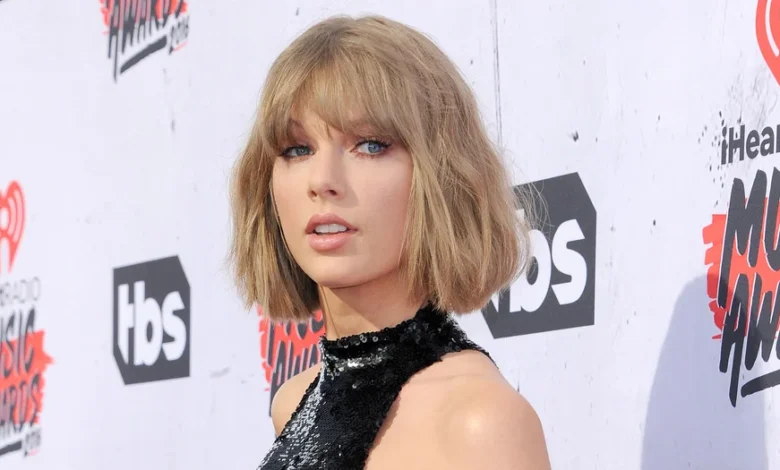
In a move that signals a transformative shift in the intersection of intellectual property law and generative technology, global music icon Taylor Swift has officially moved to trademark her voice and physical likeness. The filings, submitted by TAS Rights Management on April 24, 2026, represent a proactive legal maneuver intended to establish a defensive perimeter against the rising tide of artificial intelligence-generated deepfakes. By seeking federal trademark protection for her distinct vocal timbre and specific visual characteristics, Swift is attempting to close a legal loophole that has left many public figures vulnerable to digital exploitation.
The applications filed with the U.S. Patent and Trademark Office (USPTO) include two distinct audio clips and a specific photograph of the artist. According to legal documentation, the visual filing depicts Swift in a signature performance pose, wearing a sequined outfit and holding a pink guitar—an image synonymous with her record-breaking "Eras Tour." The audio filings are even more groundbreaking, consisting of vocal samples intended to serve as "source identifiers" for her brand. This strategy seeks to treat a human voice not just as a medium for art, but as a protected commercial trademark similar to a logo or a brand name.
The Technological Catalyst: The Rise of the Deepfake
The motivation behind Swift’s latest legal filing is rooted in the rapid proliferation of high-fidelity AI tools. Over the past twenty-four months, the internet has been inundated with AI-generated content that replicates Swift’s voice with uncanny precision. These range from harmless parodies to more malicious "synthetic" endorsements and non-consensual explicit deepfakes. In early 2024, a series of AI-generated images of the singer went viral on social media platforms, prompting international outcry and calls for federal legislation.
Traditional legal frameworks have struggled to keep pace with these developments. While copyright law protects specific sound recordings, it does not necessarily protect the "sound" of a person’s voice itself if that voice is used to create entirely new, unrecorded content. If an AI model is trained on Swift’s discography to generate a "new" song that she never actually sang, copyright law offers a difficult path for litigation because no existing recording was technically "sampled" or "copied" in the traditional sense.
Josh Gerben, a prominent trademark attorney who first highlighted the filings, noted that these applications are specifically designed to address this "gap." By registering her voice as a trademark, Swift’s legal team is positioning her persona as a commercial asset. If a third party uses an AI-generated version of her voice to sell a product or create content that suggests her involvement, Swift could sue for trademark infringement, arguing that the use creates "consumer confusion" regarding the source of the goods or services.
A Chronology of Intellectual Property Advocacy
Taylor Swift’s decision to pursue these trademarks is the latest chapter in a career-long effort to control her creative output and personal brand. Her history of intellectual property (IP) management serves as a blueprint for the modern artist:
- 2014–2015: Swift famously removed her catalog from streaming services like Spotify, citing concerns over the devaluation of music. During this period, she also filed trademarks for specific lyrical phrases from her 1989 album, such as "this sick beat," to prevent unauthorized merchandising.
- 2019–Present: Following a highly publicized dispute over the ownership of her master recordings, Swift began the process of re-recording her first six studio albums. By releasing "Taylor’s Version" of her records, she effectively regained control over her music through the ownership of new master files.
- Early 2024: The viral spread of non-consensual AI deepfakes of Swift led to a surge in legislative interest, including the introduction of the "NO FAKES Act" in the U.S. Senate, which aimed to protect individuals’ voices and likenesses from unauthorized digital replicas.
- Early 2026: Actor Matthew McConaughey successfully navigated similar filings to protect his persona, providing a legal proof-of-concept that Swift’s team has now adopted and expanded upon.
The Legal Strategy: Trademark vs. Right of Publicity
The shift toward trademark law is a calculated move to gain federal protection. Historically, celebrities have relied on the "Right of Publicity," which is a state-level legal doctrine that prevents the unauthorized commercial use of a person’s name, likeness, or other recognizable aspects of their persona. However, Right of Publicity laws vary significantly from state to state; Tennessee and California have robust protections, while other states have very little.
By moving into the realm of the USPTO, Swift is seeking a uniform, federal standard of protection. Trademark law, governed by the Lanham Act, provides a powerful set of tools for enforcement across all fifty states.
"Registering a celebrity’s spoken voice is a new use of trademark registration," Gerben wrote in a recent analysis. "In the past, singers have been able to rely on copyright law to protect recorded music. But AI technologies now allow users to generate entirely new content that mimics an artist’s voice without copying an existing recording, creating a gap that trademarks may help fill."
The application for the "pink guitar" image is equally strategic. By trademarking a specific visual "look," Swift is essentially creating a "trade dress" for her persona. This makes it legally hazardous for AI companies to train models to generate images that replicate her specific aesthetic for commercial gain.
Supporting Data: The Economic Impact of AI Misuse
The urgency of these filings is underscored by the economic stakes involved. According to data from Sensity AI, a firm specializing in deepfake detection, the volume of AI-generated video content online has increased by over 900% since 2023. A significant portion of this content targets high-profile celebrities with massive commercial value.
For an artist like Swift, whose "Eras Tour" became the first tour in history to gross over $1 billion, the "Swift" brand is an economy unto itself. Unauthorized AI endorsements could potentially dilute her brand value or lead to millions of dollars in lost sponsorship revenue. Market analysts estimate that the music industry loses approximately $500 million annually to various forms of digital piracy and unauthorized AI usage, a figure that is projected to grow as technology becomes more accessible.
Industry Reactions and Broader Implications
The music and film industries are watching the outcome of Swift’s applications with intense interest. Organizations such as SAG-AFTRA and the Recording Industry Association of America (RIAA) have been vocal supporters of stricter controls on generative AI.
A spokesperson for the RIAA commented, "The unauthorized use of an artist’s voice is not just a technological gimmick; it is a theft of identity and a threat to the livelihood of creators. We support all legal avenues, including trademark innovation, that empower artists to defend their craft."
However, some legal scholars warn of the potential for "IP overreach." Critics argue that if celebrities are allowed to trademark their voices and faces, it could stifle legitimate forms of expression, such as parody, satire, and transformative art. The USPTO will have to weigh Swift’s right to protect her commercial identity against the First Amendment rights of creators who use AI for non-commercial or commentary purposes.
If Swift’s applications are approved, it will likely trigger a gold rush of similar filings from other A-list celebrities, athletes, and influencers. This could lead to a fundamental restructuring of how "fame" is managed in the digital age, where a person’s very existence is treated as a registered trademark.
Conclusion: Setting a Precedent for the Digital Era
Taylor Swift’s decision to trademark her voice and likeness is more than a defensive play; it is a declaration of sovereignty in an era where digital identity is increasingly fluid. By leveraging the USPTO, she is attempting to anchor her physical and vocal identity in a legal framework that predates AI but must now evolve to contain it.
As the USPTO reviews the applications for the two audio clips and the "pink guitar" image, the legal community remains divided on whether trademark law is the appropriate vessel for this protection. Regardless of the outcome, Swift has once again positioned herself at the vanguard of the music industry’s legal evolution. Her actions highlight a critical truth of the 21st century: in a world where technology can replicate anything, the only thing left of value is the legally enforceable right to be oneself.
The result of this filing will likely serve as a landmark precedent, determining whether the human voice can officially function as a brand in the eyes of the law, and providing a new set of weapons for creators in the ongoing battle against the unregulated frontier of artificial intelligence.