U.S. State Department to Issue Commemorative 250th Anniversary Passports Featuring Portrait of President Donald Trump

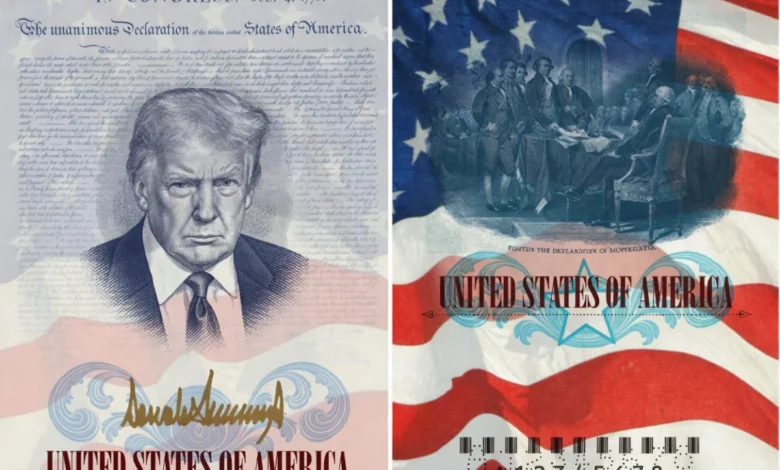
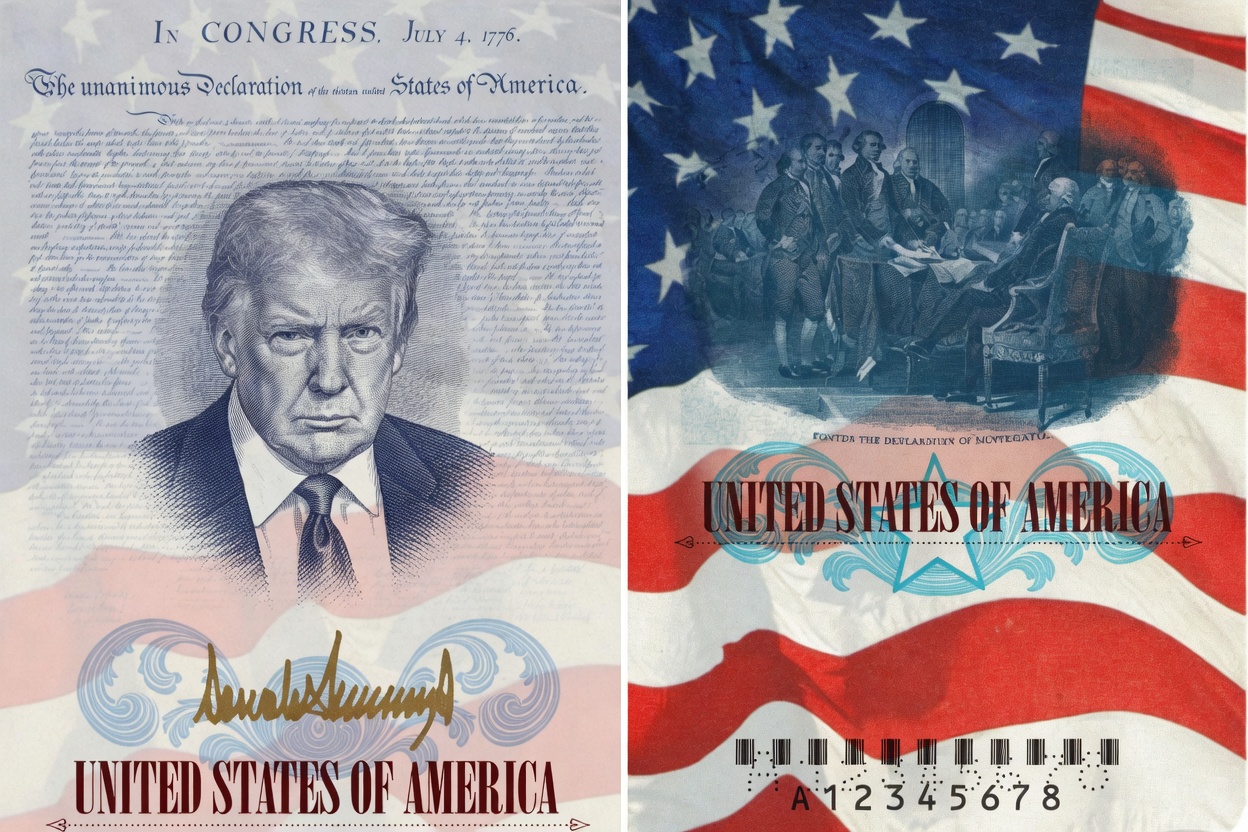
The United States Department of State has announced plans to release a limited-edition commemorative passport to mark the nation’s 250th anniversary, featuring a portrait of President Donald Trump and his signature rendered in gold ink on the interior pages. Scheduled for release around July 4, 2026, the document is designed to coincide with the peak of the United States Semiquincentennial celebrations. This move represents a significant departure from traditional American passport design, which has historically focused on national landmarks, historical documents, and deceased historical figures rather than living political leaders.
According to internal communications and reports first highlighted by Politico, the commemorative passport is intended to serve as a high-profile souvenir of the "America 250" milestone. While the standard U.S. passport underwent a significant redesign in 2021 with the introduction of the "Next Generation Passport" (NGP) series, this new variant will specifically incorporate the likeness of the 47th President. The State Department confirmed that the design features were selected to reflect the current administration’s emphasis on national identity during the historic anniversary of the Declaration of Independence.
Legal Authority and Design Discretion
The authority to determine the appearance and issuance of United States passports rests primarily with the Executive Branch. Under 22 U.S. Code § 211a, the Secretary of State is authorized to grant and issue passports, and cause passports to be granted, issued, and verified in foreign countries, under such rules as the President shall designate and prescribe. This legal framework provides the Department of State with broad latitude regarding the aesthetic and functional elements of travel documents.
Legal experts note that while federal law dictates the security requirements and the "proof of citizenship" function of the document, the specific artwork, quotes, and imagery used on the interior pages are largely a matter of administrative discretion. Historically, this discretion has been used to highlight themes of American liberty, such as the preamble to the Constitution, the Gettysburg Address, and depictions of the American West. The decision to include a portrait of a sitting president, however, places the 2026 commemorative edition in a unique category of federal documentation.
The State Department has clarified that this document is not a "special issuance passport," such as those designated for diplomatic or official government travel. Instead, it is a "commemorative artwork variant" of the standard blue-covered tourist passport. It remains unclear whether this specific version will be available to the general public upon request or if it will be the default issuance for specific processing centers, such as the Washington Passport Agency.
Historical Precedent and International Comparisons
The inclusion of a sitting president’s portrait marks a first in the history of the United States passport. While previous versions of the document have featured presidents, they have done so through the depiction of historical monuments. The 2007 and 2021 passport series both include images of Mount Rushmore, which features George Washington, Thomas Jefferson, Theodore Roosevelt, and Abraham Lincoln. However, the direct inclusion of a contemporary leader’s portrait and signature is an unprecedented shift in American consular practice.
When compared to international standards, the move is equally distinctive. Very few modern democracies feature living heads of state or government on their travel documents. For example, the People’s Republic of China does not include the image of its President or Premier on its biometric passports, opting instead for regional landscapes and symbols of national heritage. Similarly, nations such as Turkmenistan, which have historically maintained high levels of personality-driven iconography in public spaces, do not typically feature the head of state on the passport itself.
The closest contemporary parallel is found in the United Kingdom, though the implementation differs fundamentally. British passports are issued in the name of the reigning monarch. The first page of a UK passport contains a request from "His Britannic Majesty’s Secretary of State" for the bearer to pass freely. However, the passport does not feature a photograph of King Charles III. Furthermore, as the sovereign is the authority in whose name the document is issued, the King himself does not possess a passport. Other members of the Royal Family, including Queen Camilla and the Prince of Wales, are required to carry standard passports for international travel.
The Semiquincentennial Timeline
The release of the commemorative passport is part of a broader federal effort to celebrate the 250th anniversary of the United States. The U.S. Semiquincentennial Commission, established by Congress, has been tasked with coordinating festivities across the country. The timeline for the passport release is strategically aligned with these national events:
- April 2026: Official announcement of the commemorative passport design and the commencement of specialized printing runs.
- May 2026: Finalization of distribution protocols for the Washington D.C. Passport Office and regional agencies.
- July 4, 2026: The official launch of the commemorative edition, coinciding with national Independence Day celebrations.
- Late 2026: Expected conclusion of the limited-run printing, returning to the standard Next Generation Passport design.
The administration has signaled that there are no current plans to make the Trump portrait the permanent standard for all future U.S. passports. Instead, it is framed as a "limited-run" item for citizens renewing or applying for travel documents during the anniversary year.
Official Responses and Political Reaction
The announcement has elicited a range of reactions from political figures and international observers. The White House utilized social media to highlight the intersection of the passport announcement with a high-profile state visit from King Charles III. On April 28, 2026, the official White House social media account posted a photograph of President Trump and King Charles III with the caption "TWO KINGS," accompanied by a crown emoji. This post was widely interpreted as a "trolling" gesture, leaning into the president’s penchant for provocative branding.
Supporters of the administration have praised the move as a bold celebration of American leadership during a historic milestone. They argue that the passport serves as a symbol of the "America First" era and a unique memento of the 250th anniversary. Conversely, critics have raised concerns regarding the politicization of a neutral federal document. Some members of Congress have suggested that the use of a sitting president’s likeness on a passport borders on a "cult of personality" more commonly associated with authoritarian regimes, though no formal legislative challenges have been filed as of late April.
King Charles III, during his visit to Washington, reportedly engaged in lighthearted diplomatic "trolling" of his own, though the specifics of his remarks were kept within the bounds of royal protocol. The juxtaposition of the British monarch—who needs no passport—and the American president—whose face will now grace millions of them—provided a unique backdrop for the bilateral meetings.
Technical Specifications and Security Features
The State Department’s Bureau of Consular Affairs has emphasized that despite the commemorative artwork, the 2026 passport will maintain the highest levels of security. The "Next Generation" features will remain the foundation of the document, including:
- Polycarbonate Data Page: A sturdy, multi-layered plastic page that houses the bearer’s personal information and a laser-engraved photo.
- Gold Ink Signatures: The President’s signature will be applied using a specialized metallic ink that is difficult to replicate and is integrated into the security laminate of the interior pages.
- Tactile Features: Raised printing and micro-text that can be felt by customs officials to verify authenticity.
- Enhanced Images: The portrait of President Trump is expected to be rendered using high-definition security printing techniques, likely incorporating holographic elements that shift when viewed from different angles.
For citizens looking to obtain the commemorative version, the State Department has suggested that it may be available primarily through the D.C. Passport Office or via a specific "opt-in" checkbox on the DS-82 renewal form, though final logistics are still being finalized. For those wishing to avoid the commemorative design, officials have noted that the standard NGP design will remain in circulation and that there is no requirement to renew early if a citizen prefers the traditional imagery.
Broader Impact and the Evolution of the Passport
The introduction of this passport variant highlights the evolving nature of the travel document. In the ancient world, the concept of "citizenship" acted as a passport in itself. The Latin phrase civis romanus sum ("I am a Roman citizen") was famously a safeguard for travelers; the perceived power and retributive capability of the Roman Empire ensured that its citizens could often travel unmolested.
In the modern era, the requirement for a physical passport is a relatively recent phenomenon. Prior to World War I, many nations allowed international travel without formal documentation. The standardized, secure booklet we recognize today emerged from the geopolitical shifts of the 20th century. By incorporating the likeness of a sitting president into this document, the U.S. government is asserting a specific vision of national identity and executive authority on the global stage.
As the 2026 Semiquincentennial approaches, the "Trump Passport" will likely remain a point of significant public discourse. Whether viewed as a patriotic tribute or a controversial break from tradition, the document will serve as a permanent record of the aesthetic and political priorities of the United States at its 250-year mark. For now, the State Department maintains that its primary goal remains the efficient processing of travel documents, ensuring that regardless of the artwork inside, the U.S. passport remains the "gold standard" for international mobility.