The Vanishing Federal Cases Inside the Crackdown on Immigration Protesters and the Collapse of Criminal Charges

In June 2025, a quiet residential street in East Los Angeles was transformed into a tactical theater. National Guard soldiers in desert camouflage cordoned off East Sixth Street, blocking access to a nearby elementary school while federal agents deployed flash-bang grenades into a small family home. Their target was Alejandro Orellana, a 30-year-old Marine Corps veteran and UPS employee. Orellana was not a known violent criminal or a foreign operative; he was a man seen on video distributing water, food, and face shields to protesters opposing the Trump administration’s immigration enforcement operations.
The arrest was a highly choreographed media event. Bill Essayli, the head of the federal prosecutor’s office in Los Angeles, arrived on the scene accompanied by a Fox News crew. As Orellana and his family were led out in handcuffs, Essayli donned an FBI windbreaker and told television cameras that the operation had dismantled a "well-orchestrated and coordinated" conspiracy. Orellana was charged with conspiracy and aiding and abetting civil disorder—statutes typically reserved for organized crime syndicates and drug cartels.

However, the high-profile case against Orellana disintegrated within weeks. A search of his home yielded no incriminating evidence of an insurrectionist plot, and prosecutors were unable to identify any other co-conspirators. By late July, the charges were quietly dismissed. The Orellana case, while dramatic, was not an anomaly. It was the first visible crack in a massive, nationwide legal strategy that prioritized spectacle and deterrence over sustainable criminal prosecution.
A Pattern of Failed Prosecutions and Systemic Overreach
An investigation conducted by ProPublica and FRONTLINE, involving a comprehensive review of social media, court records, and news reports, has identified more than 300 protesters and bystanders arrested by federal agents during immigration sweeps over a 10-month period. These individuals were frequently accused of serious crimes, including assaulting federal officers or interfering with law enforcement activities. Yet, when these cases reached the courtroom, the narrative presented by the government often crumbled.
The data reveals a striking discrepancy. In the federal justice system, U.S. attorneys typically secure convictions or guilty pleas in over 90% of the cases they bring. In 2022, for instance, only 8.2% of federal criminal cases were dismissed. In contrast, more than a third of the cases involving immigration protesters were dismissed by prosecutors, refused by the courts, or resulted in acquittals at trial. This failure rate suggests a systemic issue with the quality of arrests being made on the ground.

Legal experts and former prosecutors argue that the administration adopted an "arrest first, justify later" mentality. Cuauhtémoc Ortega, the chief federal defender for the Central District of California, noted that the current situation is unprecedented. The aggressive tactics appear designed to clear the streets and intimidate dissenters rather than to address actual criminal conduct.
The Chronology of the Urban Sweeps
The crackdown began in earnest in June 2025 in Southern California under the leadership of Gregory Bovino, a veteran Border Patrol chief. Bovino, accustomed to the remote desert regions of the Imperial Valley, brought a paramilitary approach to urban policing. Body-worn camera footage captured Bovino instructing his agents to "arrest as many people that touch you as you want to," and promising to ship in "tractor trailers full" of "less lethal" weapons like pepper balls and tear gas.
The strategy quickly moved beyond California. By October 2025, Bovino’s forces had arrived in Illinois, where they focused on activists documenting the movements of Immigration and Customs Enforcement (ICE) convoys. In Chicago, the operations took on a political dimension. Then-Homeland Security Secretary Kristi Noem appeared at protest sites wearing tactical gear, accompanied by pro-administration social media influencers like Benny Johnson.

The pattern of arrests followed a predictable cycle:
- The Confrontation: Agents would surge into crowds of protesters, often without clear dispersal orders, and "randomly grab" individuals.
- The Media Blast: DHS and allied influencers would post photos of the arrestees in handcuffs, labeling them "domestic terrorists" or "violent activists."
- The Legal Collapse: Once defense attorneys obtained bystander video or body-cam footage, the official accounts were frequently proven false, leading to the dismissal of charges.
Case Studies in Discrepancy: Chicago and North Carolina
The case of Cole Sheridan in Broadview, Illinois, serves as a poignant example of this cycle. Sheridan was accused of attacking Chief Bovino and causing a groin injury that required hospitalization. He spent several days in jail facing felony charges. However, a bystander’s video eventually surfaced showing that Sheridan had not assaulted Bovino at all; he had merely been standing nearby and shouting. Faced with undeniable visual evidence that contradicted the agents’ statements, the U.S. Attorney’s office was forced to dismiss the case "in the interest of justice."
In North Carolina, Heather Morrow, a 45-year-old school bus driver, was charged with felony assault. The Department of Justice issued a press release claiming she had jumped on an ICE officer’s back. Social media footage later showed the opposite: an officer had tackled Morrow from behind while she was simply chanting and banging on a metal dish. While her felony charges were dropped, the government replaced them with misdemeanor charges, a tactic critics say is used to save face and maintain some level of control over the defendant through pretrial probation.

The Training Gap and Misuse of Specialized Forces
A primary reason for the high failure rate of these cases is the lack of specialized training among the agents deployed. Border Patrol agents are trained for the "scoop and carry" operations of the desert, not the complex dynamics of urban crowd control. Similarly, ICE agents, while working in cities, rarely have experience managing hostile, First Amendment-protected demonstrations.
Christy Lopez, a former Justice Department attorney who investigated law enforcement misconduct, observed that the agents’ behavior in these sweeps was "on par with the worst protest policing" seen in any department. The use of federal agents for street-level policing—a task usually reserved for local law enforcement—created a volatile environment where agents frequently violated their own rules regarding the use of force.
Furthermore, the involvement of the FBI in these sweeps was an unusual departure from their standard operating procedure. Typically, the FBI spends months building a case before making an arrest. In these instances, they were questioning protesters about who paid for their transportation, attempting to find evidence of a grand "conspiracy" that prosecutors were rarely able to prove in court.

Official Responses and the "Chilling Effect"
The Department of Homeland Security (DHS) has consistently defended its actions, stating that while the First Amendment protects peaceful assembly, it does not protect "rioting." In statements, the department emphasized that its officers are trained to use the "minimum amount of force necessary" and that they have been repeatedly attacked by "rioters and terrorists."
However, the U.S. Attorney for Chicago, Andrew Boutros, acknowledged a more nuanced reality, stating that his office’s willingness to dismiss cases reflects a commitment to "do the right thing" when conduct falls outside of criminal activity. This admission stands in contrast to the inflammatory rhetoric used by DHS leadership on social media.
The impact of these arrests extends far beyond the courtroom. Jared Fishman, executive director of the Justice Innovation Lab and a former career prosecutor, argues that the goal of the administration may not have been convictions at all. "If the goal… is to keep people out of the streets, then it doesn’t matter if the people are getting convicted," Fishman said. The trauma of arrest, the cost of legal fees, and the public shaming on social media create a "chilling effect" that discourages citizens from exercising their right to protest.

Broader Implications for the Justice System
The surge in low-level protest and immigration cases has also strained the resources of the Department of Justice. Carley Palmer, a former federal prosecutor, noted that the focus on these cases has shifted attention away from complex prosecutions that the DOJ is uniquely suited for, such as financial fraud, environmental crimes, and civil rights violations.
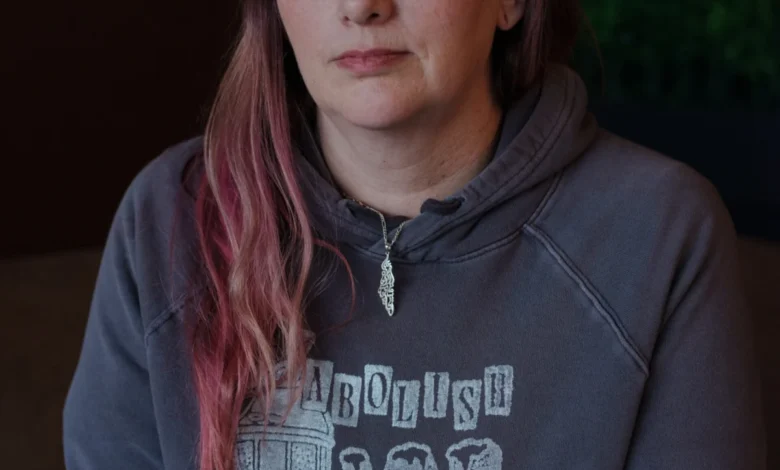
As of early 2026, dozens of cases remain pending in Minnesota and California. The demotion of Chief Bovino in late January, following the fatal shooting of two activists in Minneapolis, signaled a potential shift in the administration’s tactical approach, but the legal fallout continues. For individuals like Alejandro Orellana and Rebecca Ringstrom, the ordeal has left lasting scars—lost jobs, damaged reputations, and a deep-seated fear of their own government.
The investigation into these "vanishing" cases highlights a period of significant tension between federal law enforcement and constitutional protections. While the government maintains it is upholding the rule of law, the data suggests a pattern of overreach that has tested the limits of the federal judiciary and the resilience of the First Amendment.
Related posts: