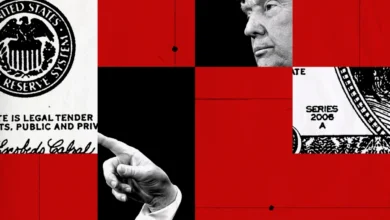
Dismantling the Guardrails: How the Systematic Overhaul of Federal Election Oversight Reshapes the American Democratic Landscape

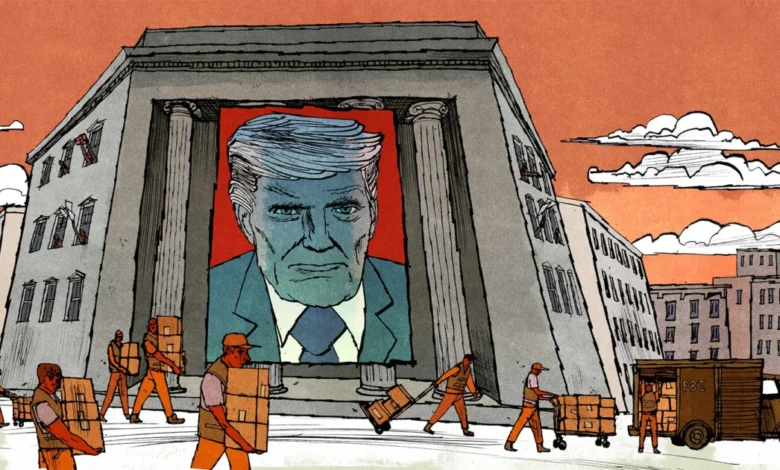
In mid-December 2020, as claims of a stolen presidential election reached a fever pitch, a group of federal officials gathered in a fortified, windowless room at the Department of Justice headquarters in Washington, D.C. Summoned by then-Attorney General William Barr, the group included experts from the Cybersecurity and Infrastructure Security Agency (CISA) and top FBI officials. The objective was to address a specific conspiracy theory consuming the Oval Office: the claim that voting machines in Antrim County, Michigan, had been hacked to flip votes from Donald Trump to Joe Biden.
During the meeting, the nonpartisan specialists from CISA provided a definitive answer. They explained that a local clerk’s error in updating ballot styles had caused a temporary software glitch, which was quickly identified and corrected. There was no evidence of a cyberattack or systemic fraud—a conclusion later verified by a physical hand count of the ballots. Following the briefing, Barr reportedly signaled his intent to present these findings to the president, despite knowing it would likely lead to his dismissal. Days later, after telling the president that the claims were "detached from reality," Barr resigned.
While the institutional guardrails of the federal government held in 2020, a comprehensive investigation into the current state of federal election oversight reveals that those very defenses have been systematically dismantled. As the 2026 midterm elections approach, the cadre of career professionals who resisted the effort to overturn the 2020 results has been largely replaced by political loyalists, many of whom were active participants in the movement to challenge the legitimacy of the previous national election.
The Evolution of Federal Election Oversight: 2020 to 2026
The resistance to election interference in 2020 was characterized by a decentralized but firm alignment of career officials across the Department of Justice (DOJ), the Department of Homeland Security (DHS), and the intelligence community. At the time, CISA, an agency created during the first Trump administration to protect critical infrastructure, served as a primary bulwark against disinformation. Its "Rumor Control" website and its joint statement declaring the 2020 election "the most secure in American history" were pivotal in maintaining public confidence, even as the agency’s director, Chris Krebs, was fired for his refusal to validate fraud claims.
However, since the beginning of 2025, the federal approach to election security has undergone a radical transformation. Reporting indicates that at least 75 career officials involved in election integrity across multiple agencies have been removed, resigned, or reassigned. In their place, the administration has installed approximately two dozen officials with direct ties to the election denial movement.
The Dismantling of CISA and Intelligence Hubs
The first phase of this overhaul targeted the agencies responsible for technical security and foreign influence monitoring. In February 2025, DHS leadership placed the CISA staff focused on countering disinformation on administrative leave. Shortly thereafter, the agency’s election security work—which included physical and cybersecurity assessments for local election offices—was frozen. Today, the three dozen specialists who previously managed these portfolios have been entirely purged from the agency.
Simultaneously, the administration dismantled the National Security Council’s election security group and the Foreign Malign Influence Center within the Office of the Director of National Intelligence (ODNI). The Foreign Malign Influence Center had been instrumental in stymieing interference efforts from Russia, China, and Iran during the 2024 cycle. While the administration argues these functions were folded into other departments for "efficiency," former national security officials contend that the federal government’s ability to coordinate a real-time response to foreign threats has effectively ceased.
A New Architecture at the Department of Justice
The shifts within the Department of Justice have been equally seismic, particularly within the Public Integrity Section (PIN) and the Civil Rights Division. Historically, these units operated with a degree of independence to ensure that law enforcement actions remained insulated from partisan politics.
The Collapse of the Public Integrity Section
The Public Integrity Section, once a 36-person unit responsible for overseeing sensitive corruption and election-related cases, has been reduced to just two staff members. This decline followed the mass resignation of top staff in early 2025 after they were directed to dismiss corruption charges against the former mayor of New York City. Sources familiar with the department’s operations indicate that the administration no longer mandates PIN review for politically sensitive cases, removing a critical check on the use of federal investigative power for political ends.
Reorienting the Civil Rights Division
The Civil Rights Division’s voting section, which traditionally focused on enforcing the Voting Rights Act and combating racial discrimination, has seen its mission inverted. Under the leadership of Assistant Attorney General Harmeet Dhillon, the section’s focus has shifted toward enforcing executive orders aimed at "citizenship verification." At least four newly appointed lawyers in this section previously participated in legal challenges to the 2020 election results. This shift has resulted in the DOJ litigating against the very voting rights groups it once partnered with to ensure ballot access.
The Rise of "Team America" and Federalized Election Research
Behind the scenes at DHS and the White House, a small group of political appointees, colloquially known as "Team America," has been working to operationalize the president’s executive orders on elections. This group includes David Harvilicz, a DHS assistant secretary, and Heather Honey, a former activist whose claims about the 2020 Pennsylvania vote were famously cited by the president.
The primary objective of this group has been the creation of digital tools to purge voter rolls. By merging data from various federal agencies, the group aims to identify noncitizens on state voter lists. While the administration claims its "Systematic Alien Verification for Entitlements" (SAVE) system is a reliable tool for election integrity, experts have pointed to significant inaccuracies in the data, noting that many flagged individuals are, in fact, naturalized citizens.
The Fulton County Raid: A Case Study in the New Guard
The most visible manifestation of this new federal assertiveness occurred in late January 2026, when the FBI conducted an unprecedented raid in Fulton County, Georgia, to seize 2020 election materials. The raid was the culmination of a months-long effort led by Kurt Olsen, the White House director of election security and integrity.
Olsen, a lawyer who was previously sanctioned by judges for making baseless allegations about the 2020 vote, reportedly bypassed traditional protocols to pressure the FBI’s Atlanta field office. When the head of that office, Paul Brown, resisted the seizure on the grounds that the allegations had already been debunked by the Georgia Election Board, he was forced into retirement. His replacement, along with a specially appointed prosecutor from Missouri, Thomas Albus, moved forward with the search warrant, citing a report authored by a longtime ally of Olsen.
Chronology of the Federal Election Overhaul
- December 2020: AG William Barr meets with CISA/FBI experts; confirms no systemic fraud in Antrim County; subsequently resigns.
- January 2021 – January 2025: Career officials at CISA and DOJ establish robust protocols for state-federal coordination on election security.
- February 2025: Trump administration returns to office; places CISA disinformation specialists on leave; freezes election security assessments.
- March 2025: Executive Order issued to exert federal control over mail-in voting and voter eligibility; met with immediate legal challenges.
- August 2025: The Foreign Malign Influence Center (ODNI) is officially dismantled.
- Late 2025: Kurt Olsen meets with FBI Atlanta officials to demand seizure of Fulton County ballots; Paul Brown is ousted shortly thereafter.
- January 2026: FBI conducts raid in Fulton County; DOJ begins suing states for confidential voter roll data.
- March 2026: Second Executive Order on citizenship verification is issued; state secretaries of state report a "demolished" trust in federal partnerships.
Official Responses and Counter-Arguments
The Trump administration has consistently defended these changes as necessary measures to restore faith in the democratic process. White House spokesperson Abigail Jackson stated, "Election integrity has always been a top priority for President Trump. The President will do everything in his power to defend the safety and security of American elections and to ensure that only American citizens are voting in them."
Spokespeople for the DOJ and DHS have echoed this sentiment, arguing that the reduction in staff and the closing of certain centers were budgetary and mission-alignment corrections. They contend that the previous structure was overstepping its statutory authority by engaging in "censorship" and "electioneering" under the guise of combating disinformation.
However, Democratic lawmakers and state election officials have characterized the moves as a coordinated effort to nationalize the 2026 midterms. Senator Alex Padilla of California warned that the upcoming elections would serve as a "stress test" for the republic, noting that "more election deniers have access to federal power than ever before."
Broader Impact and Implications for 2026
The dismantling of the "guardrails" has resulted in a profound breakdown of the partnership between federal and state election authorities. Secretaries of State from Maine to Colorado have reported that they now view the federal government as an adversary rather than a resource.
The loss of intelligence-sharing channels—such as the FBI command posts and CISA’s physical security assessments—leaves states and localities more vulnerable to both domestic unrest and foreign cyberattacks. Experts suggest that if a genuine threat to the 2026 election were to emerge, the current federal infrastructure is designed more for "narrative control" and "post-election investigation" than for the real-time prevention of interference.
As the 2026 midterms approach, the federal government has been transformed from an objective arbiter of election security into an active participant in the debate over the legitimacy of the vote. With the Public Integrity Section hollowed out and "Team America" at the helm of DHS election policy, the institutional capacity to say "no" to political pressure has been largely extinguished. The integrity of the upcoming vote may now depend less on federal guardrails and more on the resilience of state courts and local election administrators.
Related posts: