The Rise of Mass Timber: How Engineered Wood is Redefining Urban Architecture and Climate Resilience

The modern skyline, long defined by the cold rigidity of steel and the gray expanse of concrete, is undergoing a fundamental transformation as architects return to the world’s oldest building material. In an era defined by the dual pressures of rapid urbanization and the escalating climate crisis, "mass timber"—a category of engineered wood products—has emerged as a viable, sustainable, and high-performance alternative to traditional carbon-intensive materials. By leveraging advanced engineering techniques such as cross-lamination and glue-lamination, designers are now constructing high-rise buildings that mimic the evolutionary resilience of a forest, offering a blueprint for a more sustainable built environment.
The New Vanguard of Vertical Forestry
The momentum behind mass timber is best illustrated by a series of record-breaking projects across North America. In 2022, the architectural community turned its attention to Milwaukee, Wisconsin, where the Ascent MKE building opened its doors. Standing at 284 feet and encompassing 25 stories, it officially became the world’s tallest timber-concrete hybrid building. This milestone proved that wood could compete at the scale previously reserved for steel skeletons.
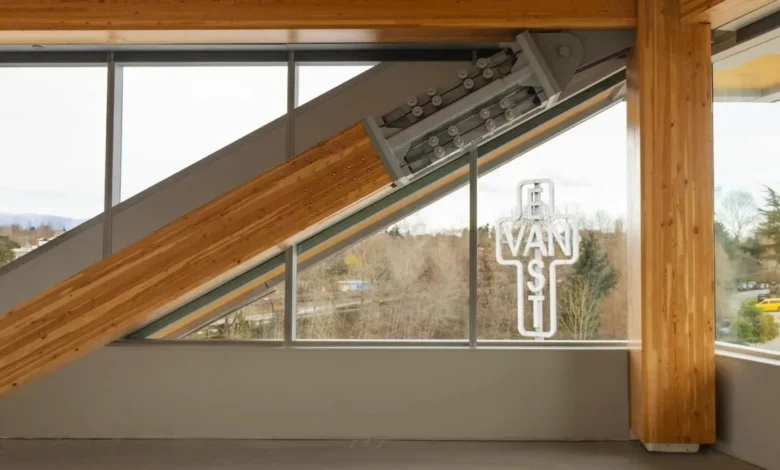
More recently, in early 2024, construction crews in Vancouver, British Columbia, completed "The Hive." This 10-story office building represents a different kind of milestone: it is currently North America’s tallest brace-framed, seismic-force-resisting timber structure. Designed by the architectural firm Dialog, The Hive utilizes a sophisticated honeycomb-like exterior and internal damping systems to navigate the seismic risks of the Pacific Northwest. Lindsay Duthie, an architect at Dialog, noted that the industry is essentially "going back to how we used to build," but with the added benefit of modern precision and structural science.
The Engineering Behind the Material
Mass timber is not to be confused with the "stick-frame" construction common in residential housing. It refers to large-scale structural panels, beams, and columns typically made by bonding layers of wood together. The two primary products driving this revolution are Cross-Laminated Timber (CLT) and Glue-Laminated Timber (Glulam).

- Cross-Laminated Timber (CLT): Consists of layers of kiln-dried lumber stacked in alternating directions and bonded with structural adhesives. This cross-layering provides immense rigidity in two directions, similar to the strength of a reinforced concrete slab but at a fraction of the weight.
- Glue-Laminated Timber (Glulam): Comprises individual wood laminations oriented in the same direction. This material is exceptionally strong when used for vertical columns or horizontal beams, often outperforming steel in strength-to-weight ratios.
Because these materials are engineered, they do not require the harvesting of old-growth "behemoth" trees. Instead, they can be manufactured from smaller, faster-growing species and second-growth timber. This allows for a more sustainable harvesting cycle and supports forest management efforts aimed at reducing wildfire risks by thinning overcrowded stands.
A Chronology of the Mass Timber Movement
The path to the current "timber renaissance" has been paved over several decades of technical refinement and regulatory shifts:
- 1990s: Cross-Laminated Timber is first developed and utilized in Austria and Germany, gaining traction across Europe as a sustainable alternative for mid-rise buildings.
- 2011: The first CLT manufacturing plant in North America opens, signaling the beginning of a domestic supply chain.
- 2016: The 18-story Brock Commons Tallwood House is completed at the University of British Columbia, serving as a global proof-of-concept for mass timber’s speed of construction and safety.
- 2021: The International Building Code (IBC) is updated to include three new construction types (Type IV-A, B, and C), allowing for mass timber buildings to reach up to 18 stories by right, significantly reducing the bureaucratic hurdles for developers.
- 2022-2024: Completion of landmark structures like Ascent MKE and The Hive, pushing the boundaries of height and seismic resilience.
Environmental Imperatives and Carbon Sequestration
The primary driver for the adoption of mass timber is its unique relationship with carbon. The construction industry is responsible for approximately 40% of global CO2 emissions, with the production of cement and steel alone accounting for roughly 15% of that total. Concrete production is particularly carbon-intensive due to the chemical reaction required to create clinker, which releases vast amounts of trapped CO2.
In contrast, trees are natural carbon sinks. Through photosynthesis, they capture atmospheric CO2 and store it in their fibers. When a tree is harvested and converted into mass timber, that carbon remains sequestered within the building’s structure for the duration of its life—often 50 to 100 years or more. Research suggests that replacing steel and concrete with wood can reduce a building’s embodied carbon footprint by 25% to 45%. Furthermore, because mass timber components are prefabricated in factories and assembled on-site, construction is quieter, faster, and produces significantly less waste.
Resilience in the Face of Earthquakes and Fire
One of the most persistent hurdles for mass timber has been public and regulatory concern regarding safety—specifically fire and seismic performance. However, recent large-scale testing has largely debunked these fears.

Seismic Performance:
Timber is naturally lighter and more flexible than concrete, which is an inherent advantage during an earthquake. To further enhance this, engineers have developed "rocking wall" systems. At the University of California, San Diego (UCSD), researchers recently tested a 10-story timber structure on a massive shake table. The building featured a central mass timber core anchored by high-strength steel rods. After being subjected to 88 simulated earthquakes, the structure remained fully intact with no structural damage.
The Hive in Vancouver employs a different technology: Tectonus dampers. These devices act as giant shock absorbers, dissipating energy and automatically recentering the building after a seismic event. Alessandro Palermo, a structural engineer at UCSD, emphasizes that these designs create "resilient structures" that can be occupied immediately after a disaster, rather than requiring demolition.
Fire Safety:
While it may seem counterintuitive, large mass timber beams are highly fire-resistant. When exposed to flame, the outer layer of a thick timber panel chars at a predictable rate. This "char layer" acts as an insulating barrier, protecting the inner core of the wood and maintaining its structural integrity. Unlike steel, which can soften and fail abruptly at high temperatures, mass timber retains its strength for extended periods, providing ample time for evacuation and firefighting efforts.
Economic and Forestry Implications
The growth of the mass timber industry has significant implications for rural economies and forest health. In the United States, the Forest Service has actively promoted mass timber as a way to create a market for "low-value" wood. By removing small-diameter trees and brush that act as "ladder fuels" for catastrophic wildfires, agencies can restore forest health while providing raw material for CLT production.
However, the transition is not without challenges. The cost of mass timber can still be higher than traditional materials in certain markets, primarily due to the nascent supply chain and the need for specialized labor. Furthermore, critics argue that the carbon benefits are only realized if the forests are managed under strict sustainability standards, such as those provided by the Forest Stewardship Council (FSC).

Industry Reactions and the Future of Urban Design
The architectural community is increasingly viewing mass timber not just as a structural choice, but as a "biophilic" one. Biophilia refers to the innate human tendency to seek connections with nature. Exposed wood interiors have been shown to reduce stress levels and improve productivity among occupants.
Katie Mesia, firmwide design resilience co-leader at Gensler, notes that wood has a "tactile quality" that people instinctively want to interact with. "That desire to be close to nature has always been there," she said.
Looking ahead, the "plyscraper" trend shows no signs of slowing. As more cities adopt the 2021 IBC standards and manufacturing capacity increases, mass timber is poised to move from a niche architectural statement to a mainstream solution for the housing and climate crises. The evolution of the skyscraper, it seems, is no longer just about reaching higher into the clouds—it is about doing so in a way that respects the biological systems that made such heights possible in the first place. By integrating the ancient resilience of the forest with 21st-century engineering, the cities of the future may once again be built of wood.