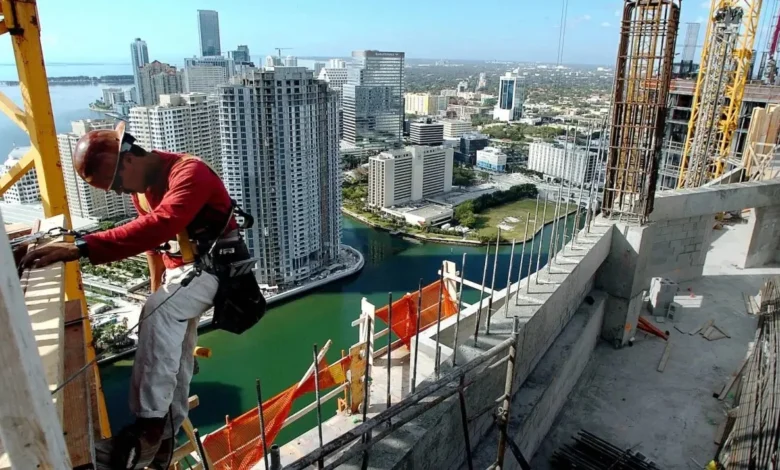
In an era defined by deep ideological divisions, a rare point of consensus has emerged between Democrats and Republicans: the urgent necessity of expanding the American housing supply. While the motivations differ—Democrats often emphasize affordability and social equity, while Republicans focus on economic stimulation and deregulation—the shared objective is clear. However, a significant byproduct of this push for new construction remains largely absent from the national political discourse. Modern apartment buildings and multi-family units represent a powerful, albeit quiet, tool for national decarbonization, offering a built-in climate solution that aligns with the policy goals of both parties.
The housing crisis in the United States has reached a critical juncture. Estimates from various economic institutions, including the National Association of Realtors and Moody’s Analytics, suggest a housing shortage ranging from 4 million to 7 million units. This scarcity has driven housing costs to record highs, making affordability a central issue for the 2026 midterm elections and beyond. As both parties scramble to propose solutions, the environmental benefits of dense, multi-family housing are becoming impossible to ignore for urban planners and climate scientists alike.
The Inherent Efficiency of Multi-Family Dwellings
The climate advantage of apartment buildings is rooted in physics and architectural design. Unlike detached single-family homes, which are exposed to the elements on all four sides, apartment units are typically surrounded by other conditioned spaces. Shared walls, floors, and ceilings provide a level of natural insulation that is nearly impossible to replicate in standalone structures. This "thermal mass" effect significantly reduces the energy required to maintain comfortable indoor temperatures.
Furthermore, the average square footage of an apartment unit is substantially smaller than that of a modern suburban house. This reduction in volume means there is less air to heat or cool. According to a recent report by the Sightline Institute, these factors contribute to a dramatic reduction in carbon footprints: the typical resident of a high-rise building in a dense urban core emits roughly one-third of the greenhouse gases produced by a resident of a detached suburban home.
This efficiency is bolstered by the trend toward electrification. The Sightline Institute report highlights that apartments are an "almost automatic form of building decarbonization" because approximately three-quarters of new apartment constructions are heated electrically. This shift allows these buildings to tap into clean energy grids or utilize rooftop solar arrays, bypassing the need for onsite fossil fuel combustion.
A Chronology of Building Electrification
The movement toward electric heating in multi-family housing is not a recent phenomenon driven solely by climate activism; it is the result of a decades-long economic evolution.
- The 1970s Transition: Following the oil crises of the 1970s, developers began moving away from oil-fired boilers. Electric resistance heating—such as baseboard heaters—became a popular alternative because it was significantly cheaper to install than the complex piping required for natural gas or steam.
- The Era of Resistance: From the 1970s through the early 2000s, roughly 68 percent of apartments built in the U.S. utilized electric heating. While electric resistance is less efficient than modern alternatives, it established a precedent for gas-free living.
- The Heat Pump Revolution: In the last decade, the technology behind heat pumps has matured. Unlike traditional heaters that generate warmth, heat pumps move thermal energy from the outside air into the building. Since 2010, heat pumps have been incorporated into nearly 20 percent of new multi-family structures in regions like the Pacific Northwest.
- Present Day: In 2023 and 2024, heat pumps have consistently outsold gas furnaces across the United States. New innovations, such as "saddle-bag" window units and all-in-one interior heat pumps, are making it easier to retrofit older apartment buildings without extensive renovations.
The Political Realignment on Housing
The political landscape surrounding housing has shifted as the crisis has moved from coastal cities to the American heartland. Traditionally, Republicans have been wary of federal climate mandates, yet they are increasingly embracing housing density as a matter of property rights and economic growth.
In Montana, a traditionally "deep-red" state, the Republican-led legislature recently passed a comprehensive package of housing bills. These laws aim to "re-legalize" multi-family housing by easing zoning restrictions and allowing for greater density. Proponents of these measures argue that increasing the supply of apartments is the most effective way to lower costs and stimulate local economies. While the primary goal in Montana was not carbon reduction, the result is the same: the construction of energy-efficient, often all-electric dwellings that reduce the state’s long-term carbon trajectory.
Democrats, meanwhile, have pivoted toward "transit-oriented development," which pairs dense housing with public transportation. This approach seeks to reduce "vehicle miles traveled" (VMT), another major source of emissions. By placing apartments near grocery stores, schools, and medical facilities, cities can foster "15-minute neighborhoods" where residents can meet their daily needs without a car.
Technological Innovations in Urban Living
The electrification of apartments serves as a gateway for other green technologies. When a building is designed without gas lines for heating, it becomes economically impractical to install gas for cooking. This has led to a surge in the adoption of induction stoves. Matt Casale, managing director of states and regions at the Building Decarbonization Coalition, notes that once a building is already using heat pumps for climate control, piping in a small amount of gas for a kitchen range is an unnecessary expense.
Beyond individual appliances, the concept of "networked geothermal" is gaining traction. This technology involves a community-based system where multiple buildings are linked to a shared underground loop. Because the earth’s temperature remains stable year-round, these systems are even more efficient than air-source heat pumps. Such systems represent a "homegrown" energy solution that eliminates the need for volatile fossil fuel markets.
For residents, the benefits extend beyond environmental impact. As global temperatures rise, the cooling capabilities of heat pumps are becoming a public health necessity. In the United States, extreme heat now kills more people annually than all other weather-related events combined. Modern apartments equipped with efficient cooling systems provide a critical refuge for vulnerable populations during heatwaves.
Overcoming the Zoning Barrier
Despite the clear benefits, the expansion of multi-family housing faces significant regulatory hurdles. Zoning laws in many American cities remain a relic of the mid-20th century, often mandating single-family homes on large lots. In Oregon, for instance, apartment buildings of four stories or more are permitted on less than 1 percent of residential land in the majority of its cities. Even in Portland, a city known for its progressive urban planning, that figure only reaches 14 percent.
Housing advocates and urban planners emphasize that "re-legalizing" apartments is the most critical step toward both housing affordability and climate resilience. This involves eliminating mandatory parking minimums, which drive up construction costs, and allowing for "mixed-use" developments where commercial and residential spaces coexist.
Cécile Faraud, head of the clean construction program at C40, stresses that the quality of the surrounding environment is just as important as the buildings themselves. "Agrihoods," which integrate multi-family housing with working farms or community gardens, and the preservation of urban green spaces are essential for mental health and local biodiversity.
Broader Impact and Implications
The convergence of housing policy and climate strategy represents a rare "win-win" in American politics. By focusing on the construction of apartments, policymakers can address the cost-of-living crisis while simultaneously making meaningful progress on national carbon goals.
The economic implications are also substantial. The shift toward all-electric, dense housing reduces the long-term infrastructure costs associated with maintaining sprawling gas networks and expansive road systems. It also fosters more resilient local economies by concentrating consumers near small businesses and transit hubs.
As the 2026 election cycle approaches, the "secret superpower" of apartments is likely to gain more visibility. While the rhetoric may differ—one side hailing the "freedom to build" and the other the "right to a sustainable future"—the physical reality of the solution remains the same. Dense, electrified, and well-located housing is the foundation of a modern, climate-conscious America.
In the words of Amanda D. Smith, a senior scientist at Project Drawdown, the consensus is grounded in a fundamental human need: "Even across a political landscape that’s as fractured and divided as what we’re seeing now, I think most people are willing to say: We want people to have homes." If those homes happen to be the most effective climate solution "hiding in plain sight," it may be the one area where American political interests finally align.