Trump Administration Allocates Billions in Taxpayer Funds to Dismantle Offshore Wind and Subsidize Coal Industry

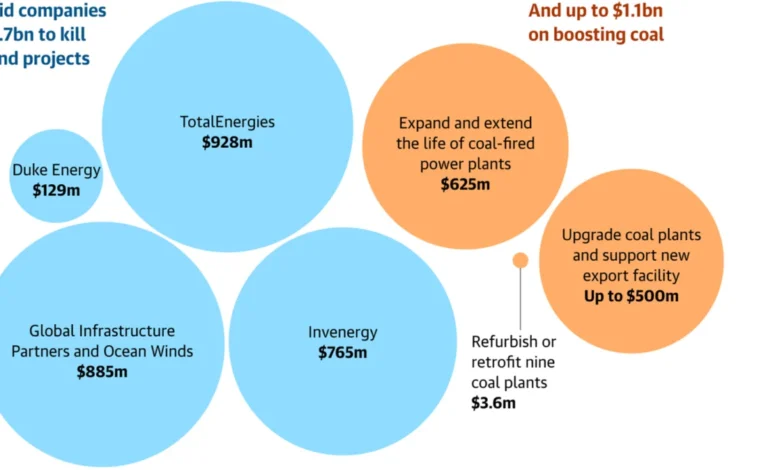
The Trump administration has embarked on a multi-billion-dollar fiscal campaign to fundamentally realign the United States energy landscape, directing $2.7 billion in taxpayer funds to terminate offshore wind projects while simultaneously injecting $1.1 billion into the struggling coal sector. This aggressive shift in federal spending represents a historic reversal of previous climate-oriented policies, sparking intense debate over the economic burden placed on American ratepayers and the long-term viability of the nation’s power grid. Critics argue that these maneuvers prioritize the interests of fossil-fuel donors over the economic well-being of working-class citizens, while administration officials maintain that the measures are necessary to ensure national security and energy reliability.
The Department of the Interior (DOI) and the Department of Energy (DOE) have emerged as the primary vehicles for this policy overhaul. Since March 2026, the DOI has finalized four major agreements with global energy firms, effectively paying them to relinquish legally acquired offshore wind leases. These deals have resulted in the cancellation of eight major projects that were expected to provide gigawatts of clean energy to the Eastern Seaboard. Parallel to these cancellations, the DOE has initiated a series of funding rounds designed to "reinvigorate" aging coal-fired power plants, many of which were slated for decommissioning due to their inability to compete with cheaper renewable alternatives.
A Chronology of Energy Policy Reversal
The administration’s strategy began to take clear shape in the spring of 2026. In March, the Department of the Interior announced its first major settlement with the French energy giant TotalEnergies. Under the terms of the deal, the federal government paid the company to cancel its offshore wind developments in exchange for a commitment to pivot toward fossil-fuel infrastructure. This move was met with immediate legal resistance; seven states led by Democratic governors filed a joint lawsuit alleging that the administration was misappropriating public funds to sabotage established energy markets.
By June 2026, the administration announced a similar agreement with Duke Energy, further reducing the projected capacity of the U.S. offshore wind fleet. These actions represent a departure from historical norms. While previous administrations have occasionally delayed energy projects through regulatory hurdles or environmental reviews, there is no modern precedent for the federal government directly compensating developers to abandon renewable energy leases that were purchased through competitive auctions.
In September 2026, the focus shifted to direct subsidies for the coal industry. The DOE announced a $625 million package specifically aimed at extending the operational life of coal-fired plants. This allocation included $350 million for plant modernization, $175 million for rural coal initiatives, and $50 million for wastewater management upgrades. This was followed by a controversial invocation of the Defense Production Act (DPA) in early 2027, through which the administration set aside $500 million to expand the capacity of 13 specific coal plants and facilitate the construction of a coal export terminal in Oakland, California.
The Economic Conflict: Ratepayers vs. Subsidies
The administration’s "coal-first" policy stands in stark contrast to prevailing market trends. According to a 2025 analysis by the research firm Grid Strategies, maintaining the operation of fossil-fuel plants that are scheduled for retirement could cost American ratepayers at least $3.1 billion by 2028. This is largely because coal remains the most expensive fossil fuel to extract, transport, and burn for electricity.
Data from Energy Innovation, a non-partisan energy and environmental policy firm, reveals that 99 percent of existing U.S. coal plants are currently more expensive to run than it would be to replace them with new wind or solar installations. In 2024, the cost of generating power from coal rose by 28 percent compared to 2021 levels. Critics, including former Washington Governor Jay Inslee, argue that the administration is "mugging" the American taxpayer by forcing them to pay twice: once through direct subsidies to coal companies and again through higher monthly utility bills.
"Trump is getting Americans coming and going," Inslee stated. "He’s forcing higher power bills on them by blocking clean energy, then he’s fattening the wallets of his cronies—all with billions of our tax dollars."
The administration, however, rejects this narrative. White House spokesperson Taylor Rogers asserted that the government is not "spending" money in the traditional sense but rather "returning" bid amounts to companies whose projects were deemed incompatible with national security. Rogers argued that offshore wind is "the least dependable" source of power and that the previous administration "lured" companies into unviable projects with "the promise of millions of taxpayer dollars in subsidies."

Legislative Architecture and the "One Big Beautiful Bill"
The fiscal shift is underpinned by the "One Big Beautiful Bill Act," a centerpiece of the administration’s legislative agenda. This act included a provision that slashed royalty rates for coal extracted from federal lands from 12.5 percent to 7 percent. While the administration frames this as a move to lower energy costs, the fiscal impact on coal-producing states has been significant. Wyoming, the nation’s top coal producer, estimated that this change alone could cost the state $50 million annually in lost revenue.
Furthermore, the administration’s attempt to stimulate the market through federal leasing has seen lukewarm results. In late 2026, the government held the largest coal lease sale in over a decade. Despite the administration’s support, the sale attracted only one bid, which amounted to a fraction of a penny per ton. Analysts suggest this lack of private-sector interest underscores the terminal decline of coal as a competitive energy source, regardless of federal intervention.
Jenny Rowland-Shea, senior director for conservation policy at the Center for American Progress, noted that the administration is essentially trying to "snuff out an entire form of energy" at a time when national demand is surging due to the proliferation of data centers and the electrification of the economy. "They are paying companies not to produce this energy or to give taxpayers what was promised," she said.
Public Health and Environmental Implications
The pivot back to coal carries substantial public health risks. Coal is the most carbon-dense fossil fuel and a primary driver of particulate matter pollution. A 2023 Harvard T.H. Chan School of Public Health study estimated that air pollution from coal plants was responsible for approximately 460,000 deaths in the United States between 1999 and 2020. By extending the lifespan of these plants, health advocates warn that the administration is locking in decades of avoidable respiratory and cardiovascular illnesses.
Gabrielle Levy, a spokesperson for the Climate Action Campaign, emphasized the hidden costs of these policies. "These coal plants were going to close down because they couldn’t keep themselves open on their own," Levy said. "So we’re paying as taxpayers to keep economically unviable plants open, and meanwhile those are doing immeasurable harm to the local environment, to people’s health, and to the climate."
The environmental impact extends beyond carbon emissions. The administration has also streamlined permitting for fossil-fuel projects on public lands while simultaneously freezing or slowing the permitting process for new wind and solar developments. This regulatory bottleneck has created a "chilling effect" on the renewable energy sector, leading to a projected shortfall in the nation’s ability to meet international climate commitments.
National Security and the Pentagon Mandate
To justify the heavy subsidization of coal, the administration has increasingly leaned on the rhetoric of national security. In February 2027, the president signed an executive order directing the Department of Defense to prioritize the purchase of electricity from coal-fired plants. The administration argues that coal provides a "baseload" power source that is less vulnerable to cyberattacks or weather-related disruptions than a grid heavily reliant on renewables and natural gas.
DOE spokesperson Ben Dietderich defended the administration’s record, stating that the "Green New Scam" of the previous administration had led to "premature shutdowns" of reliable plants and increased the risk of blackouts. Dietderich claimed that states with aggressive anti-coal policies have seen the highest price increases, though energy economists note that price spikes are often more closely linked to the volatility of global natural gas markets than to the adoption of renewables.
Conclusion: A Polarized Energy Future
As the Trump administration continues to reallocate billions of dollars toward fossil-fuel preservation, the United States finds itself at a crossroads. On one side, the administration and its supporters see a necessary return to "traditional" energy sources that they believe guarantee American independence and industrial strength. On the other side, a coalition of state governors, environmental advocates, and economic analysts view these actions as a costly and dangerous attempt to forestall an inevitable energy transition.
The long-term consequences of these policies will likely be measured in both dollars and degrees. With $2.7 billion already spent to halt the progress of offshore wind and $1.1 billion committed to propping up coal, the financial footprint of this administration’s energy strategy is substantial. Whether these investments will result in the "affordable, reliable energy" promised by the White House or a legacy of higher bills and environmental degradation remains the central question of the current American political era. For now, the legal battles in federal courts and the economic shifts in the energy markets continue to unfold, with the American taxpayer footing the bill for a historic pivot in national priority.