Trump Administration Fast Tracks Energy Infrastructure for AI Data Centers Amid Environmental and Local Opposition

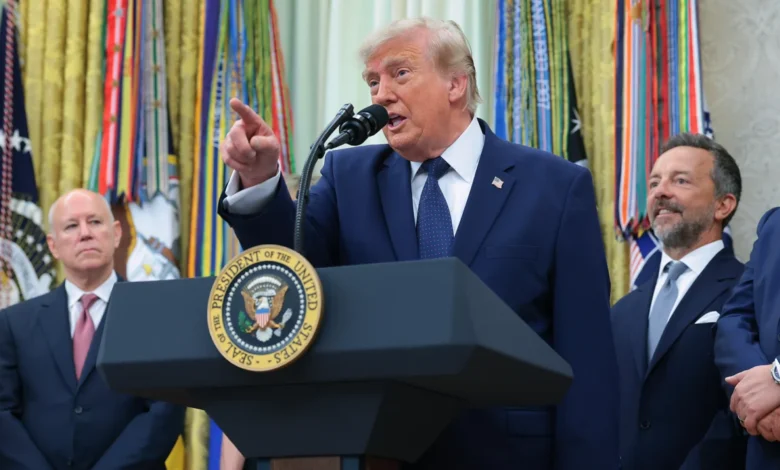
In a significant shift in federal energy and technology policy, President Donald Trump announced on Monday that his administration is implementing an expedited approval process for power plants dedicated to artificial intelligence data centers, promising to reduce permit timelines to a matter of weeks. Speaking to reporters at the White House on July 6, 2026, the President emphasized that the move is essential for the United States to maintain its competitive edge in the global artificial intelligence race, specifically citing the need to outpace foreign adversaries in computing power.
The President’s remarks followed a series of discussions with high-profile leaders in the technology sector, including Meta’s Mark Zuckerberg, Amazon’s Jeff Bezos, OpenAI’s Sam Altman, and SpaceX’s Elon Musk. According to Trump, these executives expressed concern that the current energy infrastructure is insufficient to meet the massive electrical demands of next-generation AI models. Trump noted that the industry’s requirements could potentially necessitate doubling the country’s existing energy capacity.
This push for rapid infrastructure expansion comes at a time when the "AI arms race" has moved from software development to the physical layer of the internet. As large language models and generative AI systems become more complex, the hardware required to train and run them—specifically high-end GPUs housed in massive data centers—requires a constant, high-voltage supply of electricity that many local grids were not designed to provide.
A New Framework for Energy Expediency
The centerpiece of the administration’s strategy is the "behind-the-meter" generation model. Under this approach, tech companies are encouraged to build private power plants directly on the sites of their data centers rather than relying solely on the public utility grid. While this practice has existed in various forms for years to ensure redundancy, the Trump administration is now promoting it as the primary solution for the AI sector’s energy hunger.
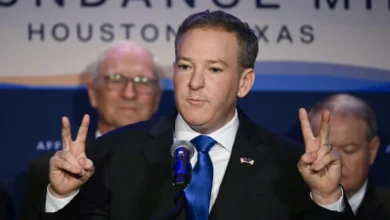
Environmental Protection Agency (EPA) Administrator Lee Zeldin reportedly informed the President that many tech firms were initially hesitant to submit plans for on-site power plants, skeptical of the federal government’s ability to bypass traditional regulatory hurdles. Trump stated that after personal calls to major tech CEOs, the administration demonstrated that approvals could be secured in weeks rather than the years typically required for industrial energy projects.
However, the administration has not yet detailed the specific legal mechanisms being used to achieve this acceleration. Critics and legal experts suggest the "fast-track" process likely relies on a combination of executive orders, the waiving of certain federal environmental reviews, and the utilization of emergency authorities originally intended for national security crises.
The Technological and Environmental Toll
The rapid expansion of the data center industry has significant implications for the American energy landscape. According to a comprehensive report released in June 2026 by the Environmental Integrity Project (EIP), a national nonprofit organization, there are currently plans for 74 new or expanded methane gas plants across the United States specifically designed to serve AI facilities.
These proposed gas-fired plants are expected to generate approximately 143 gigawatts of electricity. To put this in perspective, that amount of power is nearly three times the total energy consumption of the state of California. The geographic distribution of these projects is concentrated in states with favorable tax environments and existing energy infrastructure:
- Texas: 32 proposed gas plants
- Ohio: 10 proposed gas plants
- Pennsylvania: 7 proposed gas plants
The environmental impact of this energy surge is a point of intense debate. The EIP report estimates that these 74 power plants would release nearly 662 million tons of greenhouse gas pollution annually—a figure roughly equivalent to the total national emissions of Australia. Beyond carbon dioxide, these facilities also emit nitrogen oxides and sulfur dioxide, which contribute to smog and respiratory issues in surrounding communities.
Furthermore, data centers are notoriously water-intensive. The cooling systems required to prevent servers from overheating can consume millions of gallons of water per day. In regions already facing water scarcity, such as the American Southwest and parts of the rural Midwest, the arrival of massive data center complexes has sparked fears regarding the long-term viability of local aquifers.
Divergent Energy Philosophies: Nuclear vs. Renewables
President Trump’s energy strategy for AI centers heavily on fossil fuels and nuclear power, while explicitly excluding wind energy. During his Monday briefing, the President reiterated his long-standing opposition to wind turbines, labeling the technology "terrible" and "unworkable" for the high-reliability needs of the tech industry.
"We don’t allow wind," Trump said, emphasizing that the administration would instead prioritize oil, gas, and nuclear options. This stance represents a direct challenge to the current energy mix in the U.S., where wind power currently accounts for approximately 10% of total electricity generation, according to the U.S. Energy Information Administration (EIA).
Proponents of the administration’s plan argue that the "baseload" power provided by gas and nuclear is necessary for data centers, which require 24/7 uptime that intermittent renewables like wind and solar cannot guarantee without massive advancements in battery storage. Critics, however, argue that by excluding renewables, the administration is tethering the "industry of the future" to the carbon-heavy fuels of the past.
Growing Political and Local Resistance
Despite the federal government’s push, the data center boom is meeting significant resistance at the state and local levels. The issue has become a political flashpoint as the 2026 midterm elections approach, with politicians from both parties grappling with constituent concerns over noise, land use, and utility costs.
In Congress, Senator Bernie Sanders (I-Vt.) and Representative Alexandria Ocasio-Cortez (D-N.Y.) introduced legislation in March 2026 seeking a national moratorium on new data center construction. The bill proposes a pause until comprehensive federal safeguards are established to protect workers and the environment.
At the state level, the response has been varied:
- New York: The State Legislature recently passed a one-year moratorium on data center permits. Governor Kathy Hochul, facing a reelection campaign, has expressed reservations about the bill, suggesting that such zoning and permitting decisions should remain with local municipalities.
- Texas: Governor Greg Abbott, despite his general support for industrial growth, recently called for a block on new data center developments in rural East Texas. Abbott has argued that these facilities must do more to support the state’s independent electric grid and pay for their own infrastructure rather than passing costs to residential consumers.
- Local Bans: Municipalities such as Monterey Park, California, and Ashville, Ohio, have enacted temporary pauses or bans on new developments as they struggle to update zoning laws to accommodate the scale of these facilities.
The Deregulatory Path Forward
The Trump administration’s refusal to set nationwide environmental requirements for the data center industry marks a return to a "states-first" regulatory philosophy. EPA Chief Lee Zeldin argued at a recent energy summit that local communities are best positioned to determine their own environmental standards.
This hands-off approach has been met with sharp criticism from environmental advocacy groups. Clara Vondrich, senior policy counsel with Public Citizen’s Climate Program, suggested that the lack of federal oversight is a "green light" for tech companies to bypass environmental protections. "Big Tech executives have lobbied hard to ingratiate themselves into the administration’s orbit," Vondrich stated, adding that the current policy suggests those lobbying efforts were successful.
As the administration moves forward with its "weeks-long" approval process, the legal and social battles over the future of American energy are expected to intensify. The tension between the perceived necessity of AI dominance and the preservation of environmental standards remains the central conflict of this new industrial era.
Chronology of Recent AI Energy Policy
- July 2025: The Trump administration releases its "AI Action Plan," which first proposes waiving certain federal environmental rules for tech infrastructure.
- March 2026: Sanders and Ocasio-Cortez introduce the Data Center Moratorium Bill in response to rising electricity prices in tech hubs.
- May 2026: The EPA proposes loosened construction rules specifically for gas plants and data centers located in "Strategic Computing Zones."
- June 2026: The Environmental Integrity Project publishes its report on the "Power Behind AI," detailing the projected surge in greenhouse gas emissions.
- June 2026: New York State passes a one-year moratorium on data center permits; Texas Governor Greg Abbott calls for rural bans.
- July 6, 2026: President Trump announces the fast-tracking of power plant approvals for AI developers during a White House press briefing.
The coming months will likely see the first test cases of this expedited permitting process, as major tech firms seek to break ground on new facilities in Pennsylvania and Ohio. Whether these projects can withstand the inevitable legal challenges from environmental groups and local governments will determine the trajectory of the American AI industry for decades to come.
Related posts: