Maine Legislature Passes First Statewide Hyperscale Data Center Moratorium Amid Rising Energy Costs and AI Infrastructure Concerns

The Maine state legislature has made history by passing the nation’s first state-level moratorium on the construction of hyperscale data centers, a move that signals a significant shift in how local governments are responding to the rapid expansion of artificial intelligence infrastructure. The legislation, which was finalized this week, effectively freezes all construction approvals for data centers requiring more than 20 megawatts of power for the next 18 months. This threshold is specifically designed to target the massive computing facilities utilized by global technology firms to train and deploy advanced artificial intelligence models. As the energy demands of the digital age collide with the realities of aging power grids and rising utility costs, Maine has become the first state to prioritize local ratepayer stability over the immediate expansion of the tech sector.
The Emergence of the Data Center Conflict
For several years, the expansion of data centers—the physical backbone of the internet and the cloud—has been a largely localized issue. Developers typically negotiated directly with small-town planning commissions and city councils, often promising jobs and tax revenue in exchange for zoning variances and infrastructure support. However, as the AI boom has accelerated, the scale of these facilities has grown exponentially. What were once modest server farms have evolved into "hyperscale" complexes that consume as much electricity as small cities.
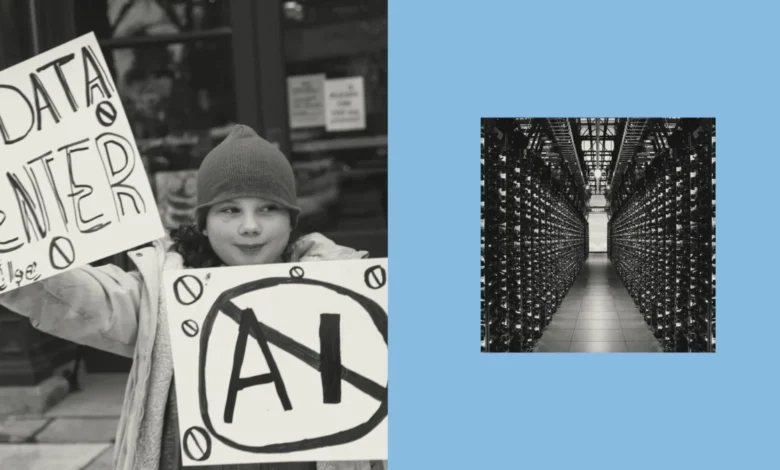
In recent months, the battleground has shifted. Local opposition in towns across the country, from Apex, North Carolina, to Festus, Missouri, has intensified. In Festus, voters recently ousted every incumbent council member over concerns regarding a proposed data center. Maine’s decision to elevate this issue to the state level represents a turning point, suggesting that the "not in my backyard" (NIMBY) sentiment is evolving into a statewide policy framework aimed at protecting public resources.
The 18-month moratorium is intended to provide Maine policymakers with a "cooling-off" period. During this time, state agencies will study the long-term impacts of high-density computing on the state’s electrical grid, water supplies, and overall economic health.
Chronology of the Legislative Shift and the AI Boom
The path to Maine’s moratorium can be traced back to the global surge in generative AI that began in late 2022. As companies like OpenAI, Microsoft, Google, and Meta raced to build larger and more powerful models, the demand for specialized data centers equipped with thousands of power-hungry GPUs (Graphics Processing Units) skyrocketed.
By early 2024, the energy industry began sounding alarms. Forecasts suggested that the electricity demands of data centers used for AI could increase by as much as 165 percent by 2030. In Maine, this national trend intersected with a local energy crisis. Over the last five years, electricity bills for Maine residents have increased by an average of 58 percent. While much of this spike is attributed to the state’s heavy reliance on natural gas and volatile global energy markets, the prospect of adding massive new loads to the grid sparked immediate political concern.
In early 2026, Representative Melanie Sachs, a Democrat, sponsored the moratorium measure. The bill gained momentum as reports emerged from other states regarding the environmental and social costs of data centers. By April 2026, the Maine legislature moved to finalize the freeze, ignoring intense lobbying from the tech industry.
Supporting Data: Energy Consumption and Economic Disparities
The core of the debate in Maine rests on the technical requirements of modern AI. A standard data center might require a few megawatts of power, but hyperscale facilities—those targeted by the Maine moratorium—routinely exceed 20 megawatts, with some "gigascale" projects in other states aiming for 1,000 megawatts.
To put this in perspective, 20 megawatts is enough to power roughly 15,000 to 20,000 homes. The strain on the grid is not merely a matter of supply, but of infrastructure. Large data centers require high-voltage transmission lines and massive cooling systems. In Maine, where the grid is already under pressure from the transition to renewable energy and the electrification of heating, the sudden addition of hyperscale loads could necessitate billions of dollars in upgrades—costs that are often passed down to residential ratepayers.
Furthermore, the economic benefits of these facilities are increasingly under scrutiny. While data center construction provides a temporary boost to the building trades, the permanent workforce for a facility is often small, ranging from 30 to 50 technicians and security personnel. Despite this, developers frequently receive millions of dollars in state and local tax breaks. Because many of these companies operate through LLCs and insist on strict non-disclosure agreements (NDAs) during the planning phases, the true cost-benefit ratio often remains hidden from the public and even from some regulators.
Official Responses and Stakeholder Perspectives
The passage of the moratorium has drawn sharp reactions from both proponents of the tech industry and advocates for corporate accountability.
Dan Diorio, a representative for the Data Center Coalition, an industry lobbying group, characterized the move as a setback for Maine’s economic future. "A statewide moratorium on data centers would discourage investment and send a signal that Maine is closed for business," Diorio stated. He argued that the law deprives local communities of the opportunity to compete for high-tech jobs and significant long-term capital investment.
Conversely, Representative Melanie Sachs defended the measure as a necessary safeguard for Maine’s citizens. "Frankly, the tradeoffs have not been shown to be of benefit to our ratepayers, water usage, or community benefit in terms of economic activity," Sachs told the Associated Press. Her position reflects a growing skepticism among lawmakers who feel that the "tech-at-all-costs" era has left taxpayers footing the bill for private infrastructure.
Expert analysis supports this cautious approach. Arjun Krishnaswami, who studies data center energy use at the Federation of American Scientists, noted that the industry has failed to be transparent about its impact. "Tech companies have failed to demonstrate that they are taking those risks seriously," Krishnaswami said. He suggested that if companies want to build in resource-constrained areas, they must prove they are bringing more than just server racks to the table.
Greg LeRoy, Executive Director of Good Jobs First, a corporate accountability research organization, described the moratorium as a "seismic shift." He highlighted the secrecy that often surrounds these projects. "They come in under LLCs and code names, they insist on non-disclosure agreements," LeRoy said. "As long as they’re acting like they have to come in the dark of the night, it just makes you ask, what are they hiding? And the answer is, it’s a bad deal."
Environmental Concerns and Legal Precedents
Maine’s legislative action also takes place against a backdrop of increasing environmental litigation related to data centers. In Memphis, Tennessee, the NAACP has filed suit against Elon Musk’s xAI, alleging that the company violated the Clean Air Act. The lawsuit claims that the facility utilized gas-burning turbines to generate power without proper permits, contributing to local air pollution in a predominantly Black neighborhood.
Such cases have heightened awareness of the environmental footprint of AI. Beyond air quality, data centers are notoriously water-intensive. A single large data center can consume hundreds of millions of gallons of water per year for cooling, often competing with local agriculture and residential needs during periods of drought. For Maine, a state that prides itself on its natural resources and environmental stewardship, these factors were critical in the legislative debate.
Broader Impact and the National Landscape
Maine may be the first to pass a statewide moratorium, but it is unlikely to be the last. Currently, twelve other states are considering similar legislative pauses or stricter regulations on data center development. This includes states like Virginia, which currently hosts the largest concentration of data centers in the world, and Georgia, where lawmakers are grappling with the massive power demands of new facilities.
At the federal level, the issue has caught the attention of prominent lawmakers. Senator Bernie Sanders and Representative Alexandria Ocasio-Cortez recently introduced a proposal for a nationwide moratorium on data center construction until federal environmental and energy standards are updated to reflect the realities of the AI era. This stands in stark contrast to the position of former President Donald Trump, who has advocated for a rapid, deregulated expansion of energy production to support AI growth.
The divergence in policy reflects a fundamental question: Who should pay for the infrastructure of the future? Analysts like Krishnaswami suggest that if tech companies are desperate for speed, policymakers should leverage that urgency. "Tech companies are not very sensitive to the price of electricity," he noted. This gives states the opportunity to charge "premium" rates for data center power, with the excess revenue reinvested into clean energy projects, grid modernization, or direct bill reductions for low-income residents.
Conclusion: A New Framework for Digital Infrastructure
Maine’s 18-month freeze on hyperscale data centers represents a maturation of the conversation around artificial intelligence. It moves the discussion away from the abstract benefits of "innovation" and toward the concrete realities of resource management and consumer protection.
By demanding transparency and a clear demonstration of community benefit, Maine has set a precedent that other states are already beginning to follow. The moratorium serves as a reminder that while the digital world may exist in "the cloud," it is powered by physical resources that belong to the public. As the 18-month study period begins, the eyes of the tech industry and environmental advocates alike will be on Maine to see what a more sustainable and equitable framework for AI infrastructure might look like.
Related posts: