Senate Republicans Vote to Rescind Mining Protections in Minnesotas Boundary Waters Wilderness Using Arcane Legislative Maneuver

In a narrow 50-49 party-line vote, the United States Senate has moved to overturn a long-standing environmental protection for one of the nation’s most pristine wilderness areas. On Thursday, Senate Republicans successfully passed a resolution to repeal a 20-year moratorium on mining in the Boundary Waters Canoe Area Wilderness (BWCAW) and its surrounding watershed within the Superior National Forest in Northeastern Minnesota. The resolution utilizes the Congressional Review Act (CRA), a 1996 oversight tool that allows Congress to bypass traditional filibuster rules to strike down executive branch regulations. The measure now moves to the desk of President Trump, who has signaled a strong intent to sign it into law, effectively opening more than 225,000 acres of federal land to industrial mineral extraction.
The Ecological and Cultural Significance of the Boundary Waters
The Boundary Waters Canoe Area Wilderness is a massive landscape comprising approximately 1.1 million acres of woods and water. Stretching along the border between Minnesota and Ontario, Canada, the area is characterized by its labyrinth of more than 1,100 lakes and 1,200 miles of canoe routes. It is the most visited wilderness area in the United States, drawing over 150,000 visitors annually who contribute to a robust regional outdoor recreation economy valued at nearly $900 million.
Ecologically, the Boundary Waters represents a rare, intact boreal forest ecosystem. Its waters are remarkably pure, providing a habitat for diverse wildlife, including timber wolves, moose, and lynx. Because the watershed is interconnected by a complex network of streams and aquifers, environmentalists have long argued that any pollution from industrial activity in the headwaters would inevitably contaminate the entire wilderness complex.
For the Indigenous communities of the region, the stakes are even higher. The Bois Forte Band, the Fond du Lac Band, and the Grand Portage Band of Lake Superior Chippewa (Ojibwe) hold extensive treaty rights in the area, guaranteed by the 1854 Treaty of La Pointe. These rights include the ability to hunt, fish, and gather manoomin (wild rice) in their traditional territories. Tribal leaders have expressed grave concerns that industrial mining would desecrate sacred sites and destroy the natural resources upon which their cultural survival depends.
A Chronology of the Mining Dispute
The battle over mining in the Boundary Waters has spanned several presidential administrations, reflecting a deep divide between conservation efforts and industrial development goals.
- 2016: Under the Obama administration, the U.S. Forest Service and the Bureau of Land Management (BLM) initiated a process to withdraw federal lands in the Rainy River Watershed from mineral leasing for 20 years. This was prompted by a Forest Service study that concluded sulfide-ore mining posed an unacceptable risk to the wilderness.
- 2017–2020: The first Trump administration worked to reverse this trajectory, reinstating mineral leases for Twin Metals Minnesota, a subsidiary of the Chilean mining giant Antofagasta.
- 2021–2023: The Biden administration renewed the push for protection. In January 2023, Secretary of the Interior Deb Haaland signed Public Land Order No. 7917, which officially withdrew 225,504 acres of the Superior National Forest from new mineral leasing for 20 years. This order was based on comprehensive environmental assessments and widespread public comment.
- 2025–2026: Following the change in administration and the shifting balance of power in Congress, Republicans prioritized the reversal of the Biden-era withdrawal. The use of the CRA in April 2026 represents the final legislative step in clearing the path for Twin Metals and other mining interests.
The Weaponization of the Congressional Review Act
The use of the Congressional Review Act in this instance has sparked significant legal and procedural debate. Originally conceived by former House Speaker Newt Gingrich as part of the "Contract with America," the CRA was intended to provide Congress with a check on "midnight regulations" passed at the tail end of an outgoing administration.
However, legal experts point out that the Boundary Waters protection was not a "rule" in the traditional sense, but a "Public Land Order" issued over three years ago. The CRA typically has a 60-day window for review. By applying the CRA to an order from 2023, Senate Republicans are entering what Earthjustice representative Blaine Miller-McFeeley describes as "extraordinarily legally questionable" territory.
Erik Schlenker-Goodrich, executive director of the Western Environmental Law Center, noted that the CRA is being increasingly "weaponized" to dismantle long-term land management plans. Unlike standard legislation, a CRA resolution cannot be filibustered in the Senate, requiring only a simple majority to pass. Furthermore, once a rule is overturned via the CRA, the agency is barred from issuing a "substantially similar" rule in the future without a new act of Congress, potentially creating a permanent ban on protecting the Boundary Waters.
Economic Drivers: AI, Defense, and the Global Copper Shortage
The push to open the Boundary Waters is largely driven by the global race for critical minerals. The Duluth Complex, located just south of the wilderness area, contains one of the world’s largest undeveloped deposits of copper, nickel, and platinum-group elements.
Proponents of the mine argue that domestic production of these minerals is a matter of national security. Copper, in particular, has seen a surge in demand due to the expansion of artificial intelligence data centers and the transition to renewable energy technologies. A report by S&P Global recently warned that copper demand could expand by 50 percent by 2040, creating a massive supply gap.
Similarly, nickel is essential for high-capacity batteries and military hardware. A 2025 report from the Carnegie Endowment for International Peace predicted a significant nickel deficit by 2035. Mining advocates in Minnesota argue that the state can provide these resources while adhering to strict environmental standards, creating high-paying union jobs in the process.

However, critics point out a significant flaw in the "domestic supply" argument. The United States currently lacks sufficient smelting capacity to process these minerals. Currently, the U.S. has only three copper smelters and zero nickel smelters. Consequently, raw ore extracted from Minnesota would likely be shipped to overseas facilities—often in China or South America—for processing before being sold back on the global market.
Official Responses and Political Fallout
The Senate vote was preceded by intense debate. Senator Tina Smith (D-MN) took to the Senate floor for five hours in a marathon effort to block the resolution. She argued that the move bypassed established legal protocols for public land management and ignored the scientific consensus regarding the risks of sulfide-ore mining.
"The Senate and House should follow the laws they wrote about how public land orders are treated in this country," Smith stated. "This resolution sets a dangerous precedent that any long-term conservation plan can be vaporized by a simple majority vote, regardless of the science or public will."
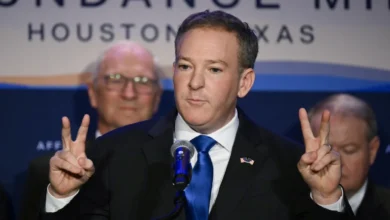
In contrast, Republican Senator Mike Lee of Utah hailed the vote as a victory for American energy independence and economic growth. He suggested that this move is just the beginning, hinting at similar CRA resolutions aimed at land protections in Utah, including the Grand Staircase-Escalante National Monument.
The primary corporate beneficiary of the vote is Twin Metals Minnesota. The company released a statement praising the Senate’s decision, asserting that their proposed underground mine would be "the most technologically advanced and environmentally responsible mine in the world." Twin Metals has faced scrutiny in the past due to its parent company’s ties to the Trump family; specifically, billionaire Andrónico Luksic, whose family controls Antofagasta, previously rented a D.C. mansion to Ivanka Trump and Jared Kushner.
Broader Environmental and Scientific Concerns
The scientific community remains largely opposed to mining in the Boundary Waters watershed. Unlike the traditional taconite (iron) mining that has occurred in Minnesota for over a century, the minerals in the Duluth Complex are embedded in sulfide-bearing rock. When this rock is exposed to air and water, it creates sulfuric acid—a process known as acid mine drainage.
A 2016 study by the U.S. Forest Service determined that a sulfide-ore copper mine in this specific location could cause "serious and irreplaceable harm" to the ecosystem. The study noted that even with modern mitigation technology, the risk of seepage into the interconnected water system was high, and the impacts would be "nearly impossible" to remediate once they began.
Marc Fink, a senior attorney for the Center for Biological Diversity, emphasized that the Senate’s decision flies in the face of the federal government’s own internal research. "The U.S. Forest Service is 100 percent opposed to mining in this watershed," Fink said. "This is a political decision that ignores the biological reality of the region."
Future Implications and Legal Challenges
As the resolution heads to the White House, environmental groups and tribal nations are already preparing for a protracted legal battle. The unprecedented use of the CRA to target a multi-year-old Public Land Order is expected to be challenged in federal court.
The outcome of this case will have implications far beyond Minnesota. If the courts uphold the use of the CRA in this manner, it could signal a new era of federal land management where protections for national monuments, wildlife refuges, and wilderness areas are subject to the fluctuating political winds of Washington D.C.
For now, the Boundary Waters remains at a crossroads. While the legislative path for mining has been cleared, the logistical, environmental, and legal hurdles remain formidable. The fight over the future of America’s most popular wilderness is entering its most volatile chapter yet, as the demand for 21st-century minerals clashes with the preservation of a prehistoric landscape.
Related posts: