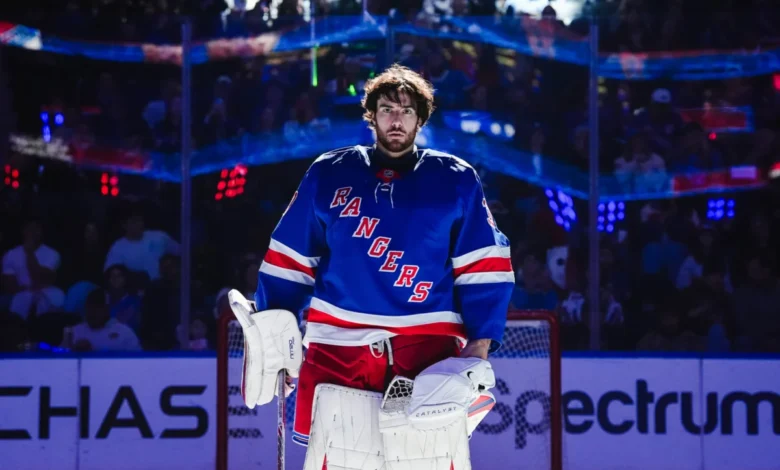
Dylan Garand’s inaugural foray into the National Hockey League, while arriving later in the 2025-26 season than perhaps initially anticipated, has provided the rookie goaltender with an unparalleled month-long apprenticeship. Stationed within the New York Rangers’ distinguished goaltending fraternity, Garand has been an active observer and participant in the daily routines of two of the sport’s most decorated goaltenders: the established ace Igor Shesterkin and the veteran stalwart Jonathan Quick. This period of tutelage, unfolding against the backdrop of Quick’s impending retirement and the subsequent opening of the crucial backup goaltending position, offers a compelling narrative of player development and organizational strategy.
A Season of Transition and Opportunity
The 2025-26 NHL season has been marked by significant shifts within the goaltending landscape for the New York Rangers. With Jonathan Quick announcing his intention to retire following the conclusion of this campaign, the team faces the critical task of identifying and cultivating its next reliable No. 2 netminder. It is within this context that Dylan Garand, the Rangers’ 103rd overall selection in the 2020 NHL Entry Draft, earned his first recall to the NHL roster. While Garand has seen limited action in the crease, appearing in only two games thus far, the true value of his call-up may lie not solely in his on-ice performance, but in the invaluable experience gained by observing and interacting with goaltending royalty on a daily basis.
The veteran presence of Igor Shesterkin, a Vezina Trophy winner and Stanley Cup champion, provides a consistent benchmark of elite performance. Simultaneously, the opportunity to learn from Jonathan Quick, a two-time Stanley Cup champion and Conn Smythe Trophy recipient, offers Garand a unique perspective on longevity, adaptability, and the mental fortitude required to sustain a high level of play over an extended career. This dual mentorship, bridging generational talent and distinct goaltending philosophies, presents a rare developmental advantage for the young Garand.
Garand’s Path to Broadway
Garand’s journey to the NHL has been a steady, deliberate progression. After being drafted in 2020, he continued to hone his skills in junior hockey before transitioning to professional ranks. His performance in the American Hockey League (AHL) with the Hartford Wolf Pack has been a key indicator of his potential. In the 2024-25 AHL season, Garand posted a commendable .915 save percentage and a 2.55 goals-against average across 48 games, demonstrating the consistency and poise that caught the attention of the Rangers’ management. These statistics placed him among the league’s top goaltenders, signaling his readiness for a potential NHL audition.
The timing of his NHL debut, while coming late in the season, aligns with the Rangers’ strategic planning. With the playoffs nearing and the team needing to assess its goaltending depth, Garand’s call-up serves a dual purpose: providing him with invaluable experience and allowing the coaching staff to evaluate his capabilities in a high-stakes environment. His NHL debut came in a matchup against the Winnipeg Jets, a testament to the rigorous schedule and the caliber of opponents the Rangers face. Though the outcome of that specific game may have been disappointing, the experience itself is a crucial stepping stone.
The Mentorship Dynamic: Shesterkin and Quick
The goaltending duo of Igor Shesterkin and Jonathan Quick represents a fascinating confluence of talent and experience. Shesterkin, in his prime, is widely regarded as one of the premier goaltenders in the NHL. His athletic ability, exceptional puck-handling skills, and calm demeanor under pressure have made him the cornerstone of the Rangers’ success in recent seasons. For Garand, observing Shesterkin’s preparation, his technique during practice, and his unwavering focus during games offers a direct lesson in what it takes to perform at the absolute highest level.
Jonathan Quick, despite his age, has brought a wealth of experience and a championship pedigree to the Rangers’ crease. His presence, even in a backup role, provides a different but equally valuable perspective. Quick’s ability to remain engaged and effective throughout his career, adapting to evolving game strategies and the physical demands of the NHL, is a masterclass in professional resilience. Garand benefits from Quick’s insights into game management, handling adversity, and maintaining a positive presence in the locker room, particularly during challenging stretches.
This symbiotic relationship between the established star and the veteran leader creates an ideal learning environment. Garand is not merely a spectator; he is an active participant in a unique goaltending development program. The daily interactions, the shared locker room space, and the opportunity to glean knowledge from two distinct but equally successful goaltending careers are invaluable.

Analyzing the Implications for the Rangers’ Future
Garand’s integration into the Rangers’ goaltending corps carries significant implications for the franchise’s future. The impending retirement of Jonathan Quick leaves a void that needs to be filled. While Shesterkin remains the undisputed starter, the reliability of his backup is paramount for a team with Stanley Cup aspirations. Garand’s performance during this late-season audition, combined with his ongoing development under the tutelage of Shesterkin and Quick, will be a key factor in determining his role in the coming seasons.
Should Garand continue to impress, he could solidify his position as the Rangers’ long-term backup, providing a cost-effective and internally developed option. This would allow the team to allocate financial resources to other areas of the roster. Conversely, if his development trajectory suggests a need for more extensive AHL seasoning, the Rangers may explore external options in free agency or via trade. However, the investment made in drafting and developing Garand suggests a strong internal belief in his potential.
Furthermore, the mentorship provided by Shesterkin and Quick extends beyond just Garand. The culture of excellence and the emphasis on goaltending development within the organization are reinforced by the presence of these two elite players. This creates a sustainable model for future goaltending success. The Rangers have a history of strong goaltending, and the current situation suggests a continued commitment to that tradition.
Broader Context of NHL Goaltending Development
The scenario unfolding with Dylan Garand is not unique in the NHL, but the specific circumstances surrounding the Rangers’ goaltending situation offer a compelling case study. The league is increasingly recognizing the importance of specialized coaching and mentorship for developing goaltenders. Teams are investing heavily in goalie coaches and development staff, aiming to streamline the transition from junior or college hockey to the professional ranks.
The modern NHL game demands a high level of athleticism, technical proficiency, and mental fortitude from goaltenders. The increasing pace of play, the effectiveness of power plays, and the sheer volume of shots necessitate goaltenders who can consistently make difficult saves and control rebounds. Garand’s exposure to the elite skills of Shesterkin and the seasoned experience of Quick provides him with a condensed and accelerated learning curve in these critical areas.
The trend towards drafting and developing goaltenders from within has proven successful for many franchises. It allows teams to control the development process, instill their preferred systems, and foster a sense of loyalty and continuity. The Rangers’ approach with Garand exemplifies this strategy, emphasizing patience and providing the necessary resources for his growth.
Looking Ahead: The Future Between the Pipes
As the 2025-26 season draws to a close, all eyes will be on Dylan Garand and his continued development. His brief NHL experience, coupled with the invaluable lessons learned from Igor Shesterkin and Jonathan Quick, has undoubtedly shaped his perspective and enhanced his readiness for the challenges ahead. The New York Rangers organization, known for its storied history and commitment to building a championship contender, appears to be strategically positioning itself for continued success in the goaltending department.
The lessons learned in this immersive experience will likely serve Garand well, regardless of his immediate role. Whether he steps into a full-time backup capacity next season or continues to refine his game in the AHL, his time spent observing and learning from two of the game’s finest goaltenders represents a significant chapter in his burgeoning NHL career. The transition from prospect to NHL contributor is a demanding one, but with the foundation being laid during this crucial month, Dylan Garand is well-equipped to embrace the future of New York Rangers goaltending. His journey underscores the enduring importance of mentorship and the strategic cultivation of talent within the demanding landscape of professional hockey.