Democrats Face Strategic Crossroads as Iran Conflict Drives Energy Crisis and Renewed Push for Clean Energy Independence

The global energy landscape has been plunged into a period of profound instability following the escalation of military conflict involving Iran, the United States, and Israel. As the geopolitical crisis reshapes international trade routes and drives domestic fuel costs to historic highs, a growing chorus of Democratic leaders is urging the party to pivot its messaging. The central argument emerging from the party’s climate hawks is that clean energy should no longer be framed solely as an environmental necessity, but as a vital tool for economic resilience and national security.
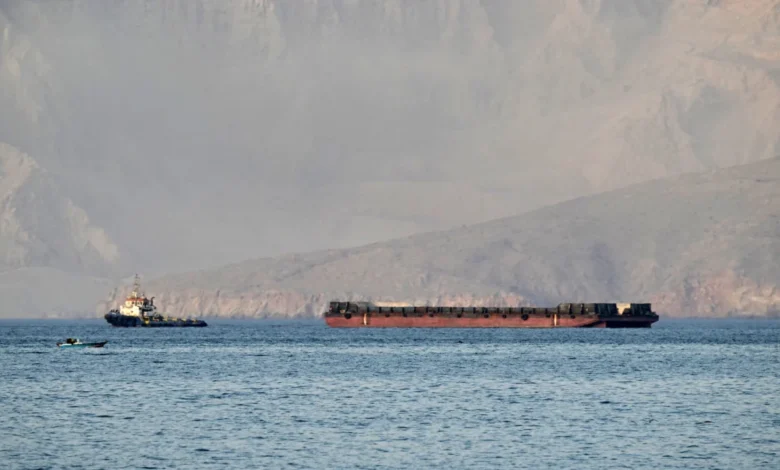
As of April 2026, the national average for gasoline in the United States has surged past $4.10 per gallon, with projections suggesting prices could climb even higher as the northern hemisphere enters the peak summer driving season. This spike is directly linked to the closure of the Strait of Hormuz, a critical maritime chokepoint through which approximately 20 percent of the world’s petroleum and liquefied natural gas (LNG) supplies transit daily. The disruption has not only rattled global markets but has also intensified the domestic debate over the future of American energy policy.
The Strategic Chokepoint: Conflict in the Strait of Hormuz
The current energy crisis was precipitated by the collapse of peace talks and subsequent military actions in the Persian Gulf. Following a series of strikes by U.S. and Israeli forces against Iranian targets, the Iranian government moved to blockade the Strait of Hormuz. This narrow waterway, bordered by Oman and Iran, connects the Persian Gulf with the Gulf of Oman and the Arabian Sea. It is the world’s most important oil transit point; its closure effectively strands millions of barrels of oil per day from major producers including Saudi Arabia, Iraq, Kuwait, and the United Arab Emirates.
The blockade has sent shockwaves through the global economy. While the United States has increased domestic production over the last decade, oil remains a globally traded commodity. Consequently, American consumers are feeling the impact of international price volatility. Donald Trump, currently serving his second term, has utilized the crisis to double down on fossil fuel extraction, frequently employing the slogan "drill, baby, drill." However, critics point out that even with record-high domestic production, the U.S. remains tethered to global price fluctuations dictated by geopolitical events in the Middle East.
Domestic Economic Fallout and the Fossil Fuel Windfall
The economic consequences of the Iran war have been stark. During the first month of the conflict alone, the world’s 100 largest oil and gas corporations recorded more than $30 billion every hour in what analysts describe as "unearned profit." These windfall gains have sparked outrage among consumer advocacy groups and progressive lawmakers, who argue that the fossil fuel industry is profiting from global instability while average citizens struggle with the rising cost of living.
In the U.S., the surge in energy prices has become a central political liability. Public opinion polls indicate that gasoline costs are the primary concern for Americans regarding the war in Iran. This economic pressure has led to a phenomenon known as "climate-hushing" among some centrist Democrats. Wary of being perceived as out of touch with the immediate financial burdens of their constituents, many politicians have softened their rhetoric on carbon reduction, focusing instead on short-term affordability.
However, Senator Sheldon Whitehouse, a prominent Democratic voice on climate issues, has warned that this silence is a strategic error. "Democrats will continue to lose the righteous and winnable fight over the future of clean energy if we cede the battlefield to fossil fuel liars and our own party’s misguided climate-hushers," Whitehouse stated. He argues that true energy independence can only be achieved by transitioning to renewable sources—such as wind and solar—which are immune to the whims of foreign dictators or the closure of shipping straits.
The Democratic Dilemma: Climate Protection vs. Cost Reduction
The internal debate within the Democratic Party centers on how to effectively communicate the benefits of the green transition during a period of high inflation. Paul Bledsoe, a former climate adviser in the Clinton administration, suggests that the party must prioritize the "affordability" narrative. According to Bledsoe, when clean energy is pitched as a way to cut consumer costs and bolster the economy, the public is more likely to support the secondary benefit of emissions reduction.
This shift in messaging is seen as a necessary response to the 2024 election cycle, where concerns over the "imperiled livability of the planet" were often overshadowed by the immediate "affordability crisis." Proponents of this new strategy argue that electric vehicles (EVs) and home electrification should be marketed as "inflation-proof" technologies. By decoupling household energy needs from the volatile oil market, proponents argue that the U.S. can create a more stable domestic economy.
Representative Ro Khanna has echoed these sentiments, suggesting that the party missed a critical opportunity during the early stages of the Ukraine war to link clean energy to national security. "We should have been linking the clean energy agenda to Americans’ economic security and our national security, and we should do that again," Khanna said. He has called for a "moonshot" for clean technology to wean the U.S. off its dependence on "petrostates."
Legislative Stagnation and the Rollback of Clean Energy Incentives
The political path forward is complicated by the current composition of Congress. Following the 2024 elections, Republicans regained control of both chambers, moving swiftly to gut the landmark climate legislation passed during the Biden administration. Incentives for solar installation, wind farm development, and EV tax credits have been largely rescived or significantly reduced.
Senate Minority Leader Chuck Schumer has proposed a plan to partially resurrect these clean energy incentives, framing them as a direct response to the "Trump-driven" energy price hikes. The Democratic plan focuses on lowering utility bills through localized renewable grids and providing relief for families looking to transition away from gasoline-powered vehicles. However, without control of the legislative agenda, these proposals remain largely aspirational, serving more as a platform for the upcoming midterm elections than as immediate policy solutions.
A Global Pivot: International Responses to the Energy Crunch
While the U.S. remains embroiled in a partisan divide over energy, other nations are moving aggressively to accelerate their transition. The European Union has drafted proposals to fast-track clean energy deployment to alleviate electricity bills, stating that "every delayed investment in the energy transition risks greater cost for society at a later stage."
In Southeast Asia, the response has been even more rapid. In South Korea and Malaysia, electric car sales have seen a significant uptick since the start of the Iran conflict. Indonesia’s President Prabowo Subianto recently announced a sweeping mandate to convert all motorcycles, cars, trucks, and tractors to electric power, calling the current crisis a "wake-up call" for the nation’s energy sovereignty. Similarly, in Pakistan, electric rickshaws have become a primary mode of transport as petrol costs become prohibitive for the working class.
These global shifts highlight a growing consensus that fossil fuel dependence is a systemic vulnerability. Simon Stiell, the United Nations’ climate chief, recently described clean energy as the "antidote to fossil fuel cost chaos." He noted that while wars can disrupt oil supplies, they cannot "disrupt the supply of sunlight for solar power," nor can they blockade the wind.
The Environmental Toll: Record Heat and Economic Fragility
The urgency of the energy transition is further underscored by the deteriorating state of the global climate. The start of 2026 has been recorded as the hottest and driest in U.S. history. Record-breaking temperatures in March have led to severe snow droughts in the Pacific Northwest and the Rocky Mountains, while heatwaves and wildfires have already begun to strafe the American West and the Great Plains.
These climate shocks have a direct impact on the economy, particularly in the agricultural sector. Rising food prices are increasingly linked to climate-driven crop failures and water scarcity. Research indicates that global economic growth could fall by as much as 50 percent over the next two decades if climate shocks are not mitigated. This data reinforces the argument that the "cost of living" and the "climate crisis" are two sides of the same coin.
Conclusion: The Path to a Renewable Future
As the conflict in the Middle East continues with no immediate resolution in sight, the U.S. faces a choice between doubling down on a volatile fossil fuel infrastructure or embarking on a rapid transition to renewable energy. For Democrats, the challenge lies in overcoming internal hesitations and presenting a unified front that emphasizes the practical, economic, and security benefits of green technology.
The upcoming international climate conference in Colombia is expected to serve as a pivotal moment for global leaders to craft a roadmap for moving beyond the fossil fuel era. For American policymakers, the Iran war serves as a stark reminder that energy policy is not merely an environmental concern, but the bedrock of national stability. Whether the Democratic Party can successfully navigate this strategic crossroads will likely determine both their political future and the country’s long-term economic resilience.