Earth Day 2026: Artemis II Mission and Environmental Leaders Signal New Era of Planetary Stewardship Amid Climate Crisis

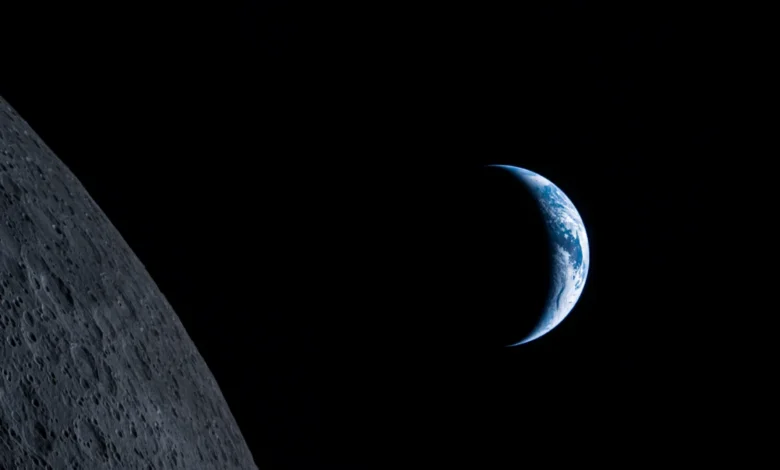
As the NASA Artemis II mission transitioned into its lunar flyby phase earlier this month, a singular moment of visual clarity captured the attention of the global community. Commander Reid Wiseman, operating from the Orion spacecraft, captured a high-resolution image of Earth partially illuminated by the moon’s glow. Titled "Hello, World," the photograph represents the first time a human being has photographed the entire terrestrial sphere from deep space since the conclusion of the Apollo program in 1972. The image, which shows the Earth as a fragile, blue-tinged crescent against the stark, cratered horizon of the lunar surface, has arrived at a pivotal moment in the global discourse regarding climate change and environmental conservation.
The release of the photograph coincided with Earth Day 2026, serving as a catalyst for renewed discussions on the habitability of our planet. Commander Wiseman described the experience as a transformative event for the four-person crew, noting that the ability to see the entire globe from pole to pole paused their operations in collective awe. This "overview effect"—a cognitive shift reported by astronauts when viewing Earth from space—is now being leveraged by environmental advocates to underscore the urgency of planetary protection. In a special commemorative broadcast of the "More To The Story" program, prominent environmental figures including former Vice President Al Gore, activist Catherine Coleman Flowers, and author Bill McKibben provided a sobering yet resilient analysis of the current state of the global environment.
The Historical Context of Planetary Photography
To understand the impact of the "Hello, World" photograph, it is necessary to look back to December 7, 1972. During the Apollo 17 mission, the crew captured the "Blue Marble" image, which became one of the most reproduced photographs in history. That image is widely credited with helping to galvanize the modern environmental movement, providing a visual realization that the Earth is a finite, isolated system.
For over five decades, humanity relied on robotic satellites and composite imagery to view the planet from a distance. The Artemis II mission marks the return of the human eye to deep space. Artemis II is the first crewed mission in NASA’s lunar exploration roadmap, utilizing the Space Launch System (SLS) rocket and the Orion spacecraft to carry a crew around the Moon and back to Earth. This mission serves as a precursor to Artemis III, which aims to land the first woman and the first person of color on the lunar surface. The "Hello, World" image serves as a technological and cultural bridge, connecting the pioneering spirit of the 20th century with the existential environmental challenges of the 21st.
Perspectives from Environmental Leadership
The intersection of space exploration and environmental policy was a central theme in recent interviews with three of the world’s leading climate voices. Former Vice President Al Gore, who has spent decades advocating for climate action through the Climate Reality Project, addressed the persistent opposition to environmental regulation. Gore highlighted what he termed a coordinated effort by the fossil fuel industry to obscure the realities of the climate crisis. Despite the political headwinds, Gore remains steadfast in his belief that the transition to renewable energy is inevitable. He argued that while the industry may attempt to "pull the wool over everybody’s eyes," the physical realities of a warming planet—manifesting in extreme weather and rising sea levels—will eventually render such denialism obsolete.
Catherine Coleman Flowers, a MacArthur Fellow and founder of the Center for Rural Enterprise and Environmental Justice, brought the focus down to the grassroots level. Her work emphasizes the disproportionate impact of climate change on marginalized communities, particularly in the American South. Flowers has long campaigned for basic human rights, such as functional sanitation and clean water, which are increasingly threatened by flooding and infrastructure failure linked to climate change. Her perspective provides a necessary counterpoint to the high-altitude view of the Artemis mission, reminding policymakers that the "fragile blue dot" is home to millions who lack basic environmental protections.
Bill McKibben, the founder of 350.org and Third Act, offered a strategic analysis of the current movement. McKibben, who authored some of the first mainstream books on global warming in the late 1980s, noted that the window for meaningful action is closing rapidly. He emphasized that while the technology for a green transition exists, the primary obstacles remain political and financial. McKibben’s participation in the Earth Day discourse centered on the need for mass mobilization to counter the influence of "oligarchic" control over environmental policy.
The Regulatory Landscape and Political Friction
The optimism expressed by these leaders exists in a state of tension with the current political climate in the United States. The administration has recently moved to roll back several key federal environmental protections, a move that critics argue undermines the progress made under the Paris Agreement. These rollbacks include the loosening of emission standards for power plants, the expansion of oil and gas leasing on federal lands, and the reduction of the Environmental Protection Agency’s (EPA) oversight authority.
Data from the National Oceanic and Atmospheric Administration (NOAA) indicates that 2025 was one of the warmest years on record, following a trend of record-breaking temperatures throughout the mid-2020s. Scientific reports suggest that the global mean temperature is dangerously close to the 1.5-degree Celsius threshold established by the Intergovernmental Panel on Climate Change (IPCC). Exceeding this threshold increases the risk of triggering "tipping points," such as the collapse of the West Antarctic Ice Sheet or the thawing of Arctic permafrost.
The administration’s policy shifts have drawn sharp criticism from the international community. During the most recent UN Climate Change Conference, delegates expressed concern that the withdrawal of U.S. leadership could stall global efforts to decarbonize the economy. However, the three leaders interviewed for "More To The Story" noted that the momentum of the private sector and sub-national governments (states and cities) continues to drive investment in wind, solar, and battery storage technologies.
Supporting Data: The Economic and Scientific Reality
The shift toward a sustainable future is increasingly supported by economic data, even as regulatory frameworks fluctuate. According to the International Energy Agency (IEA), global investment in clean energy reached record highs in 2025, significantly outpacing investment in fossil fuels. The cost of solar photovoltaic (PV) modules and lithium-ion batteries has plummeted by over 80% over the last decade, making renewable energy the most cost-effective option for new power generation in most parts of the world.
Furthermore, the "Hello, World" image serves as a reminder of the critical role satellite data plays in monitoring the Earth’s health. NASA’s Earth Science Division currently operates dozens of missions that track carbon dioxide levels, ocean temperatures, and forest cover. This data provides the empirical foundation for climate science, making it more difficult for political entities to dismiss environmental changes as mere speculation.
Broader Implications and the Path Forward
The Artemis II mission and the voices of Gore, Flowers, and McKibben converge on a single theme: the necessity of a unified planetary perspective. The mission demonstrates humanity’s technical capacity to reach the stars, while the climate crisis tests our moral and political capacity to preserve our only home.
The "Hello, World" photograph is more than a milestone in space photography; it is a call to action. Analysis suggests that the psychological impact of such imagery can lead to increased support for international cooperation. In an era defined by political polarization and the influence of powerful industrial interests, the image of a borderless Earth provides a rare moment of shared identity.
As the Artemis program continues toward its goal of a sustained lunar presence, the lessons learned from looking back at Earth will be just as vital as the discoveries made on the Moon’s surface. The environmental leaders featured in the Earth Day special emphasize that hope is not a passive state but an active pursuit. They argue that the combination of technological innovation, grassroots activism, and a renewed sense of planetary awe—sparked by moments like the Artemis "Hello, World" capture—can provide the necessary impetus to navigate the challenges of the 21st century.
In the final analysis, the success of the Artemis mission will not only be measured by the footprints left on the lunar regolith but by the degree to which it inspires a more rigorous and compassionate stewardship of the Earth. As Vice President Gore noted, the efforts to ignore the climate crisis are "doomed to fail" because the reality of the planet’s limits is now visible to everyone—from the rural communities of Alabama to the four astronauts currently orbiting the moon. The challenge remains to translate that visibility into a sustained, global commitment to a habitable future.