Maine Passes Nations First State-Level Hyperscale Data Center Moratorium as Opposition to AI Infrastructure Grows

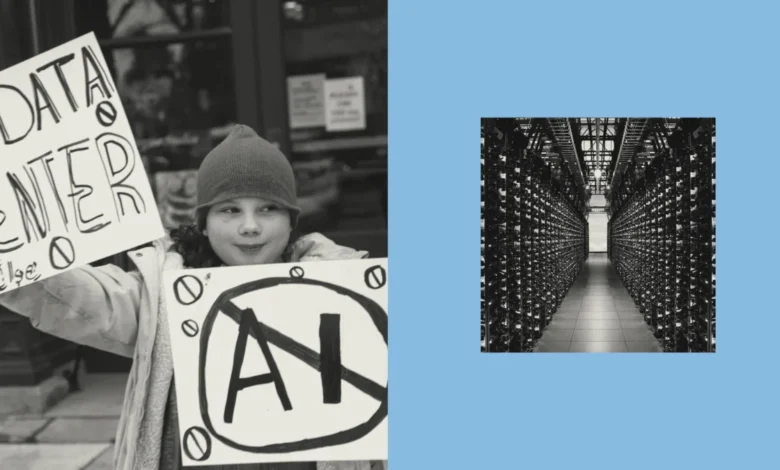
In a landmark decision that signals a turning point for the technology sector’s physical expansion, the Maine legislature has officially passed the nation’s first state-level moratorium on the construction of hyperscale data centers. The legislation, which was finalized this week, implements a 18-month freeze on all construction approvals for data center facilities requiring more than 20 megawatts of power. This specific threshold is significant, as it targets the massive computing hubs essential for training and deploying the next generation of generative artificial intelligence (AI) models. While developers have long argued that these facilities are engines of economic growth, Maine policymakers and community advocates are increasingly questioning the long-term sustainability and transparency of the industry.
The move by Maine marks a significant escalation in what has previously been a series of localized skirmishes. For years, the battle over data center placement was fought within the confines of town council chambers and municipal zoning commissions in places like Apex, North Carolina, and Gaines Township, Michigan. However, as the scale of these projects has ballooned to meet the insatiable appetite of the AI revolution, the conversation has shifted toward state and federal oversight. The Maine moratorium represents a "seismic shift" in public policy, reflecting a growing skepticism regarding the promises made by Big Tech companies and their developers.
The Economic Context and the Burden on Ratepayers
The primary driver behind the Maine moratorium is a deep-seated concern over the state’s energy infrastructure and the financial burden placed on its residents. Over the past five years, electricity bills in Maine have skyrocketed, with the average resident seeing a 58 percent increase in their utility costs. While analysts attribute much of this volatility to the state’s heavy reliance on natural gas for power generation, there is a mounting fear that the massive energy requirements of hyperscale data centers will exacerbate these costs.
Hyperscale data centers are not typical commercial buildings. A facility exceeding 20 megawatts can consume as much electricity as thousands of homes. When these "vampire loads" are added to the grid, they often necessitate expensive upgrades to transmission lines and the procurement of additional peak-capacity power. Under current regulatory frameworks, these costs are frequently socialized across the entire ratepayer base, meaning ordinary citizens may end up subsidizing the infrastructure needed for multi-billion-dollar tech corporations to run their algorithms.
Democratic State Representative Melanie Sachs, the primary sponsor of the measure, has been vocal about the lack of evidence supporting the industry’s claims of local benefit. In statements following the bill’s passage, Sachs noted that the trade-offs—ranging from water consumption to grid strain—have not been shown to provide a net benefit to Maine’s ratepayers or local economies. The argument that these facilities create a "tech hub" or significant job opportunities is also under scrutiny; once constructed, a data center that spans hundreds of thousands of square feet may only require a skeleton crew of a few dozen technicians and security guards to operate.
A Chronology of Growing Opposition
The path to Maine’s moratorium is part of a broader timeline of resistance that has accelerated alongside the AI boom of 2023 and 2024.
In the early 2020s, data center developers were largely welcomed with open arms by local governments eager for property tax revenue. However, by 2023, the scale of projects began to change. Microsoft, Google, Meta, and Amazon began seeking sites for "gigawatt-scale" campuses. This shift led to a series of notable local conflicts:
- April 2024: Voters in Festus, Missouri, ousted every incumbent council member who had supported a proposed data center project, signaling a "voter revolt" against the industry.
- Late 2024: Legal challenges mounted in Memphis, Tennessee, where the NAACP filed a lawsuit against Elon Musk’s xAI. The lawsuit alleges that the company violated the Clean Air Act by utilizing unauthorized gas-burning turbines to power its massive supercomputer, bypassing traditional grid constraints at the expense of local air quality.
- March 2025: Senator Bernie Sanders (I-Vt.) and Representative Alexandria Ocasio-Cortez (D-N.Y.) introduced a proposal for a nationwide moratorium on data center construction, citing the environmental impact and the concentration of power among a handful of "oligarchs."
Maine’s decision to move from local pushback to a statewide freeze is the culmination of these rising tensions. It provides a cooling-off period intended to allow state regulators to study the actual impacts on the grid and the environment before more permanent infrastructure is cemented into the landscape.
Supporting Data: The Energy-Water Nexus
The scale of the data center industry’s resource consumption is staggering. According to research from the Federation of American Scientists, the electricity demands of data centers used for AI are projected to increase by as much as 165 percent by 2030. Nationally, data centers accounted for about 3 percent of the total U.S. GDP growth in the past year, illustrating how central they have become to the modern economy. However, this growth comes with a physical price.
Beyond electricity, water usage is a critical concern. Hyperscale facilities require millions of gallons of water per day for evaporative cooling systems to prevent servers from overheating. In regions facing drought or aging water infrastructure, this creates a direct competition between the needs of the local population and the needs of the digital cloud. In Maine, where environmental preservation is a cornerstone of the state’s identity, the potential for massive water withdrawal from local aquifers has become a rallying cry for conservationists.
Furthermore, the industry’s reliance on tax incentives has come under fire. Research from Good Jobs First, a corporate accountability organization, reveals that data centers consistently receive millions of dollars in tax breaks. Despite these public subsidies, developers often use non-disclosure agreements (NDAs) and operate under anonymous LLCs during the planning phases. This "black box" approach prevents state regulators and the public from seeing the full scope of the financial arrangements, leading critics like Greg LeRoy to argue that these projects are often a "bad deal" for the public.
Industry Reaction and the "Closed for Business" Warning
The tech industry and its lobbying arms have reacted to the Maine moratorium with sharp criticism. Dan Diorio, a representative for the Data Center Coalition, argues that the state is sending a damaging signal to global investors. In an official statement, Diorio claimed that a statewide moratorium would discourage investment and force Maine to relinquish significant long-term economic dividends.
Industry proponents argue that data centers are the backbone of the modern economy and that by stalling their construction, Maine risks falling behind in the global AI race. They point to the potential for data centers to anchor renewable energy projects, suggesting that tech companies’ high demand for green power can actually accelerate the transition to a carbon-neutral grid by providing a guaranteed buyer for wind and solar energy.
However, analysts like Arjun Krishnaswami of the Federation of American Scientists suggest that the industry has failed to prove this "virtuous cycle" to the public. Krishnaswami notes that while tech companies are not particularly sensitive to the price of electricity—given their massive profit margins—they are highly sensitive to the speed of construction. He suggests that policymakers could use this leverage to demand a "premium" for grid access, which could then be used to fund direct bill reductions for residents or social programs. Instead, the industry’s historical preference for secrecy has eroded public trust.
Broader Impact and National Implications
The Maine moratorium is unlikely to be an isolated incident. Currently, twelve other states are considering similar legislative freezes or increased regulatory hurdles for hyperscale data centers. The trend suggests a shift in how the United States views its digital infrastructure: no longer as a harmless "cloud" in the sky, but as a heavy industrial sector with significant environmental and social footprints.
The political landscape is also divided on the issue. While progressive lawmakers like Sanders and Ocasio-Cortez push for moratoria and environmental accountability, others, including former President Donald Trump, have advocated for building data centers "big and fast" to ensure American dominance in AI. This creates a complex regulatory environment where state-level actions like Maine’s may come into direct conflict with federal industrial policy.
For the next eighteen months, Maine will serve as a laboratory for how a state can balance the pressures of technological advancement with the protection of its citizens and resources. The findings of the Maine legislature during this period will likely set the precedent for how data centers are taxed, regulated, and integrated into the American landscape for decades to come. As the "AI infrastructure reckoning" moves from small-town meetings to the halls of state government, the era of unchecked expansion for Big Tech’s physical footprint appears to be coming to a close.