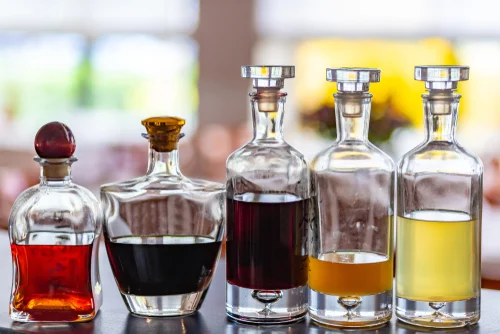
In a landmark decision that challenges over a century and a half of federal tax enforcement, the 5th U.S. Circuit Court of Appeals in New Orleans has struck down a federal ban on home distilling that dates back to the Reconstruction era. The ruling, issued on Friday, April 10, 2026, marks a significant shift in the interpretation of congressional taxing authority, concluding that the long-standing prohibition on the production of spirits for personal use exceeds the powers granted to the federal government by the Constitution. The case, brought by the Hobby Distillers Association, represents a pivotal victory for enthusiasts who have long argued that spirits should be treated with the same legal leniency as home-brewed beer and fermented wine.
The Hobby Distillers Association (HDA), a non-profit organization representing thousands of amateur distillers across the United States, filed the lawsuit challenging the constitutionality of several sections of the Internal Revenue Code. Specifically, the plaintiffs targeted statutes that criminalized the operation of a "still" for the production of spirits in any residential dwelling. Under the previous legal framework, individuals caught distilling even small amounts of liquor for personal consumption—such as the popular "apple-pie vodka" cited in court documents—faced severe federal penalties, including up to five years in federal prison and fines reaching $10,000.
The Constitutional Conflict: Taxing Power vs. Police Power
The central legal question before the court was whether Congress possesses the authority to prohibit a purely private, non-commercial activity under the guise of its power to lay and collect taxes. Writing for the majority, 5th Circuit Judge Edith Hollan Jones delivered a sharp critique of the government’s defense of the 158-year-old ban. The federal government argued that the ban was a "necessary and proper" measure to ensure the integrity of the federal excise tax system on spirits. By banning home production, the government contended, it prevented the "leakage" of untaxed alcohol into the market and simplified the collection of revenue from commercial distilleries.
However, Judge Jones and the appellate panel rejected this reasoning, asserting that the government’s logic lacked a "limiting principle." The court found that if the government could criminalize private home activities simply because they might theoretically interfere with tax collection, there would be no end to federal overreach. In a notable passage of the opinion, Judge Jones suggested that the government’s theory could be used to justify the criminalization of other modern domestic activities, such as working remotely or operating small, home-based businesses, under the pretense that these activities make it more difficult for the IRS to monitor and tax commercial real estate or corporate office structures.
"Without any limiting principle, the government’s theory would violate this court’s obligation to read the Constitution carefully to avoid creating a general federal authority akin to the police power," Jones wrote. Under the U.S. Constitution, "police power"—the authority to regulate for the health, safety, and welfare of the citizenry—is reserved to the states, not the federal government.
A Historical Legacy of the Reconstruction Era
The ban in question was enacted in 1868, a period of significant upheaval in American history. Following the Civil War, the federal government was burdened with massive debt and sought to maximize revenue through aggressive excise taxes on various goods, most notably tobacco and alcohol. The 1868 Act was designed to crush the "moonshining" culture that was prevalent in rural areas, where farmers often converted excess grain into whiskey to make it easier to transport and sell.
For 158 years, this law remained a cornerstone of federal alcohol regulation. While the 18th Amendment and the subsequent era of Prohibition (1920–1933) banned all alcohol, the repeal via the 21st Amendment returned regulatory power to the states but left federal taxing statutes intact. In 1978, President Jimmy Carter signed legislation that legalized the home production of beer and wine for personal and family use, but spirits were pointedly excluded from this liberalization. The federal government maintained that distilling was inherently more dangerous due to the risk of explosions and the potential for producing toxic methanol, and thus required strict industrial oversight.
The 5th Circuit’s ruling effectively dismantles this exclusion, suggesting that while the government can tax the sale of spirits, it cannot outright ban the act of making them for personal use within a home.
Chronology of the Legal Challenge
The path to this appellate victory began years ago as the Hobby Distillers Association mobilized its members to challenge what they viewed as an arbitrary distinction between fermentation (beer/wine) and distillation (spirits).
- 2022-2023: The Hobby Distillers Association gathers evidence and plaintiffs, arguing that modern technology has made small-scale distilling safe and that the federal ban is a relic of post-war revenue desperation.
- Early 2024: The HDA files its initial lawsuit in federal district court, naming the Department of Justice and the Alcohol and Tobacco Tax and Trade Bureau (TTB) as defendants.
- Late 2024: A district court judge initially upholds the ban, citing decades of precedent regarding the "Necessary and Proper Clause" and the government’s broad latitude in tax enforcement. The HDA immediately appeals to the 5th Circuit.
- 2025: Oral arguments are heard in New Orleans. The HDA emphasizes that they are not seeking to sell liquor, but merely to engage in a traditional craft for personal consumption.
- April 10, 2026: The 5th Circuit issues its reversal, declaring the home distilling ban unconstitutional.
Supporting Data and Economic Context
The economic implications of the ruling are multifaceted. According to the Distilled Spirits Council of the United States (DISCUS), the spirits industry is a major driver of the U.S. economy, contributing over $200 billion annually. Federal excise taxes on spirits are significantly higher than those on beer or wine. As of 2025, the federal excise tax on spirits is $13.50 per proof gallon.
The government argued that legalizing home distilling would result in a loss of revenue. However, proponents of the ruling point to the "Homebrewing Effect." When homebrewing was legalized in 1978, it did not destroy the commercial beer industry; instead, it fueled the craft beer revolution, which eventually led to thousands of new taxable businesses and a massive increase in total tax revenue.
Data from New Zealand, where home distilling was legalized in 1996, shows no significant spike in alcohol-related health issues or a collapse in commercial liquor tax revenue. Instead, it fostered a sophisticated culture of amateur "spirits-smiths" who eventually transitioned into the commercial craft sector.
Official Responses and Industry Reaction
The Department of Justice (DOJ) has expressed disappointment with the ruling, stating that it is reviewing the decision and considering all legal options, including a petition for a writ of certiorari to the U.S. Supreme Court. A spokesperson for the TTB noted that the agency remains concerned about the public health risks associated with unregulated distilling, particularly the danger of house fires caused by pressurized stills and the risk of methanol poisoning from improperly discarded "foreshots."
Conversely, the Hobby Distillers Association celebrated the ruling as a "triumph for common sense and constitutional limits."
"This isn’t about avoiding taxes; it’s about the right to engage in a time-honored craft in the privacy of one’s own home," said a representative for the HDA. "Just as Americans can bake their own bread or brew their own beer, they should be allowed to master the art of distillation without the fear of a five-year prison sentence hanging over their heads."
The craft spirits industry has offered a cautious but generally positive response. Many small-scale commercial distillers started as "outlaw" hobbyists, and industry leaders believe that a legal pathway for hobbyists will lead to more innovation and a more educated consumer base.
Broader Impact and Legal Implications
The 5th Circuit’s decision could have far-reaching consequences beyond the world of spirits. By narrowing the scope of the "Necessary and Proper Clause" as it relates to the Taxing Clause, the court has signaled a willingness to rein in federal agencies. This ruling aligns with a broader judicial trend of "New Federalism," which seeks to restore powers to the states and individuals that have been absorbed by the federal government over the last century.
If the Supreme Court takes up the case and upholds the 5th Circuit’s view, it could jeopardize other federal bans that rely on taxing authority for their legal justification. It also opens the door for states to implement their own regulations on home distilling. Much like the current landscape of cannabis or lane-splitting for motorcycles, home distilling may soon become a "patchwork" of state-level laws, where it is fully legal in some jurisdictions and subject to state-level permits in others.
For now, the ruling applies only within the jurisdiction of the 5th Circuit (Texas, Louisiana, and Mississippi), but the precedent it sets creates a significant legal hurdle for federal prosecutors nationwide. As the legal dust settles, amateur distillers across the country are watching closely, hoping that the "apple-pie vodka" once brewed in the shadows can finally be brought into the light of the American kitchen.