The Rise of Mass Timber Architecture and the Global Push for Sustainable Urban Construction

For centuries, the skyline of the modern metropolis has been defined by the cold rigidity of steel and the heavy footprint of concrete. These materials, birthed from the Industrial Revolution, allowed architects to pierce the clouds, creating vertical cities that could withstand the buffeting of high-altitude winds and the tremors of the earth. However, as the global climate crisis intensifies, the construction industry—responsible for nearly 40 percent of global energy-related carbon emissions—is looking backward to move forward. Architects and engineers are increasingly abandoning the carbon-intensive "gray" materials of the 20th century in favor of an ancient resource updated with 21st-century technology: mass timber.
Mass timber is not the traditional 2×4 lumber found in residential housing. It is a category of engineered wood products, including cross-laminated timber (CLT) and glue-laminated timber (glulam), created by bonding layers of wood together with structural adhesives. The result is a material that rivals the strength of steel and concrete while remaining significantly lighter and, crucially, serving as a carbon sink rather than a carbon source. From the recently completed 10-story "Hive" in Vancouver to the record-breaking Ascent MKE in Milwaukee, mass timber is proving that the future of urban density can be both high-rise and high-sustainability.
The Engineering Evolution of Mass Timber
The transition toward timber skyscrapers is rooted in biomimicry. In a natural forest, trees have evolved to be flexible; if a pine or fir were perfectly stiff, it would snap under the pressure of a gale. By swaying, trees dissipate energy. This same principle was applied to the early steel skyscrapers of the 20th century to ensure they did not fracture during windstorms or seismic events. Mass timber takes this a step further by utilizing the inherent cellular flexibility of wood, reinforced through engineering.
Cross-laminated timber (CLT) consists of layers of kiln-dried lumber stacked in alternating directions and bonded under high pressure. This cross-grain structure provides exceptional dimensional stability and strength in two directions, making it ideal for floor slabs and load-bearing walls. Glue-laminated timber (glulam), where the grain runs parallel, is typically used for columns and beams.
Because these materials are prefabricated in factories to precise specifications, they can be assembled on-site like a giant Lego set. This process significantly reduces construction noise, waste, and time. Industry data suggests that mass timber projects can be completed up to 25 percent faster than traditional concrete builds, offering a significant economic incentive for developers alongside the environmental benefits.
A Chronology of Vertical Growth
The timeline of mass timber’s ascent is a testament to rapid technological and regulatory shifts. For decades, building codes strictly limited the height of wooden structures due to fire concerns. However, a decade of rigorous testing and advocacy has moved the needle.

In 2012, the 10-story Forte building in Melbourne, Australia, was considered a pioneer at 105 feet. By 2017, the University of British Columbia completed Brock Commons Tallwood House, an 18-story student residence that served as a global proof-of-concept for mass timber’s viability in high-density housing.
The momentum accelerated in 2019 when Mjøstårnet, an 18-story tower in Brumunddal, Norway, reached 280 feet, briefly holding the title of the world’s tallest timber building. That record was shattered in 2022 by the Ascent MKE building in Milwaukee, Wisconsin. Standing at 284 feet and 25 stories, Ascent utilized a hybrid system of mass timber over a concrete podium, housing 259 luxury apartments.
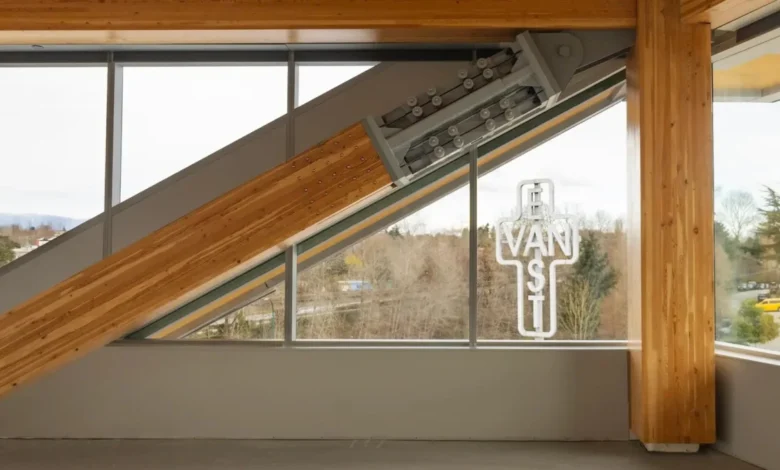
Most recently, in early 2024, crews in Vancouver completed the "Hive." While not the tallest in the world at 10 stories, it represents a new frontier in seismic engineering. It is currently North America’s tallest brace-framed, seismic-force-resisting timber structure, designed specifically to withstand the volatile tectonic activity of the Pacific Northwest.
Seismic Resilience and the Science of Stability
One of the primary hurdles for tall timber has been the perception of fragility during earthquakes. To address this, researchers have subjected mass timber structures to extreme stress tests. At the University of California, San Diego (UCSD), engineers recently utilized the world’s largest outdoor shake table to test a full-scale, 10-story timber building.
The structure was equipped with a "rocking wall" system—a massive timber core anchored to the foundation with high-strength steel rods. During simulated seismic events, the wall is designed to rock slightly and then snap back into its original position, preventing permanent deformation.
"It performed phenomenally," noted Shiling Pei, a professor of civil and environmental engineering at the Colorado School of Mines and a lead researcher on the project. The building survived 88 simulated earthquakes with virtually no structural damage.
The Vancouver "Hive" employs a different but equally innovative technology: Tectonus dampers. These devices act as high-capacity shock absorbers. During an earthquake, the dampers dissipate energy through friction and internal spring mechanisms, allowing the building to "self-center" once the shaking stops. This level of resilience is vital not just for safety, but for sustainability. If a building is damaged beyond repair in an earthquake, the carbon stored within its walls is lost, and the emissions required to replace it are doubled.

Fire Safety and the "Char" Phenomenon
The most common critique of mass timber is the risk of fire. However, structural engineers argue that mass timber is often safer in a fire than unprotected steel. Steel begins to lose its structural integrity and "wilt" at approximately 1,100 degrees Fahrenheit, often leading to sudden collapse.
In contrast, mass timber behaves like a thick log in a campfire. When exposed to fire, the outer layer of the wood chars at a predictable rate. This char layer acts as an insulating barrier, protecting the inner core of the wood from heat and oxygen, allowing the beam to maintain its load-bearing capacity for hours.
"If you have a campfire, you end up at the end of the night with black logs," explained Lindsay Duthie, an architect at Dialog, the firm behind the Hive. "That’s the char layer that actually acts as a protective coating that prevents it from burning further." Modern building codes now recognize this property, allowing for "encapsulated" mass timber designs that provide fire resistance ratings of up to three hours.
Ecological Impact and Carbon Sequestration
The environmental argument for mass timber is twofold: the avoidance of emissions and the sequestration of carbon. The production of cement and steel accounts for approximately 8 percent and 7 percent of global CO2 emissions, respectively. Wood, by contrast, is a renewable resource that naturally captures carbon through photosynthesis.
When a tree is harvested and converted into CLT, that carbon is "locked" into the building’s structure for the duration of its life. According to data from the Wood Products Council, using wood in place of other materials can reduce the carbon footprint of a building by as much as 40 percent.
Furthermore, mass timber can support healthier forest ecosystems. Much of the wood used for CLT comes from small- and medium-diameter trees, including those killed by pests like the mountain pine beetle or those removed during "thinning" operations. The US Forest Service and other agencies use thinning to prevent overcrowding and reduce the fuel loads that lead to catastrophic wildfires. By creating a commercial market for this low-value wood, the mass timber industry provides a financial incentive for responsible forest management.
Official Responses and Industry Outlook
The shift toward timber has garnered support from both environmentalists and government officials. In British Columbia, the provincial government has been a vocal proponent, recently updating building codes to allow for mass timber buildings up to 18 stories, an increase from the previous 12-story limit.

"We are going back to how we used to build, but with the benefit of modern science," said Duthie. This sentiment is echoed by Katie Mesia, firmwide design resilience co-leader at Gensler, one of the world’s largest architecture firms. Mesia points to the "biophilic" benefits of wood—the innate human desire to be connected to natural materials. "It has a tactile quality about it that people want to interact with," she noted. "That desire to be close to nature has always been there."
However, challenges remain. The supply chain for mass timber is still maturing, and in many regions, the cost of CLT remains higher than traditional concrete due to transportation and manufacturing expenses. Furthermore, the industry must ensure that the increased demand for wood does not lead to deforestation or the depletion of old-growth forests. Certifications such as the Forest Stewardship Council (FSC) and the Sustainable Forestry Initiative (SFI) are essential to ensuring that the timber used in these skyscrapers is truly sustainable.
The Future of the Urban Canopy
The success of projects like the Hive and Ascent MKE has sparked a global "arms race" for the tallest timber tower. In Perth, Australia, plans are underway for "C6," a proposed 626-foot residential tower that would utilize a hybrid timber-and-concrete structure to reach 50 stories. In Switzerland, the "Rocket&Tigerli" project aims to reach 328 feet using a mass timber system designed for high-seismic zones.
As urban populations continue to grow, the need for dense, vertical housing is undeniable. Mass timber offers a path to meeting this demand without exacerbating the climate crisis. By combining the evolutionary wisdom of the forest with the precision of modern engineering, architects are proving that the cities of the future may look less like concrete jungles and more like an extension of the natural world.
One day soon, the standard for a "modern" building will not be how much steel it contains, but how much carbon it keeps out of the atmosphere. In that future, the swaying of a skyscraper in the wind will not just be a feat of engineering, but a reminder of the trees that made it possible.