The Long Road to Recovery: A Lawyer’s Ordeal with Post-Intensive Care Syndrome Highlights the Hidden Scars of Critical Illness

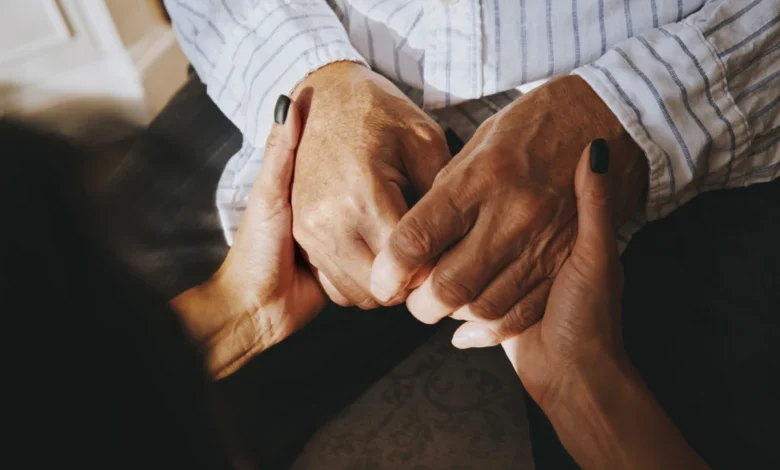
The harrowing experience of Joseph Masterson, a 63-year-old attorney on the cusp of retirement, serves as a stark illustration of the profound and often underestimated challenges faced by survivors of critical illness. What began as a sudden medical emergency on November 16th in Pittsburgh, when Masterson suffered a cardiac arrest while driving, culminating in a crash into a guardrail, quickly escalated into a prolonged battle for survival and a subsequent, arduous journey of recovery. His case underscores the complex reality of Post-Intensive Care Syndrome (PICS), a constellation of physical, cognitive, and psychological impairments that can plague individuals long after they leave the critical care unit.
A Near-Fatal Event and a Glimmer of Hope
The incident unfolded on a seemingly ordinary day. Masterson, days away from a well-earned retirement, experienced a sudden cardiac arrest while at the wheel. The vehicle veered off course, impacting a guardrail, and Masterson lost consciousness. Fortunately, the immediate vicinity of the accident was not devoid of help. Alert and quick-thinking fellow drivers immediately stopped, breaking into Masterson’s vehicle to extricate him from harm’s way and move him to safety. Their swift actions were compounded by the presence of a volunteer firefighter who happened to be passing by. This individual administered vital cardiopulmonary resuscitation (CPR) until emergency medical services arrived.
Masterson was rushed to UPMC Mercy hospital, where he entered the intensive care unit (ICU). His condition was critical. He spent 18 days in the ICU, with 14 of those days requiring mechanical ventilation. The prolonged stay in critical care led to the development of delirium, a common and distressing complication in such settings. This necessitated the administration of antipsychotic medications. Despite the presence of a feeding tube, Masterson experienced significant weight loss. "Honestly, we weren’t sure he was going to survive," recounted Ron Dedes, Masterson’s brother-in-law, reflecting the gravity of the situation and the profound uncertainty that loomed over the family.
Against considerable odds, Masterson did survive. He was discharged from the hospital on February 1st, returning home to the constant support of his family. His recovery has been a testament to his resilience and the dedicated efforts of a multidisciplinary team of therapists. While he has regained the ability to walk, albeit with lingering weakness, he has also achieved a significant degree of independence in his personal care. His speech, initially slurred and confused, has shown remarkable improvement, enabling him to perform simple tasks like preparing a sandwich.
The Lingering Shadow of Cognitive Impairment
Despite these significant strides, a primary concern remains Masterson’s cognitive function. His sister, Patti Dedes, highlighted the challenges. "Our biggest worry now is his memory," she stated. Masterson, who once navigated complex legal matters, now struggles with recalling recent conversations and events that occurred just hours prior. Tasks that were once second nature, such as operating a microwave or making a phone call, have become insurmountable hurdles. In a recent interview, Masterson described himself as "much, much better than I was," yet he faltered in stating his age, a clear indication of the cognitive deficits he faces. Cognitive assessments conducted post-discharge revealed significant cognitive deterioration and depression.
Understanding Post-Intensive Care Syndrome (PICS)
The persistent symptoms experienced by Masterson are a well-documented phenomenon known among critical care physicians as Post-Intensive Care Syndrome, or PICS. This syndrome can manifest as a spectrum of physical, psychological, and cognitive impairments that can persist for months or even years after a patient’s discharge from the ICU.
The prevalence of PICS is substantial. In the United States, over 5 million individuals are admitted to ICUs annually across approximately 5,000 hospitals. Research indicates that more than half of these patients experience some form of PICS. The risk is further amplified by advanced age, making individuals like Masterson, nearing the age of 65, particularly vulnerable.
The Disconnect Between Survival and Recovery
A significant disconnect often exists between the public perception of surviving critical illness and the reality of recovery. "The belief is that they’ll come out of the hospital and in two or three weeks they’ll be back to normal," observed Dr. Brad Butcher, Masterson’s physician and a researcher who has recently published on PICS in JAMA. "That doesn’t align with the reality."
Indeed, as ICU utilization and treatment advancements continue to improve, the number of individuals surviving critical illness is on the rise. The Society of Critical Care Medicine (SCCM) estimates that between 70% and 90% of adult ICU patients now survive. While this represents a triumph of modern medicine, it also signifies a growing population facing the long-term consequences of critical care.
"Everyone is grateful that the patient survived," stated Dr. Lauren Ferrante, a pulmonary critical care physician and researcher at Yale School of Medicine. "But that’s just the beginning of a long road to recovery." A study co-authored by Dr. Ferrante focused on patients aged 70 and older, revealing that only about half had regained their pre-ICU functional capacity within six months of discharge.
The Multifaceted Challenges of PICS
Patients emerging from intensive care face a daunting array of challenges. The physical sequelae of PICS can include profound weakness, persistent pain, neuropathy (numbness or tingling in the extremities), and malnutrition. Psychologically, many patients grapple with anxiety and depression, mirroring the effects seen in veterans of combat or survivors of sexual assault. Cognitive impairments, similar to those experienced by Masterson, are also common, encompassing difficulties with memory, attention, concentration, and language processing.
"For many people, surviving critical illness is a life-altering experience," Dr. Butcher emphasized. Even patients admitted to the ICU following planned or emergency surgeries exhibit high rates of new physical, mental, and cognitive problems a year later.
The Double-Edged Sword of Intensive Care
Ironically, the very treatments that save lives in the ICU can also contribute to the development of PICS. Patients in critical care are typically experiencing severe organ failure requiring constant monitoring and immediate intervention. This often necessitates mechanical ventilation, which in turn typically requires sedation. Dr. Carla Sevin, a pulmonary critical care physician and director of the ICU Recovery Center at Vanderbilt University Medical Center, explained that sedation can lead to delirium, a key factor in cognitive decline.
Furthermore, the ICU environment itself presents significant challenges. The incessant beeping of monitors, the 24/7 bright lighting, and often restricted family visitation can disrupt sleep patterns and deprive patients of comforting social interaction. These environmental stressors can exacerbate confusion and anxiety.
Gregory Matthews, an 80-year-old retired accountant, recounted his experience after a lung transplant in 2014, which involved nearly a month in the ICU. He vividly recalls hallucinations, including visions of mice and being framed for drug trafficking. "One day, I thought a doctor was a murderer; I could see the rifle," Matthews shared. "So I jumped out of bed," he added, recalling how he ripped out his IV lines, requiring the staff to restrain him for several days.
The physical consequences of immobility in the ICU are also severe. Patients rapidly lose muscle mass and strength. "Our bodies are not designed to be lying down all day," noted Dr. Ferrante. This loss of physical function requires extensive rehabilitation.
The Rise of Post-ICU Clinics
Recognizing the widespread and persistent nature of PICS, medical professionals and administrators at approximately 35 hospitals across the United States have established specialized post-ICU clinics. These clinics bring together multidisciplinary teams, including physicians, nurses, pharmacists, physical, occupational, cognitive, and speech therapists, and social workers, to comprehensively assess and manage the complex needs of PICS survivors.
The Vanderbilt University Medical Center’s ICU Recovery Center saw its first patient in 2012, while the Critical Illness Recovery Center at the University of Pittsburgh Medical Center, founded by Dr. Butcher in 2018, manages around 100 patients annually, including Joseph Masterson. Yale University opened its clinic in 2022.
These clinics implement six evidence-based practices recommended by the SCCM, which have demonstrated significant reductions in post-ICU symptoms. These include employing lighter sedation, facilitating early mobilization, conducting daily breathing trials to expedite ventilator weaning, and removing restrictions on family visitation.
Holistic Care and Future Planning
Beyond direct medical interventions, these clinics often offer vital support groups for patients and their families. Evidence suggests that keeping an ICU diary, documenting patient and caregiver experiences, and engaging in physical rehabilitation can significantly improve mental health post-discharge.
Crucially, these clinics facilitate discussions about advance care planning. For patients who may face another critical illness, conversations about their preferences are paramount. Would they opt for intensive care and the risk of its sequelae again, or would they choose palliative care, prioritizing comfort over aggressive curative measures? The reality is that some patients are left with permanent disabilities following their ICU stay.
A Path Forward: Optimism Amidst Ongoing Challenges
Despite the profound challenges, there is a growing optimism within the critical care community. Dr. Butcher expressed confidence that advancements in diagnostic tools, preventative strategies, and treatments will continue to emerge. "We are going to find better diagnostic tools, better prevention strategies, and better treatments," he stated.
However, the immediate experience of the ICU remains disorienting and, for many, traumatic. A study conducted by Dr. Butcher at his post-ICU clinic revealed that many patients wished to set limitations on future medical interventions. Approximately one-third of patients expressed a preference for reduced aggressive care, with nearly a quarter opting for "do not resuscitate" and "do not intubate" orders. Almost 7% indicated they would prefer never to return to an ICU.
Joseph Masterson continues his recovery, finding solace and stability at home. "I haven’t been out much," he admitted. "I’ve been better off at home." His aspiration is to regain enough strength to resume running, a cherished activity he once enjoyed several times a week. His prior excellent physical condition and cognitively demanding career are considered positive factors for his recovery trajectory, according to Dr. Butcher.
The future for PICS patients like Masterson remains a delicate balance of hope and concern. "Who knows how he’ll be down the line," Dedes remarked. "We’re taking it day by day." The journey through critical illness and its aftermath is a stark reminder that survival is often just the beginning of a long and complex path toward reclaiming one’s life. The ongoing efforts to understand and mitigate PICS are crucial for ensuring that survivors of critical care receive the comprehensive support they need to navigate the profound and lasting impact of their ordeal.