Ukraine’s Military Robot Surge Aims to Offset Drone Risks to Humans and Reshape Future Warfare

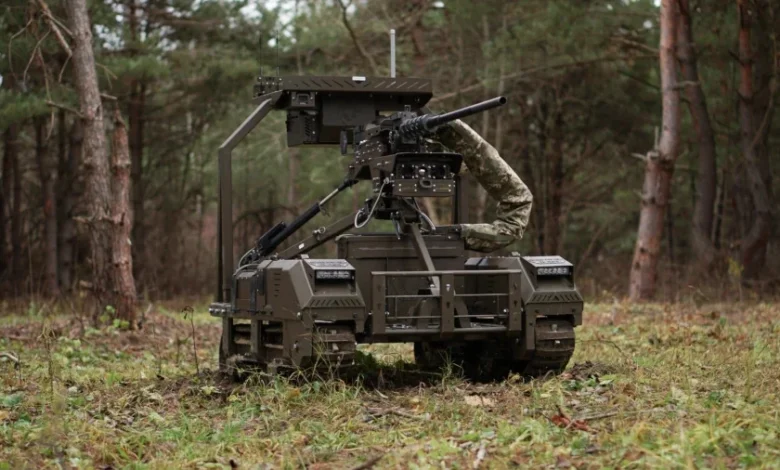
Ukrainian forces are increasingly deploying robotic systems, both aerial and ground-based, to replace human soldiers in the perilous "kill zones" of the battlefield, signaling a profound shift in modern military doctrine. This strategic pivot, driven by the escalating lethality of drone warfare, seeks to mitigate casualties and enhance operational effectiveness, with Ukrainian President Volodymyr Zelenskyy recently highlighting a significant robotic milestone involving the surrender of Russian soldiers to autonomous units. While the claim awaits independent verification, it underscores Ukraine’s rapid embrace of advanced uncrewed systems, which are already reshaping the conflict and offering critical lessons for militaries worldwide.
The Rise of Uncrewed Systems: A New Era of Warfare
The conflict in Ukraine has rapidly evolved into a proving ground for advanced military technologies, most notably uncrewed systems. What began with conventional ground maneuvers has transformed into a high-tech battle of attrition, where drones and robots play increasingly central roles. This evolution was spurred by the intense and often static nature of trench warfare, combined with the widespread availability of commercial drone technology adapted for military use.
-
Drone Dominance and the "Kill Zone"
The early phases of the war saw an unprecedented proliferation of drones, from inexpensive commercial quadcopters to sophisticated military-grade aerial vehicles. These flying platforms quickly became indispensable for reconnaissance, artillery spotting, and ultimately, direct combat. The introduction of FPV (first-person view) kamikaze drones marked a critical turning point, allowing operators to deliver explosive payloads with pinpoint accuracy against armored vehicles and even individual soldiers. These drones, now widely employed by both Ukrainian and Russian forces, are responsible for a majority of battlefield casualties as the full-scale war enters its fifth year. The constant overhead surveillance from these drones has effectively created expansive "kill zones" stretching up to 12 miles (20 kilometers) on either side of the frontlines. Within these zones, human movement, even during daylight, is fraught with extreme danger, forcing soldiers to rely on the cover of darkness, anti-thermal cloaks, or heavy fog to avoid detection and strikes. This pervasive threat has made traditional infantry maneuvers exceptionally hazardous, compelling commanders to seek alternative methods for engaging the enemy and protecting their personnel.
Beyond the immediate frontline, long-range aerial drones, such as Russia’s Iranian-made Shahed drones and Ukraine’s indigenously developed counterparts, have extended the conflict far beyond the trenches, targeting critical infrastructure and civilian areas thousands of kilometers from the front. Furthermore, Ukraine’s innovative use of uncrewed sea drones has successfully challenged Russia’s conventional naval superiority in the Black Sea, demonstrating how asymmetric robotic warfare can neutralize traditional power imbalances. This trend has also been observed in other global hotspots, such as the Red Sea and Persian Gulf, where Houthi and Iranian sea drone attacks have disrupted international shipping. -
The Evolution of Ground Robotics
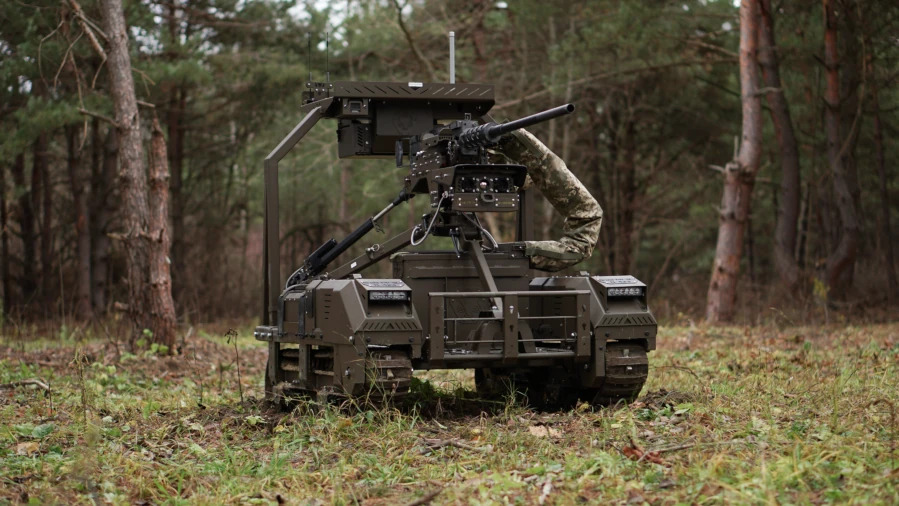
While aerial drones garnered significant attention for their pervasive impact, the deployment of uncrewed ground vehicles (UGVs) initially lagged. Early ground robots were primarily used for mundane tasks like mine clearance or basic reconnaissance. However, the increasing lethality posed by drones to human combatants has accelerated the development and integration of UGVs into frontline operations. Ukrainian companies like DevDroid have been at the forefront of this innovation, developing systems such as the Droid TW 12.7, a military robot armed with a remote-controlled machine gun, showcasing the rapid pace of domestic technological adaptation. These systems are designed to perform the "dull, dirty, and dangerous" tasks, minimizing human exposure to direct enemy fire and drone threats. The strategic imperative for such systems became undeniable as the human cost of conventional engagements soared, pushing military planners to envision a future where machines could undertake the riskiest missions.
Unprecedented Claims and Verified Growth
Ukraine’s commitment to robotic warfare is not merely theoretical; it is backed by substantial increases in deployment and a growing number of missions. Official statements and public reports reveal a clear upward trend in the use of UGVs across various operational capacities.
-
Zelenskyy’s Milestone Assertion
President Volodymyr Zelenskyy recently claimed a significant breakthrough: Ukrainian ground robots and drones successfully overcame a Russian military position on their own, ultimately forcing the surrender of Russian soldiers. If independently verified, this event would represent a major milestone in modern warfare, demonstrating the potential for uncrewed systems to achieve tactical objectives previously thought to require human intervention. Zelenskyy’s statement, though unverified by external sources, was accompanied by a promotional video where he highlighted the sheer volume of robotic activity, stating that Ukrainian military robots had completed over 22,000 missions within the preceding three months alone.
While the specifics of Zelenskyy’s claim are still emerging, it may refer to an incident that occurred in the Kharkiv oblast in northeastern Ukraine last year. The Independent previously reported on a statement from Ukraine’s 3rd Separate Assault Brigade, detailing how their unit utilized a combination of flying drones and "kamikaze" ground robots to assault fortified Russian frontline positions. The brigade’s account notably described Russian soldiers abandoning their battered fortifications and surrendering to one of the Ukrainian robots. This narrative aligns with previous documented instances of individual or small groups of Russian soldiers surrendering to Ukrainian drones, often captured on video, suggesting that the psychological impact of being confronted by an uncrewed system can be as potent as facing human adversaries. A recent video produced by United24, a Ukrainian government-run platform, further corroborated these battlefield exploits, featuring a similar, or possibly the same, incident involving the 3rd Separate Assault Brigade. This potential "first" in robotic warfare underscores a pivotal moment where machines are not just supporting, but actively shaping, the outcomes of direct engagements. -
Escalating UGV Deployments: The Numbers
The increase in robotic missions is not just anecdotal. Ukraine’s defense ministry has reported a threefold increase in uncrewed ground vehicle (UGV) missions over the last five months, indicating a rapid scale-up in deployment. Specifically, over 9,000 robotic missions were conducted in March alone, according to Scripps News. While these numbers, totaling thousands of ground robot missions per month, remain modest compared to the hundreds of thousands of drone sorties flown monthly, they signify a substantial and accelerating trend. This growing ground presence marks a new chapter in a conflict that has already become synonymous with drone warfare, indicating a strategic diversification of robotic assets. The rapid scaling of UGV operations reflects Ukraine’s urgent need to innovate and adapt to the brutal realities of the modern battlefield, where human life is increasingly vulnerable.
Tactical Advantages and Operational Imperatives
The strategic rationale behind Ukraine’s surging robot deployment is multifaceted, primarily centered on reducing human risk while expanding operational capabilities in a highly dangerous environment.
-
Mitigating Human Risk
The most compelling driver for the increased use of robots is the preservation of human life. In a conflict characterized by intense artillery duels, pervasive drone surveillance, and fortified positions, traditional infantry assaults incur devastating casualties. Robots offer a means to probe enemy defenses, clear obstacles, provide reconnaissance, and even engage targets without putting soldiers directly in harm’s way. This approach allows military commanders to maintain pressure on the enemy while minimizing the human cost, a critical factor in a prolonged war of attrition. The idea is not to eliminate human soldiers entirely, but to reassign them to less perilous, more strategic roles, leveraging the resilience and expendability of machines for the most dangerous frontline tasks. -
Logistical and Combat Roles
Ukrainian forces are deploying UGVs across a spectrum of roles. Beyond their potential combat capabilities, armed with machine guns or grenade launchers, ground robots are increasingly vital for logistical support and medical evacuations. Supply runs to forward positions, often under direct enemy fire, are inherently dangerous for human personnel. Robots can transport ammunition, food, and other critical supplies through contested areas, reducing the risk to logistics teams. Similarly, medical evacuations, particularly of critically wounded soldiers from "red zones," are among the most perilous operations. Robots equipped for medical transport can attempt to retrieve casualties from areas too dangerous for human medics, potentially improving survival chances by reducing extraction times. Some robots are also being deployed as mobile explosive devices, essentially "roving bombs" designed to target enemy fortifications or armored vehicles. This versatility allows commanders to dynamically adapt their robotic assets to the immediate needs of the battlefield, from direct engagement to critical support functions.
Challenges and the Robotic Arms Race
Despite their growing promise, military robots are not without their limitations and face significant challenges on the modern battlefield. These hurdles are compounded by the ongoing technological arms race with Russia.

-
Technical Hurdles on the Frontline
One of the primary challenges for ground robots is traversing the heavily scarred and often treacherous landscapes of the Ukrainian frontlines. Craters, destroyed infrastructure, dense vegetation, and mined areas can impede their movement, rendering them vulnerable or unable to reach their intended destinations. A deputy battalion commander of Ukraine’s 38th Marine Brigade highlighted this issue to The Kyiv Independent, stating that robots attempting to evacuate wounded soldiers failed in four out of five cases due to such complicating factors.
Furthermore, like their aerial counterparts, ground robots are susceptible to communication challenges. Signal loss in complex terrain or due to sophisticated enemy electronic warfare (EW) systems can disrupt control, rendering the robots inoperable or susceptible to capture. GPS jamming, signal spoofing, and direct electronic attacks pose significant threats to the reliability and autonomy of these systems. Their vulnerability to enemy drones also remains a concern; a well-placed FPV drone strike can neutralize an expensive UGV, underscoring the need for robust countermeasures and tactical integration with other assets. The current generation of robots, while advanced, often still requires a human operator in the loop, meaning they are not truly autonomous and can be constrained by the limitations of remote control, such as latency and line-of-sight issues. -
Russia’s Counter-Efforts
The robotic surge in Ukraine is not a unilateral development. The Russian military has also significantly stepped up its use of robots on the frontlines, particularly during the winter of 2025-2026. This parallel development creates a robotic arms race, where advancements on one side are quickly met with counter-advancements or increased deployment on the other. Russia’s efforts include deploying reconnaissance UGVs, combat platforms, and logistical support robots, aiming to achieve similar objectives of reducing human casualties and enhancing operational capabilities. This competition drives continuous innovation but also complicates the battlefield, as both sides must contend with an increasingly roboticized enemy. The deployment of anti-drone and anti-robot measures, such as advanced EW systems and specialized drone interceptors, is also escalating, making the operational environment even more complex for robotic systems.
The Future Battlefield: A Paradigm Shift
The growing integration of robots into the Ukrainian conflict points towards a broader paradigm shift in military strategy and doctrine globally. The lessons learned here will undoubtedly influence how future wars are conceived and fought.
-
Strategic Implications for Military Doctrine
The increased emphasis on battlefield robots is a direct response to the unprecedented lethality of modern warfare, particularly the ubiquitous drone threat. Rather than offering a decisive technological edge in isolation, current-generation robots provide military commanders with another critical tool to mitigate risks for human soldiers. This pragmatic mentality is epitomized by the commander of Ukraine’s 3rd Army Corps, who suggested that military units incorporating more robots could reduce their infantry ranks by up to 30 percent by the end of this year. Achieving such a goal would represent a monumental step, marking a significant evolution in force structure and manpower allocation. It implies a future where a smaller, highly skilled human force directs a larger, more expendable robotic contingent, transforming the very composition of combat units. This shift could lead to revised training programs, new command and control structures, and entirely new tactical handbooks for robotic-human teams. -
Global Lessons and Ethical Considerations
The experiences in Ukraine offer invaluable insights for militaries worldwide grappling with the challenges of modern conflict. The rapid development and deployment of affordable, effective robotic systems, often leveraging commercial off-the-shelf technology, highlight the accessibility of this new form of warfare. Nations are observing how drones and ground robots can be integrated into combined arms operations, how they can provide asymmetric advantages, and how they challenge traditional notions of combat. This accelerating trend also brings critical ethical considerations to the forefront. The concept of autonomous weapons, the psychological impact of surrendering to a machine, and the potential for machines to make life-or-death decisions raise complex moral and legal questions that the international community is only beginning to address. While current Ukrainian robots are largely remote-controlled, the trajectory towards greater autonomy is clear, necessitating robust frameworks for accountability, transparency, and human oversight. The "robotization" of warfare is not merely a technological advancement; it is a socio-military transformation that will redefine the human element in conflict and shape geopolitical strategies for decades to come.
In conclusion, Ukraine’s strategic embrace of ground robots, alongside its established drone superiority, marks a critical inflection point in military history. From unprecedented claims of forcing enemy surrender to tangible increases in mission numbers, these machines are rapidly becoming indispensable assets. While challenges persist in their deployment and operational effectiveness, the overarching goal remains clear: to save human lives by entrusting the most dangerous tasks to resilient, uncrewed systems. As Ukraine continues to integrate these technologies, it provides a real-time blueprint for the future of warfare, where the lines between human and machine combat blur, and the imperative to innovate for soldier safety drives unprecedented technological evolution.
Related posts: