Nvidia Unveils Ambitious $200 Billion Agentic AI CPU Market with New Vera Product Amid Record Earnings

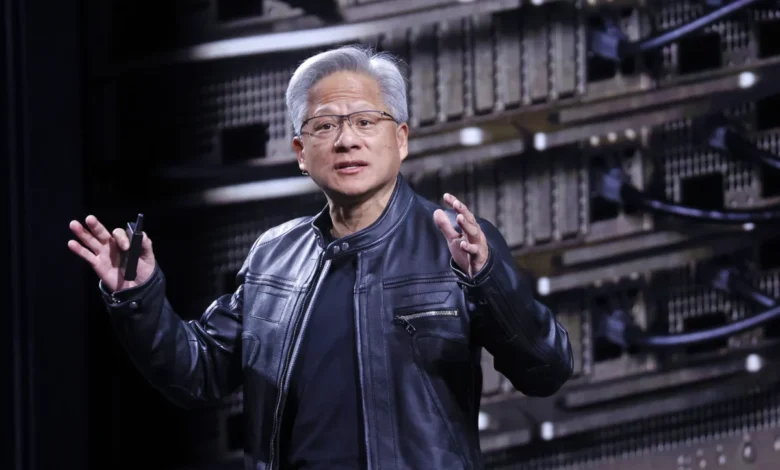
Jensen Huang, the visionary founder and CEO of Nvidia, continues to solidify his reputation as one of the technology sector’s most effective corporate evangelists, perhaps even surpassing Salesforce’s Marc Benioff in his unwavering optimism regarding his company’s trajectory and financial prospects. Yet, this relentless optimism is consistently validated by Nvidia’s remarkable performance, quarter after quarter, delivering on the ambitious promises made. This track record lends significant credibility to Huang’s latest pronouncement: the identification of a "brand new $200 billion Total Addressable Market (TAM)" for Nvidia, specifically centered around its recently introduced Vera CPU. Rather than approaching such a bold claim with skepticism, industry observers and investors alike are increasingly inclined to grant Huang the benefit of the doubt, given Nvidia’s consistent delivery of groundbreaking innovation and unparalleled financial results.
Nvidia’s Unprecedented Growth and Strategic Pivot
Nvidia’s financial performance has been nothing short of extraordinary. The company recently announced another record-breaking quarter, reporting an staggering $81.6 billion in revenue, with a forecast of $91 billion for the upcoming quarter. These figures underscore Nvidia’s dominant position in the artificial intelligence (AI) and high-performance computing markets, largely driven by its indispensable Graphics Processing Units (GPUs). It was against this backdrop of immense success that Huang, speaking during Wednesday’s earnings call, strategically positioned Vera as a potentially transformative product. He not only highlighted its innovative capabilities but also alluded to promising early sales figures, signaling a significant new chapter for the company.
Despite Nvidia’s seemingly unassailable market leadership, Wall Street consistently harbors underlying anxieties regarding potential disruptions that could dislodge the company from its prominent perch. In recent times, these concerns have increasingly focused on the Central Processing Unit (CPU) market. Historically, the CPU domain has been dominated by industry stalwarts like Intel and AMD. While Nvidia has, in fact, developed CPUs in the past—such as its Tegra line, which found applications in mobile devices and embedded systems—it has never been considered a core business segment for the GPU giant. This traditional market segmentation has fueled speculation about Nvidia’s vulnerability outside its GPU stronghold.
The competitive landscape for AI chips is intensifying, with major cloud providers and other technology giants investing heavily in custom silicon. For instance, just last month, Amazon Web Services (AWS) proudly announced a substantial contract with Meta, involving the provision of millions of Amazon’s homegrown AI CPUs. Amazon CEO Andy Jassy has explicitly articulated his belief that AWS possesses the capability to develop AI chips, encompassing both GPUs and CPUs, at a quality level comparable to, or even superior to, offerings from established players like Nvidia. This aggressive stance from a hyperscaler of Amazon’s magnitude highlights the growing internal competition and the strategic imperative for companies to control their own AI infrastructure, including the foundational silicon.
Vera: Purpose-Built for the Agentic AI Revolution
It is within this dynamic and increasingly competitive environment that Nvidia’s Vera CPU emerges as a critical strategic initiative. Huang believes that Vera, which can be purchased as a standalone unit or bundled with its Rubin GPU, represents "a major new growth driver" for Nvidia. The core of his conviction lies in Vera’s unique design philosophy: it is, as Huang declared on the earnings call, "the world’s first CPU, purpose-built for agentic AI." This specialization, he argues, is the key to unlocking the newly identified $200 billion TAM.
"Vera opens a brand new $200 billion TAM for Nvidia, a market we have never addressed before, and every major hyperscaler and system maker is partnering with us to deploy it," Huang emphasized. "The world is rebuilding computing for agentic AI and robotic physical AI. Nvidia sits at the center of these transitions." This statement underscores not only the sheer scale of the opportunity but also the collaborative approach Nvidia is taking with industry leaders to integrate Vera into the nascent agentic AI ecosystem.
To understand the significance of Vera, it’s crucial to delineate the distinction Huang draws between the computational requirements of different aspects of AI. He explained that while the "thinking" or inferencing part of an AI model predominantly leverages GPUs—due to their parallel processing capabilities ideal for complex calculations—the operations performed by "agents" largely run on CPUs. These agents, which can be thought of as autonomous software entities designed to perform specific tasks, utilize CPUs to execute their assigned functions. Huang further predicted that these agents would eventually operate on their own form of CPU-driven "PCs," signifying a paradigm shift in computing.
Understanding Agentic AI and Vera’s Specialization
Agentic AI refers to a rapidly evolving field where AI systems are designed not just to process information or generate content, but to autonomously plan, execute, and monitor tasks, often interacting with the real world or other digital systems. These agents require sophisticated decision-making, planning, and task orchestration capabilities. While large language models (LLMs) provide the "brain" for these agents, the execution layer—the part that translates high-level instructions into discrete actions, manages memory, interacts with tools, and handles perception and reasoning loops—heavily relies on efficient CPU processing.
Vera’s design directly addresses these unique demands. Unlike classic cloud architecture CPUs, which are optimized for "cores" and the ability to run multiple instances of diverse applications as fast as possible, Vera is specifically engineered to process "tokens" with maximum speed. In the context of AI, a "token" can represent a word, subword, or character, and the efficient processing of these tokens is fundamental to how AI models understand, generate, and interact with data. This token-centric optimization makes Vera exceptionally well-suited for the iterative, sequential, and often real-time processing demands of agentic AI workflows, where rapid context switching, tool utilization, and sequential reasoning are paramount.
The Competitive Landscape and Nvidia’s Strategic Differentiator
The question naturally arises: with major cloud providers and numerous startups vigorously pursuing AI chip development, what makes Huang so confident that Nvidia will become the definitive source for agentic CPUs? His answer is both direct and compelling: early market traction. Huang revealed that Nvidia has already sold an astounding $20 billion worth of standalone Vera CPUs this year, emphasizing that this is merely the beginning of what he envisions as a monumental market expansion.
This early adoption figure, if maintained, would represent a significant validation of Nvidia’s strategic pivot and Vera’s unique value proposition. It suggests that despite the formidable competition, hyperscalers and system makers are recognizing the specific advantages that a purpose-built CPU like Vera offers for the specialized demands of agentic AI.
A Future of Billions of Agents
Huang’s long-term vision extends far beyond current market dynamics. He articulated a future where agentic AI systems become as ubiquitous as human users are today. "The world has a billion users, human users. My sense is that the world is going to have billions of agents, not today. I mean, we’re going to grow into it, but we’ll have billions of agents, and those billions of agents will all use tools. And those tools are going to be like PCs, just like us humans using PCs today," he predicted.
This analogy to personal computers highlights the transformative potential of agentic AI. Just as PCs democratized computing for individuals, Huang envisions agents as becoming fundamental computational entities, each requiring its own processing capabilities. "We’re going to need a lot more CPUs," he concluded, underscoring the immense scale of the opportunity Vera is designed to capture.
Broader Impact and Implications
Nvidia’s aggressive push into the CPU market with Vera has several profound implications for the company and the broader technology industry:
- Diversification and De-risking: While Nvidia’s GPU dominance is currently unassailable, over-reliance on a single product category always carries inherent risks. The Vera CPU represents a significant diversification strategy, allowing Nvidia to capture value across different layers of the AI stack and reduce its dependence on the traditional GPU market, even as that market continues to grow.
- Full-Stack AI Leadership: By offering both leading GPUs and specialized CPUs, Nvidia is positioning itself as an end-to-end AI infrastructure provider. This full-stack approach, encompassing hardware, software (CUDA), and networking, strengthens its ecosystem lock-in and makes its offerings even more compelling to developers and enterprises building complex AI systems.
- Redefining the CPU Market: Vera’s "purpose-built for agentic AI" design challenges the conventional understanding of CPU architecture. It suggests a future where CPUs become increasingly specialized for specific AI workloads, moving beyond general-purpose computing. This could trigger a wave of innovation and specialization across the semiconductor industry.
- Intensified Competition with Hyperscalers: While Huang claims hyperscalers are partnering with Nvidia on Vera, this move also puts Nvidia in more direct competition with the custom silicon efforts of AWS, Google, and Microsoft. These companies are investing heavily in their own AI chips to optimize costs, performance, and control over their infrastructure. Nvidia’s success with Vera will test its ability to out-innovate and out-execute these powerful internal initiatives.
- Unlocking New Revenue Streams: A $200 billion TAM, if realized even partially, would represent a colossal new revenue stream for Nvidia. Given the company’s current revenue run rate, this new market segment could fuel substantial growth for years to come, further cementing its position as a trillion-dollar technology powerhouse.
- Impact on Traditional CPU Vendors: While Vera is specialized, its success could indirectly impact traditional CPU market leaders like Intel and AMD, particularly if agentic AI grows to dominate a significant portion of server workloads. These companies may need to accelerate their own efforts in specialized AI CPU development or deepen their partnerships to remain competitive.
Challenges and Outlook
Despite the ambitious projections and early sales figures, challenges remain. The agentic AI market is still nascent, and its precise trajectory and adoption rate are subject to various factors, including technological advancements, regulatory frameworks, and enterprise readiness. Nvidia will need to continuously innovate to maintain its lead against rapidly evolving competitive offerings. Furthermore, the ability to scale manufacturing and supply chain for a completely new product line, especially one in high demand, will be critical.
Nonetheless, Jensen Huang’s vision for Vera and the agentic AI market is not just a speculative forecast; it is a calculated strategic move by a company that has consistently demonstrated an uncanny ability to anticipate and shape the future of computing. With record earnings providing a robust foundation and strategic partnerships already forming, Nvidia’s foray into agentic AI CPUs with Vera appears poised to be another defining chapter in its remarkable journey. The industry will be closely watching whether this latest audacious claim, like so many before it, translates into another era of unprecedented growth and market leadership for the GPU giant.