Federal Indictment Unsealed Against Raúl Castro and Five Others for 1996 Shootdown of Civilian Planes, Escalating U.S. Pressure on Cuban Government

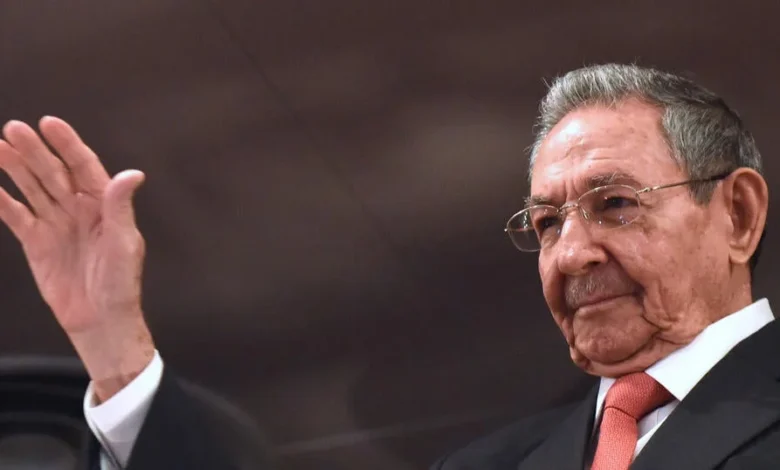
Federal prosecutors in Florida on Wednesday, May 20, 2026, unsealed a sweeping indictment charging former Cuban leader Raúl Castro and five other individuals in connection with the Cuban military’s fatal downing of two civilian planes three decades prior. Officials unveiled the charges at a press conference in Miami, marking a significant escalation in the Trump administration’s persistent pressure campaign against the Cuban government and reigniting a long-simmering controversy between Washington and Havana. The federal criminal charges against the 94-year-old Castro, brother of the late Fidel Castro and widely regarded as one of Cuba’s most enduring and powerful figures, underscore a renewed U.S. commitment to pursuing justice for the victims of the 1996 incident. Castro, who served as president of Cuba from 2008 to 2018 and as the top official of the country’s Communist Party from 2011 to 2021, faces grave accusations that could further destabilize an already fraught bilateral relationship. CBS News was the first to report that the U.S. was preparing to indict Castro, signaling the culmination of a lengthy investigation.
The Indictment’s Core Allegations
The 20-page indictment, which a judge granted prosecutors’ request to unseal on Wednesday, was initially filed in Miami on April 23. It levels severe charges against Raúl Castro, including one count of conspiracy to kill U.S. nationals, four counts of murder, and two counts of destruction of aircraft. These charges directly relate to the Cuban air force’s decision to shoot down two civilian planes operated by the Florida-based exile group Brothers to the Rescue in February 1996. The attack resulted in the deaths of four individuals: three U.S. citizens and one green-card holder. Crucially, the indictment asserts that the planes were operating outside of Cuban airspace at the time they were targeted and destroyed.
The other five named defendants in the indictment are identified as Cuban fighter pilots, including Lorenzo Alberto Perez-Perez, one of the pilots of the MiG-29 fighter jet that executed the shootdown. Perez-Perez had been previously charged in connection with the incident more than two decades ago, in 2003, alongside the other pilot on his MiG-29 and the now-deceased former head of Cuba’s air force, though that case never proceeded to trial. The new indictment broadens the scope, charging four other fighter pilots with conspiracy, accusing them of engaging in "training missions using Cuban military aircraft to find, track, pursue, and intercept small, civilian aircraft off the coast of Cuba" in the lead-up to the Brothers to the Rescue incident.
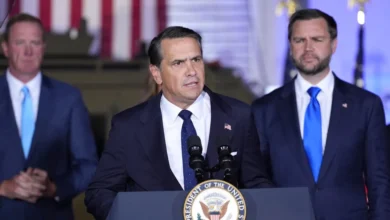
Acting Attorney General Todd Blanche articulated the U.S. government’s resolve at the Miami press conference, stating, "For nearly 30 years, the families of four murdered Americans have waited for justice. My message today is clear: The United States and President Trump does not and will not forget its citizens." This statement underscores the political weight behind the indictment, positioning it as a fulfillment of a long-standing promise to victims’ families and a potent symbol of American determination.
The 1996 Shootdown: A Historical Overview
The tragic events of February 24, 1996, remain a deeply painful chapter in U.S.-Cuba relations. Brothers to the Rescue, founded in 1991 by Cuban exiles, primarily focused on humanitarian missions, flying small, unarmed Cessnas over the Florida Straits to locate Cuban rafters attempting perilous sea voyages to the U.S. and alert the Coast Guard. While the group maintained its humanitarian mandate, it also engaged in provocative acts, such as dropping leaflets over Havana, which Cuba viewed as severe violations of its sovereignty and airspace.
On that fateful day, two of the group’s Cessna 337 Skymaster aircraft were intercepted and shot down by a Cuban MiG-29 fighter jet in international airspace. The victims were Carlos Costa, Armando Alejandre Jr., Mario de la Peña, and Pablo Morales. The incident immediately ignited international outrage. The United Nations’ International Civil Aviation Organization (ICAO) conducted an investigation, concluding that the planes were indeed flying outside Cuban airspace when they were shot down. The ICAO report also criticized Cuban authorities for failing to attempt non-lethal means of dealing with the planes, such as radio contact or guiding them out of the area, before resorting to deadly force.
The Organization of American States (OAS) also condemned Cuba, alleging a violation of international law. Then-President Bill Clinton publicly denounced the act "in the strongest possible terms," and the U.S. Congress reacted swiftly by tightening existing U.S. sanctions on Cuba through the passage of the Cuban Liberty and Democratic Solidarity (LIBERTAD) Act of 1996, commonly known as the Helms-Burton Act. This legislation codified the U.S. embargo against Cuba and aimed to deter foreign investment in Cuba, further entrenching the economic isolation of the island.
Cuba, however, has consistently denied wrongdoing, maintaining that the planes were shot down within Cuban airspace and that Brothers to the Rescue was a "terrorist" organization engaged in repeated violations of its sovereignty and even plotting to sabotage Cuban infrastructure. Cuban Minister of Foreign Affairs Bruno Rodríguez Parrilla reiterated this stance, condemning the indictment as "illegitimate and illegal" and repeating Cuba’s long-standing contention that it acted in self-defense. He argued on X that the U.S. is attempting to justify "intensified aggression against the Cuban people." Cuba’s top diplomat, Lianys Torres Rivera, further supported this narrative by posting a link to declassified FAA records from 1996, in which U.S. officials reportedly foresaw a "worst case scenario that one of these days the Cubans will shoot down one of these planes and the FAA better have all its ducks in a row."
A Web of Espionage: The Wasp Network
Central to the current indictment are allegations of an extensive and sophisticated effort by the Cuban government to infiltrate Brothers to the Rescue and gather intelligence on its operations. The indictment details the deployment of a network of spies, notoriously known as the Wasp Network (La Red Avispa), for this purpose. This spying effort, dubbed "Operation Scorpion," allegedly involved an accused Cuban double agent named Juan Pablo Roque. Roque had seemingly defected to the U.S. in the early 1990s, cultivating a public profile as an anti-Castro activist and even becoming a member of Brothers to the Rescue. However, he conspicuously returned to Cuba just one day before the flights were shot down. The indictment alleges that Roque "falsely informed the FBI that [Brothers to the Rescue] would not be flying during the weekend of February 24, 1996," a critical piece of misinformation that could have facilitated the attack. It further states that Cuban intelligence officials specifically instructed Roque and another individual not to fly with Brothers to the Rescue on the weekend of the shootdown, implying foreknowledge of the impending strike. Roque, who passed away in 2025, consistently denied serving as a Cuban spy throughout his life.
Several members of this spy ring were subsequently convicted in federal court more than a decade ago, in what became known as the "Cuban Five" case. The alleged leader of the network, Gerardo Hernandez, was sentenced to life in prison for murder conspiracy in connection with the 1996 shootdown. Hernandez eventually returned to Cuba in a high-profile prisoner swap in 2014, part of a broader diplomatic thaw during the Obama administration. The indictment’s focus on this spy network underscores the depth of Cuba’s alleged premeditation and the intricate intelligence operations employed to monitor and neutralize perceived threats from exile groups.
Political Context and Trump Administration’s Stance
The indictment of Raúl Castro emerges against a backdrop of intensifying U.S. pressure on the Cuban government, a hallmark of the Trump administration’s foreign policy towards the island nation. Since taking office, the administration has consistently rolled back the diplomatic overtures initiated by the Obama administration, reimposing sanctions, restricting travel, and targeting Cuban officials. This indictment, nearly 30 years after the incident, signifies a stark reassertion of a confrontational posture.
Acting Attorney General Todd Blanche’s assertion that "this isn’t a show indictment" emphasizes the administration’s intent to pursue the case vigorously, despite the formidable challenges. The indictment itself offers sweeping criticism of the Cuban regime, stating, "The Castro Regime established and maintained control over Cuba and her people through a reign that eliminated dissent, preserved their power, territory, and reputations, and, through expropriation and nationalization of private business, funded those objectives." This language clearly signals the U.S. government’s intent to frame the indictment not merely as a legal matter but as a broader condemnation of the Cuban political system.
The timing of this indictment, following months of escalating tensions—including threatened steep tariffs against any country shipping oil to Cuba, leading to widespread energy shortages and electrical grid failures on the island—suggests a calculated move. The U.S. attorney in Miami also launched an initiative earlier this year (2026) to investigate and prosecute Cuban leaders for various crimes, including economic, drug, immigration, and violent offenses, indicating a comprehensive strategy to exert maximum pressure.
The Question of Justice: Extradition and Precedent
A central question surrounding the indictment is how Raúl Castro, who resides in Cuba, could ever be brought to the United States to face trial. Cuba does not have an extradition treaty with the U.S. and is highly unlikely to surrender a former head of state, particularly one as central to its revolutionary history as Raúl Castro. When pressed by reporters on this logistical hurdle, Acting Attorney General Blanche did not offer specific details but maintained that "this isn’t a show indictment" and that the Justice Department fully intends to try the case. He added cryptically that "there’s all kinds of different ways" to bring in defendants located in other countries, hinting at unconventional approaches.
The specter of former Venezuelan leader Nicolás Maduro looms large in this discussion. Maduro was indicted on drug charges in 2020 by the U.S. and, earlier this year (2026), was reportedly captured by U.S. forces and flown to New York for trial. This daring and unprecedented operation, according to reports, led to the installation of an interim leader in Venezuela who is now working closely with the U.S. This highly unusual scenario, if accurately reported in the article’s timeline, provides a potential, albeit controversial and legally complex, precedent for how the U.S. might envision bringing high-profile foreign adversaries to justice. However, the political and military implications of such an operation against a sovereign nation like Cuba would be immense and potentially catastrophic.
Decades of Strained Relations: A Chronology of U.S.-Cuba Tensions
The indictment adds another layer to over six decades of deeply strained and often hostile relations between the U.S. and Cuba. Following the 1959 Cuban Revolution, led by Fidel Castro, which overthrew the U.S.-backed Batista regime, bilateral ties rapidly deteriorated. Key historical milestones include:
- 1961: The Bay of Pigs invasion, a failed U.S.-backed attempt to overthrow Castro.
- 1962: The Cuban Missile Crisis, bringing the world to the brink of nuclear war.
- 1962 onward: The imposition and subsequent tightening of a comprehensive U.S. economic embargo against Cuba.
- 1996: The shootdown incident and the passage of the Helms-Burton Act, which codified the embargo and allowed U.S. citizens to sue foreign companies benefiting from confiscated Cuban property.
- 2014-2016: A period of unprecedented rapprochement under President Barack Obama, leading to the re-establishment of diplomatic relations and eased travel restrictions.
- 2017 onward: The Trump administration reverses many of Obama’s policies, reimposing sanctions, tightening travel restrictions, and taking a harder line on Cuba, which it designates a state sponsor of terrorism.
This long and turbulent history provides crucial context for understanding the current indictment. For the Cuban exile community in Florida, particularly those associated with Brothers to the Rescue, the indictment represents a long-awaited measure of accountability and justice, resonating deeply within a community that has often felt marginalized in the broader U.S. foreign policy discourse.
Broader Implications and Future Outlook
The indictment of Raúl Castro carries significant broader implications for the future of U.S.-Cuba relations. While direct military intervention seems unlikely given the profound geopolitical risks, the symbolic weight of these charges cannot be overstated. It effectively designates a former head of state as a wanted criminal, severely complicating any future attempts at diplomatic engagement or normalization.
Secretary of State Marco Rubio, a prominent Cuban-American voice in U.S. foreign policy, has consistently advocated for a more aggressive stance against Havana. He has argued that Cuba needs sweeping economic and political reforms, characterizing the existing regime as led by "incompetent, senile men." Hours after the reported capture of Maduro, Rubio pointed to Cuba’s reliance on Venezuela and publicly stated, "If I lived in Havana and I was in the government, I would be concerned, at least a little bit." In a video message posted online Wednesday morning, Rubio urged the people of Cuba to choose "a new path," signaling the administration’s desire for regime change. Conversely, Cuba’s deputy foreign minister Carlos F. de Cossio posted on social media early Wednesday that Rubio "lies" about Cuba because he "knows full well that there is no excuse for such a cruel and ruthless aggression," encapsulating the deep ideological chasm.
President Trump’s statements regarding Cuba have, at times, appeared to fluctuate. While he has not ruled out military action, saying at various points that he is interested in a "friendly takeover" of Cuba and that the country could be "next" after the U.S.’s war with Iran, he has also suggested openness to negotiation. "Cuba is asking for help, and we are going to talk!!!" he wrote in a Truth Social post last week. This duality in rhetoric—both aggressive and open to dialogue—creates an unpredictable environment for U.S.-Cuba engagement.
Despite the heightened tensions, American officials have maintained some channels of communication. CIA Director John Ratcliffe reportedly made a rare trip to Havana just last week, meeting with Raúl Castro’s grandson, often known as "Raulito," who serves as a key point of contact with U.S. officials. A CIA official indicated that Ratcliffe conveyed the Trump administration was offering "a genuine opportunity for collaboration" and a chance to stabilize Cuba’s struggling economy. However, Ratcliffe also warned that this opportunity would not remain open indefinitely and that the administration would enforce "red lines" if necessary. Separately, the administration also offered Cuba $100 million in humanitarian aid, suggesting a complex strategy that combines punitive measures with limited, conditional engagement.
The indictment of Raúl Castro is more than just a legal proceeding; it is a profound political statement with far-reaching consequences. It cements the 1996 shootdown as an enduring grievance for the U.S., promises continued pressure on the Cuban government, and symbolically closes a chapter on the Castro era, albeit posthumously for Fidel and in advanced age for Raúl, by directly challenging their historical legacy. While the practicalities of bringing Castro to justice remain highly speculative, the symbolic and political impact of this unsealed indictment is undeniable, setting the stage for an even more volatile period in U.S.-Cuba relations.