Former New York City Mayor Rudy Giuliani Hospitalized in Critical but Stable Condition with Pneumonia Complications.

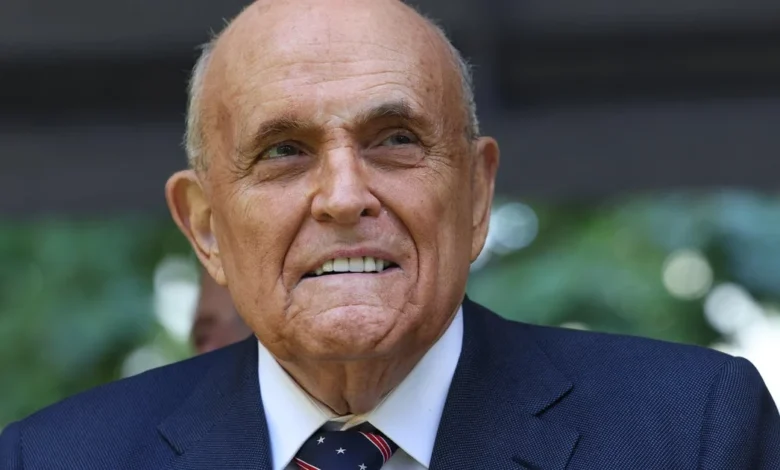
Former New York City Mayor Rudy Giuliani has been hospitalized for pneumonia, with his condition described as critical but stable, according to a statement released Monday by his spokesperson, Ted Goodman. The hospitalization marks another significant health challenge for the prominent political figure, whose medical history includes complications stemming from his service during the September 11, 2001, terrorist attacks and recent injuries sustained in a car accident.
Goodman detailed the severity of Giuliani’s current health crisis, explaining that his pre-existing condition, restrictive airway disease, significantly complicated the pneumonia. "On September 11th, Mayor Giuliani ran toward the towers to help those in need, which later led to a diagnosis of restrictive airway disease," Goodman stated, referencing the profound and long-lasting health consequences faced by many first responders and individuals exposed to the toxic environment at Ground Zero. This chronic respiratory ailment, a direct result of his unwavering presence at the disaster site, makes him particularly vulnerable to respiratory infections. "This condition adds complications to any respiratory illness, and the virus quickly overwhelmed his body, requiring mechanical ventilation to maintain adequate oxygen and stabilize his condition," Goodman elaborated. While he had required mechanical support, the spokesperson confirmed that Giuliani is now breathing on his own, signaling a crucial step in his recovery, though he "remains in critical but stable condition."
The Health Crisis: Pneumonia and Underlying Conditions
Pneumonia, an infection that inflames the air sacs in one or both lungs, can range from mild to life-threatening. For individuals with compromised respiratory systems, such as Giuliani, the disease poses a particularly severe threat. Risk factors for severe pneumonia include advanced age, pre-existing lung conditions, and a weakened immune system. Given Giuliani’s age and his documented restrictive airway disease, his susceptibility to the rapid progression of the illness and the need for mechanical ventilation underscores the seriousness of his current medical situation. Mechanical ventilation is a life-sustaining treatment that helps patients breathe when they are unable to do so adequately on their own, often used in cases of acute respiratory failure.
The diagnosis of restrictive airway disease (RAD) is a critical piece of context for Giuliani’s current health. RAD refers to a group of lung diseases that prevent the lungs from expanding fully, thereby reducing their total lung capacity. This condition can be caused by various factors, including interstitial lung diseases, neuromuscular disorders, and, pertinent to Giuliani’s case, exposure to environmental toxins. The aftermath of the September 11th attacks left thousands of first responders and downtown residents with a myriad of chronic health issues, collectively known as "World Trade Center (WTC) Dust Lung" or "WTC-related respiratory disease." Studies by organizations like the Fire Department of New York (FDNY) and the WTC Health Program have consistently shown elevated rates of asthma, chronic bronchitis, sinusitis, gastroesophageal reflux disease (GERD), and restrictive lung diseases among those exposed to the pulverized concrete, asbestos, glass fibers, and other carcinogens present in the air at Ground Zero. For many, these conditions manifest years, even decades, after initial exposure, progressively worsening over time and making individuals highly vulnerable to acute respiratory infections. Giuliani, who spent weeks at the site in the immediate aftermath, embodying the city’s resilience, now faces the long-term health consequences of that heroism.
This hospitalization is not Giuliani’s first recent health scare. Last year, he suffered significant injuries after a car he was riding in was struck from behind on a highway in Manchester, New Hampshire. Spokesperson Michael Ragusa reported at the time that Giuliani sustained broken vertebrae, along with "multiple lacerations and contusions, as well as injuries to his left arm and lower leg." Such a traumatic incident, particularly involving spinal injuries, can have lasting effects on an individual’s overall physical resilience and recovery capacity, potentially further complicating his ability to fight off severe infections like pneumonia. The cumulative impact of these various health challenges highlights the physical toll Giuliani’s public life has taken.
A Legacy Forged in Public Service: Giuliani’s Early Career and 9/11
Rudy Giuliani’s public career began to ascend in the 1980s, where he established a formidable reputation as a prosecutor in New York City. As the U.S. Attorney for the Southern District of New York from 1983 to 1989, he led aggressive campaigns against organized crime, Wall Street insider trading, and political corruption. His high-profile prosecutions of Mafia bosses and prominent financial figures earned him a tough-on-crime image and significant public recognition. This period laid the groundwork for his eventual transition into electoral politics.
Elected Mayor of New York City in 1993, Giuliani served two terms, from 1994 to 2001. His mayoral tenure was marked by a dramatic reduction in crime rates, the implementation of "quality of life" initiatives, and a focus on urban revitalization. He famously adopted "broken windows" policing, a controversial strategy that argued that cracking down on minor offenses would deter more serious crimes. While his policies drew both praise for improving the city’s safety and criticism for their impact on civil liberties and minority communities, his leadership profoundly reshaped New York.
However, it was on September 11, 2001, that Giuliani’s national profile soared to unprecedented heights. As the city endured the horrific terrorist attacks on the World Trade Center, Giuliani’s calm demeanor, decisive actions, and constant presence at Ground Zero earned him the moniker "America’s Mayor." He became a symbol of national resilience and courage in the face of unimaginable tragedy, leading the city through the immediate aftermath, coordinating emergency services, and offering comfort to a grieving populace. His leadership during this period garnered widespread acclaim and cemented his image as a national hero.
Post-Mayoral Political Ambitions and Transition
Following his successful two terms as mayor, Giuliani briefly dabbled in national politics, most notably with a bid for the Republican presidential nomination in 2008. Despite initially being considered a frontrunner due to his post-9/11 popularity, his campaign struggled to gain traction. His strategy of focusing on early primary states like Florida, while largely bypassing Iowa and New Hampshire, ultimately proved unsuccessful, and he withdrew from the race after a disappointing performance.
In the years that followed, Giuliani transitioned into a role as a political commentator, consultant, and public speaker. His prominence remained, but his political influence waned until he forged a close alliance with Donald Trump during Trump’s first presidential campaign in 2016. This partnership would fundamentally redefine Giuliani’s public image and trajectory.
The Trump Era: 2016 Election and the 2020 Election Challenge
As a key advisor and surrogate for Donald Trump, Giuliani became one of the most fervent defenders of the Trump administration. His unwavering loyalty and aggressive media appearances solidified his position within Trump’s inner circle. This alliance reached its zenith in the aftermath of the 2020 presidential election.
Following Mr. Trump’s defeat, Giuliani emerged as a central figure in the unprecedented efforts to challenge the election results. He spearheaded numerous legal actions and public campaigns, often appearing at press conferences—including the infamous event at Four Seasons Total Landscaping—to propagate claims of widespread voter fraud. Giuliani was instrumental in advancing and disseminating conspiracy theories targeting ballot counters and voting machine companies, specifically Dominion Voting Systems and Smartmatic. He alleged that these entities were involved in a scheme to rig the election, claims that were repeatedly debunked by election officials, courts, and independent investigations. His actions during this period drew intense scrutiny and criticism, marking a dramatic departure from his earlier image as a respected legal and political figure. The widespread dissemination of these unproven claims contributed significantly to the erosion of public trust in democratic institutions and processes, sparking intense political polarization.
Legal Reckoning: Disbarment, Defamation, and Bankruptcy
Giuliani’s role in the 2020 election challenges led to severe legal and professional consequences. In a series of unprecedented rulings, he was disbarred in both New York and Washington, D.C. These disciplinary actions stemmed from his propagation of false statements about the election, which violated professional ethics rules requiring lawyers to be truthful and avoid frivolous litigation. The disbarment effectively stripped him of his license to practice law in these jurisdictions, a profound blow to a career built on legal prowess. The disbarment process involves rigorous review by disciplinary committees, and such a outcome for a former U.S. Attorney and Mayor of New York City highlighted the gravity of his professional misconduct.
Compounding his legal woes, Giuliani faced significant financial repercussions. He was found liable for $148 million in damages in a defamation lawsuit brought by two Georgia election workers, Ruby Freeman and Shaye Moss. Giuliani had publicly and repeatedly accused them of engaging in criminal conduct to manipulate votes, claims that were demonstrably false and led to a torrent of harassment and threats against the women. The substantial judgment underscored the severe impact of his baseless allegations on their lives and reputations.
In the wake of this judgment, Giuliani declared bankruptcy, filing for Chapter 11 protection. Chapter 11 bankruptcy typically allows individuals or businesses to reorganize their finances under court supervision, aiming to repay creditors over time while continuing operations. For Giuliani, this filing was a direct response to the massive defamation judgment and other mounting legal fees, indicating the dire financial straits he faced. The bankruptcy proceedings are ongoing, complicating his financial future and legal defense strategies.
The Pardon and Lingering Legal Challenges
In November 2025, former President Trump issued a series of pardons to individuals involved in efforts to overturn the 2020 election results, including Rudy Giuliani. The pardon specifically addressed any potential federal charges related to the "false elector scheme," where allies of Trump sought to submit slates of electors in states won by Joe Biden. While a presidential pardon offers protection from federal prosecution, it is crucial to note that it does not extend to state-level charges. This distinction proved significant for Giuliani, as he faced state-level investigations and charges in Georgia and Arizona related to his post-election activities.
The Georgia case, which was a sprawling Racketeer Influenced and Corrupt Organizations (RICO) Act indictment focusing on efforts to pressure state officials to alter election results, saw a significant development late last year. A Georgia judge dismissed the case against Giuliani, though the specific grounds for dismissal were not immediately detailed in the initial reports. This dismissal provided a temporary reprieve from one of his most serious legal threats. However, Giuliani continued to face potential charges in Arizona, where a grand jury has been investigating the false elector scheme. The status of the Arizona case, and whether his current health condition could impact any future proceedings or court appearances, remains a subject of ongoing legal and public interest.
Reactions and Public Commentary
Immediately following the news of Giuliani’s hospitalization, former President Donald Trump took to his Truth Social platform to express his support. Mr. Trump described Giuliani as "fabulous … a True Warrior, and the Best Mayor in the History of New York City, BY FAR." This statement not only reaffirmed Trump’s enduring loyalty to Giuliani but also highlighted his persistent admiration for Giuliani’s earlier public service, particularly his mayoral tenure. Trump’s comments underscore the deep, albeit controversial, bond between the two figures, even as Giuliani navigates severe health and legal challenges.
Beyond Trump’s direct comment, the news of Giuliani’s critical condition elicited varied reactions from across the political spectrum and among legal and medical observers. Medical professionals, speaking generally about pneumonia in individuals with pre-existing lung conditions, emphasized the precariousness of such situations, especially for older patients. They highlighted that while breathing independently is a positive sign, recovery from mechanical ventilation can be long and arduous, with potential for lingering weakness and susceptibility to further complications.
Legal experts weighed in on the implications for Giuliani’s ongoing legal battles. While his illness would likely lead to deferrals in any court proceedings, it does not absolve him of legal liability. The bankruptcy proceedings, defamation judgment, and the lingering threat of state charges in Arizona continue to cast a long shadow over his future. Political analysts reflected on Giuliani’s complex and often contradictory legacy. From the celebrated "America’s Mayor" who guided New York through its darkest hour, he has become a polarizing figure embroiled in controversy, epitomizing the profound shifts in American politics over the past two decades. His hospitalization serves as a stark reminder of the human element behind these public sagas, prompting a moment of reflection on a career marked by both extraordinary achievement and profound controversy.
Broader Implications and Conclusion
Rudy Giuliani’s hospitalization for pneumonia, complicated by a restrictive airway disease linked to his 9/11 service, brings into sharp focus the long-term health consequences faced by those who heroically responded to the 2001 attacks. His current medical state adds another layer of complexity to an already tumultuous period in his life, defined by significant legal battles, professional disbarment, and financial distress.
His journey from a revered prosecutor and iconic mayor to a central figure in election challenges and the recipient of severe legal penalties underscores a remarkable and often tragic arc in American public life. The medical emergency also raises practical questions regarding the future of his ongoing legal entanglements and bankruptcy proceedings, which may see further delays as he prioritizes his recovery.
As Giuliani battles for his health, his story remains a powerful, if complicated, narrative within the contemporary political landscape. His legacy will undoubtedly continue to be debated and re-evaluated, caught between the indelible image of "America’s Mayor" and the controversial figure of the post-2020 election era. His recovery will be closely watched, not only for his personal well-being but also for the potential implications it holds for the many legal and political narratives in which he remains deeply embedded. The coming weeks will be critical for Giuliani, both medically and in terms of the broader public and legal scrutiny that continues to define his extraordinary, and increasingly challenging, life.
Related posts: