Saudi strike on Yemen’s Taiz reportedly kills seven as regional tensions escalate across the Middle East

The fragile security landscape of the Middle East fractured further on Sunday as a Saudi airstrike in the southwestern Yemeni city of Taiz claimed the lives of seven civilians and left 40 others wounded. The attack, confirmed by the Houthi-affiliated Al-Masirah TV, reportedly targeted a central marketplace, marking a violent escalation in a conflict that has increasingly intertwined with a broader, regional war between Iran and the United States. This incident occurs against a backdrop of intensifying military operations in September, characterized by a bold Houthi offensive that has effectively secured control over Yemen’s entire Red Sea coastline, including the strategically vital Bab al-Mandab Strait.
The regional volatility is compounded by a series of diplomatic and military confrontations that have left global markets and international powers on high alert. From the seizure of American underwater technology by Iranian forces to the last-minute shuttering of schools in Riyadh, the events of the past week underscore a region caught in a tightening spiral of blockade, retaliation, and stalled diplomacy.
A Chronology of Escalation: September 2026
The current phase of the crisis is rooted in a series of developments that began in late February and surged throughout the summer. By early September, the Houthi movement, backed by Iran, successfully executed a campaign to seize the Bab al-Mandab Strait. This move effectively strangled Saudi energy exports, which were already suffering from the Iranian-enforced closure of the Strait of Hormuz.
On September 26, Saudi Foreign Minister Faisal bin Farhan addressed the United Nations General Assembly, issuing a stark warning that the international community’s absence in defending Gulf shipping lanes was a direct threat to global energy security. Bin Farhan demanded a return to the pre-February 28 status quo in the Strait of Hormuz, rejecting the use of vital waterways as geopolitical bargaining chips.
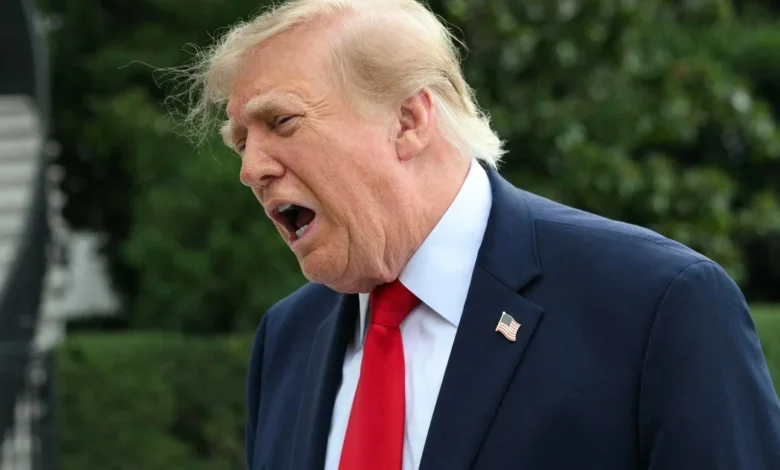
Simultaneously, the United States has maintained a rigid stance. President Donald Trump has officially rejected a seven-day proposal from Tehran aimed at reopening the Strait of Hormuz in exchange for a Middle East ceasefire, the release of frozen Iranian assets, and the cessation of the naval blockade. Mr. Trump’s administration remains confident in its strategy of "maximum pressure," asserting that military escorts have successfully guided 29 vessels out of the Strait of Hormuz as of late September, despite the ongoing regional instability.
The Maritime Front: Blockades and Drone Captures
The conflict has expanded beyond land-based skirmishes into the maritime domain. On Sunday, Iran’s Revolutionary Guards (IRGC) announced the capture of a U.S. Remus 600 autonomous underwater vehicle (UUV) in the Strait of Hormuz. The IRGC claimed the drone was engaged in espionage, asserting that the vehicle is now being analyzed by specialists to recover data. This seizure follows the broader U.S. naval blockade that, according to U.S. Central Command, had redirected at least 122 commercial vessels by September 25.
The blockade has caused severe disruptions to the energy sector, with Brent crude prices hovering around $104 per barrel. The impact is being felt globally, as the European Union’s energy chief, Dan Jorgensen, warned member states of a "price crisis" linked to the supply shortages, urging nations to curb energy demand immediately.
Diplomatic Deadlocks and Global Responses
Despite the rhetoric, back-channel diplomacy remains active, though progress is minimal. During the UN General Assembly, Iranian President Masoud Pezeshkian emphasized that Tehran remains open to a deal, even inviting UN nuclear inspectors back into the country as a gesture of good faith. However, the disconnect between Iranian demands for sanctions relief and the U.S. administration’s insistence on a comprehensive nuclear agreement has left the negotiations in a state of suspended animation.
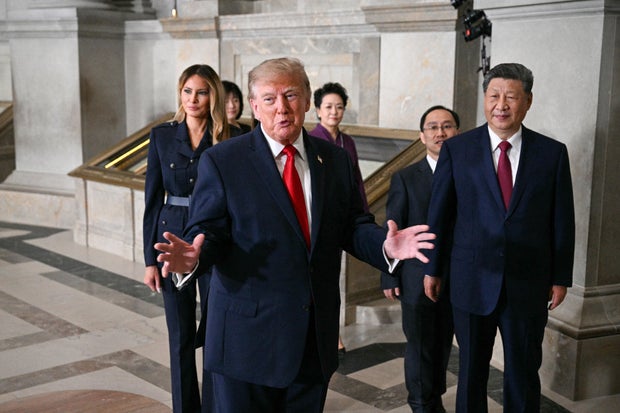
China, while maintaining a high-profile diplomatic relationship with the U.S. following President Xi Jinping’s state visit to Washington, has simultaneously signaled support for the sovereignty of Middle Eastern nations. Vice President Han Zheng, addressing the UN, called for major powers to respect regional sovereignty, a thinly veiled critique of U.S. pressure tactics. Washington, meanwhile, has been clear: any Chinese support—direct or indirect—for the Iranian regime is deemed "totally unacceptable." U.S. officials have expressed concerns regarding alleged Chinese assistance in sanction evasion and satellite coordination for Iranian forces.
Economic and Humanitarian Fallout
The human cost of these geopolitical maneuvers is mounting. In Yemen, the healthcare system is on the brink of total collapse. Hospitals in government-held areas, such as Aden, are overwhelmed by the influx of war-wounded, often at the expense of patients suffering from malnutrition and other chronic health crises. With over 130,000 people displaced in the last month alone, the humanitarian situation in the world’s poorest nation is deteriorating rapidly.
In Saudi Arabia, the impact of the Houthi attacks has reached the capital. Schools in Riyadh shifted to remote learning for the week of September 27 due to the frequency of drone and missile threats. The Saudi-led coalition, supported by a nascent defense pact with Turkey and Pakistan, has intensified its own military operations in an attempt to neutralize the Houthi threat. The Saudi government has explicitly declared any threat to the sanctity of the holy city of Mecca a "red line," following alleged Houthi drone attempts that have been intercepted by Saudi air defenses.
Analysis: The Risk of Protracted Conflict
The current state of affairs suggests a protracted conflict with no immediate resolution. The United States continues to rely on economic strangulation through "Operation Economic Outcast," which has successfully pressured the UAE, Oman, and Turkey to restrict Iranian airline access. By removing Iranian financial entities from the U.S. dollar system, the U.S. Treasury Department has effectively isolated Tehran’s economy, yet the Iranian regime appears willing to absorb these costs in exchange for its regional strategic objectives.
The failure of the latest ceasefire proposal highlights the ideological chasm between the two sides. While Iran seeks to use the opening of the Strait of Hormuz as leverage for a broader regional de-escalation, the Trump administration views the closure of the strait as a failure of Iranian regional policy that should be met with further pressure rather than concessions.
Furthermore, the involvement of non-state actors like Hezbollah in Lebanon and the Houthi militia in Yemen ensures that even a bilateral agreement between Washington and Tehran might not be enough to stop the fighting. As Israel continues to strike weapons storage facilities in southern Lebanon and Saudi Arabia continues to target Houthi positions in Yemen, the war has become a complex, multi-theater entanglement.
Looking Ahead
The coming weeks are critical. With the U.S. midterm elections approaching in November, the diplomatic clock is ticking. President Pezeshkian has expressed an urgency to reach a deal before the elections, while President Trump remains skeptical of the timing, viewing the Iranian overtures as a sign of weakness caused by the efficacy of current U.S. sanctions.
As the UN continues to call for restraint and Muscat attempts to mediate, the reality on the ground—characterized by the seven deaths in Taiz and the interception of drones over Riyadh—presents a stark contrast to the boardroom discussions in New York. The Middle East remains trapped in a cycle where military escalation is frequently used to force a seat at the diplomatic table, a strategy that is currently producing more destruction than solutions.
For the international community, the primary concern remains the stability of global energy markets and the prevention of an all-out regional war. However, as long as the strategic waterways of the Strait of Hormuz and the Bab al-Mandab Strait remain points of contention, the global economy will remain hostage to the shifting military realities of the Gulf. The path forward requires not only technical agreements on shipping but a fundamental shift in the security architecture of the region—a prospect that, for now, remains distant.