The Hidden Cost of Rising Temperatures: How Climate Change Is Exacerbating Gun Violence in American Cities

As major urban centers across the United States experience longer, more intense heat waves, researchers and community advocates are identifying an alarming and previously unquantified consequence of global warming: an increase in urban gun violence. While criminology has long recognized a correlation between soaring temperatures and spikes in interpersonal conflict, a new collaborative analysis reveals that climate change itself is directly fueling hundreds of shootings nationwide.
The findings, developed through a partnership between the nonprofit newsroom The Trace and climate research organization Climate Central, estimate that approximately 2,000 shootings between 2021 and 2025 across the 100 U.S. cities with the highest rates of gun violence are attributable to temperature increases driven by anthropogenic climate change. This intersection of environmental science and public safety sheds new light on the cascading impacts of a warming planet, illustrating how extreme weather compounds existing socioeconomic vulnerabilities.
A Sweltering Independence Day Weekend
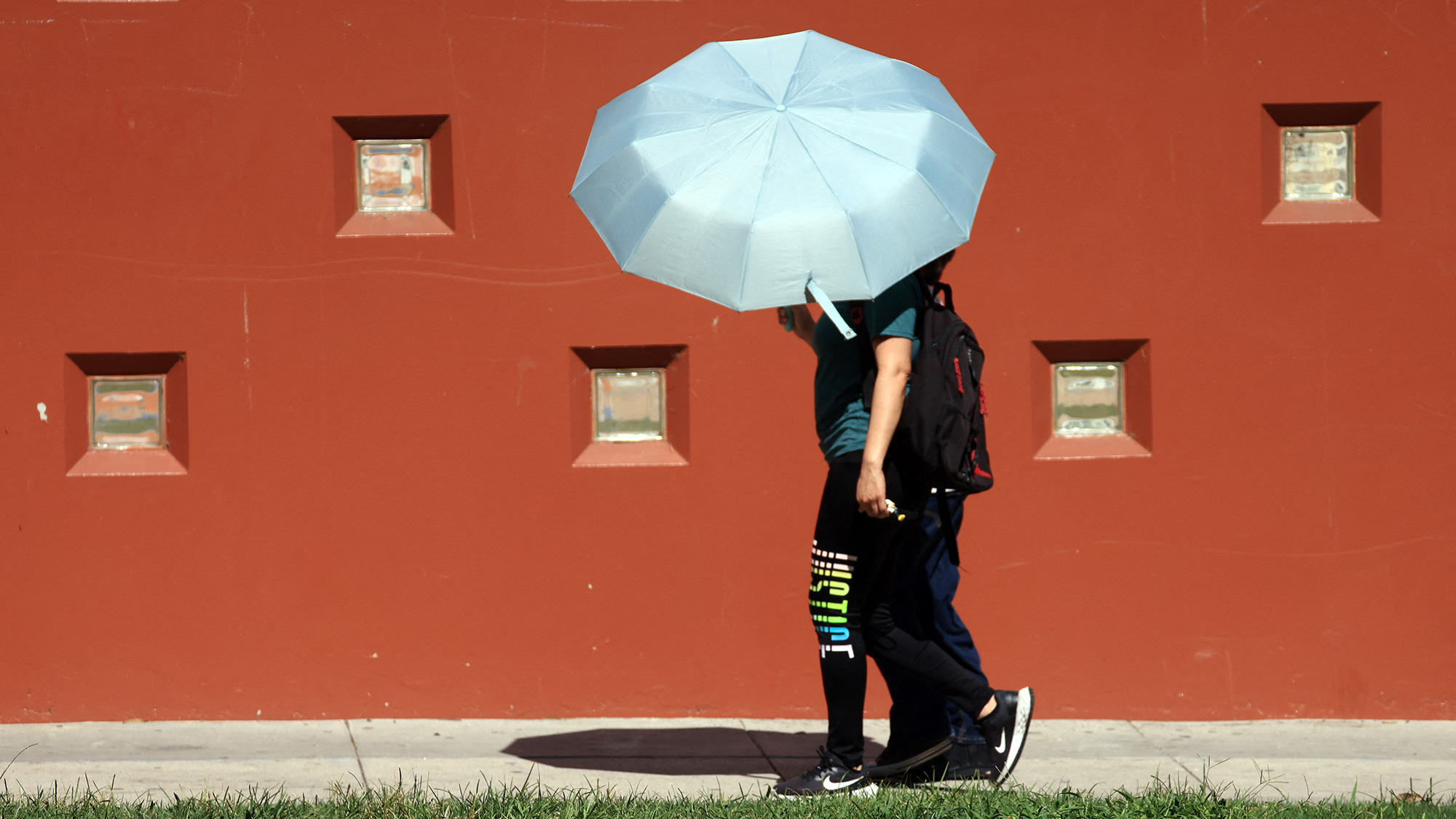
The real-world implications of this research were starkly visible during the Independence Day weekend of 2026. A massive heat dome stretching from Maine to the Gulf of Mexico descended upon the eastern and southern United States, exposing roughly 165 million people to major or extreme heat conditions. Cities including Boston, Baltimore, and Raleigh shattered historic temperature records. In Philadelphia, which is otherwise on track to record its lowest number of annual homicides since 1963, temperatures surpassed 100 degrees Fahrenheit for three consecutive days.
This brutal heatwave coincided with a sharp surge in local gun violence. Between July 2 and July 4, the Gun Violence Archive recorded nine separate shooting incidents in Philadelphia alone, leaving three people dead and nine others wounded.
According to Climate Central’s attribution models, the oppressive heat that baked the region during that holiday weekend was at least twice as likely to occur because of long-term climate change. Public health experts and community organizers note that extreme weather acts as an invisible accelerant in environments already strained by economic hardship and resource scarcity.
Unpacking the Data: The Climate Central Analysis
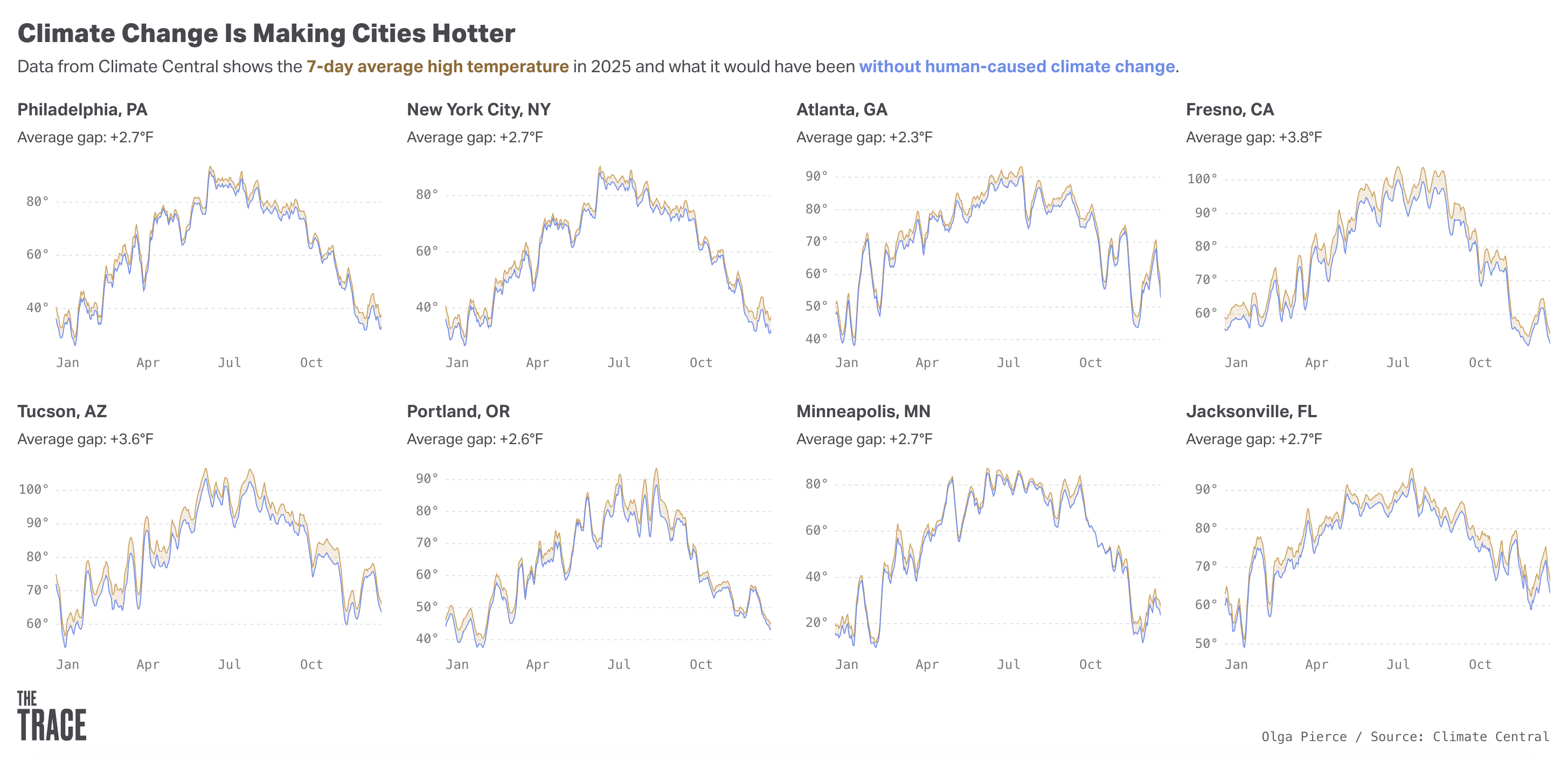
For decades, criminologists and sociologists have noted a seasonal pattern in crime statistics: violent crime rates reliably climb during the summer months and fall during the winter. However, isolating the specific influence of climate change—how much hotter human emissions have made these days compared to a pre-industrial baseline—has remained a complex scientific challenge.
To measure this impact, researchers from Climate Central analyzed five years of data (2021–2025) across 100 U.S. cities. First, they established localized mathematical models linking historical daily temperatures to expected rates of gun violence in each specific city, accounting for regional differences in climate resilience and baseline norms (such as the difference in tolerance for a 95-degree day in the Northeast versus Phoenix).
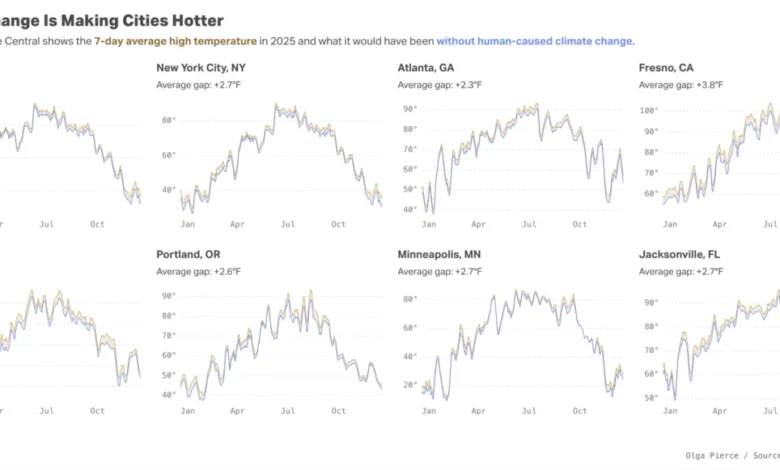
Next, researchers utilized 22 global climate models to simulate a counterfactual world—estimating what temperatures would have looked like in those cities absent human-induced climate change. By comparing the actual recorded temperatures to these simulated baselines, the team calculated that climate change has warmed the typical day in those 100 cities by about 2.4 degrees Fahrenheit, with localized increases ranging from 1.7 degrees in coastal cities like San Francisco and Miami to 3.8 degrees in inland regions like Fresno, California.
Applying these temperature gaps to the cities’ predictive violence models yielded an estimated 1,950 additional shootings over the five-year period, accounting for roughly 1.7 percent of the 116,281 total shootings recorded by the Gun Violence Archive in those jurisdictions. In Philadelphia specifically, an estimated 2.7-degree increase in average temperatures over the study period correlated with roughly 149 additional shooting incidents. Researchers emphasize that while these figures are statistical estimates rather than direct causal links for individual crimes, the macro-level trend is unmistakable.

The Science of Heat and Aggression
Why does excessive heat translate into interpersonal violence? Neuroscientists and psychologists point to two primary, mutually reinforcing explanations: physiological stress and behavioral shifts driven by environmental discomfort.
At a biological level, extreme heat disrupts human thermoregulation. When ambient temperatures rise, the human hypothalamus initiates responses to cool the core body, including expanding blood vessels near the skin and inducing perspiration. While effective, this physiological strain is deeply uncomfortable, triggering negative emotional states such as irritability, hostility, and frustration. Simultaneously, high core body temperatures can impair prefrontal cortex functioning—the region of the brain responsible for impulse control and emotional regulation.
Research conducted at Washington State University’s environmental neuroscience lab demonstrates that heat can also alter social perception. Studies involving participants in controlled sauna environments revealed that elevated temperatures not only increase impulsive aggressive behaviors, such as stealing in experimental gaming scenarios, but also cause individuals to misinterpret the neutral expressions or actions of others as hostile or threatening.
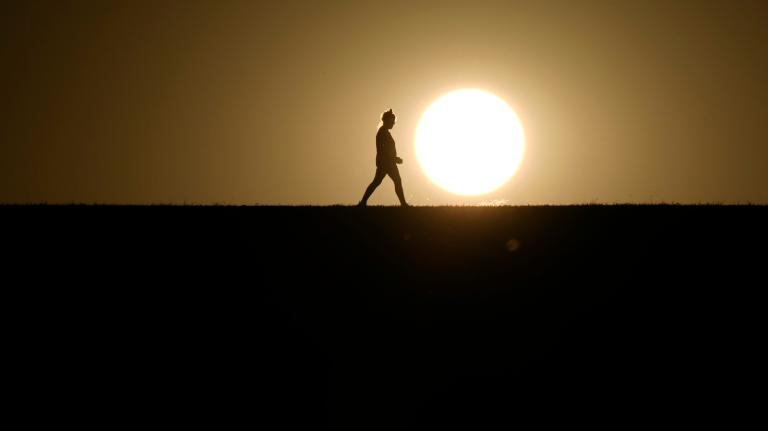
Alternatively, criminologists point to "routine activities theory," which suggests that warmer weather naturally drives more people outdoors, increasing the frequency of social interactions and, consequently, the statistical probability of interpersonal conflict. John Roman, a distinguished senior fellow at the University of Chicago’s NORC social research center, notes that this dynamic may shift as the planet continues to warm. Rather than simply increasing violence during peak summer months, rising temperatures are expanding the shoulder seasons—making spring and autumn months significantly warmer, drawing more people outside earlier and later in the year, and altering traditional seasonal crime curves.
Urban Heat Islands and Environmental Injustice
The burden of climate-driven temperature increases is far from evenly distributed. Within individual cities, extreme heat disproportionately impacts historically marginalized neighborhoods—areas that frequently overlap with zones experiencing higher baseline rates of gun violence.
These disparities are driven by the phenomenon of urban heat islands. Decades of discriminatory housing policies, historical disinvestment, and a lack of municipal spending have left low-income neighborhoods and communities of color with significantly less green space, fewer mature trees, and vast expanses of heat-absorbing asphalt and concrete.
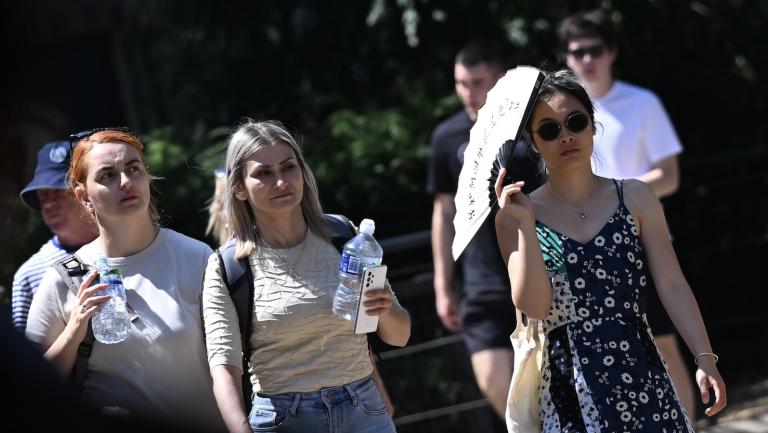
For example, contrasting neighborhoods in New York City highlights this stark divide. While affluent areas feature leafy canopies and lower ambient temperatures, neighborhoods like Mott Haven in the Bronx suffer from surface temperatures up to 5 degrees higher on an average day due to a 40 percent deficit in green space. Furthermore, local health department data indicates that while 84 percent of Mott Haven households have air conditioning, soaring electricity costs—such as monthly utility bills reaching $1,000—make continuous cooling financially prohibitive for many families. When residents venture outside, they encounter sun-baked public housing complexes, unshaded bus routes, and stifling subway platforms that can trap heat up to 18 degrees higher than street level.
Community leaders and environmental justice advocates emphasize that these physical conditions create an compounding cycle of physiological and financial stress. Kimberly Meidenbauer, an assistant psychology professor leading Washington State University’s environmental neuroscience lab, explains that chronic exposure to financial strain, discrimination, neighborhood violence, and extreme heat induces a state of elevated allostatic load—meaning the human body remains in a persistent state of high stress, diminishing its capacity to manage additional environmental triggers.
Policy Responses and Long-Term Solutions
As municipalities grapple with the dual crises of accelerating climate change and urban gun violence, local governments and community organizations are increasingly exploring interventions that target both issues simultaneously.

Short-term mitigation strategies focus on expanding access to cooling infrastructure. Major cities routinely deploy emergency heat protocols, opening libraries, community centers, and specialized cooling shelters during heat waves. Some jurisdictions have introduced mobile cooling units and pop-up relief stations for outdoor laborers and vulnerable residents. However, resource constraints remain a persistent hurdle; aid programs supplying subsidized air conditioning units frequently exhaust their funding before the peak of summer, and existing programs rarely assist families with ongoing utility costs.
Longer-term solutions increasingly involve nature-based urban revitalization. A landmark 2018 study conducted in Philadelphia demonstrated that cleaning up vacant lots and planting grass and trees in economically disadvantaged neighborhoods was associated with a significant reduction in nearby gun violence. Building on this research, cities are launching ambitious greening initiatives. Philadelphia’s Tree Plan, funded by the city and administered by the Pennsylvania Horticultural Society, aims to achieve a 30 percent tree canopy citywide—a vital intervention for neighborhoods suffering from severe tree cover deficits and elevated surface temperatures.
Public health advocates argue that public messaging must also evolve to address the psychological toll of extreme weather. Rather than focusing solely on physical dehydration and heat exhaustion, educational campaigns should encourage individuals to monitor their emotional well-being, manage sleep disruptions caused by nighttime heat, and recognize the subtle ways environmental stress can impair cognitive function.
Ultimately, experts stress that while temperature is only one variable within a complex constellation of factors driving urban gun violence, mitigating the impacts of climate change is an urgent public safety imperative. Without aggressive global emissions reductions and targeted local investments in climate-vulnerable communities, the upward pressure of rising temperatures threatens to undermine decades of progress in reducing urban crime.