Commerce Secretary Howard Lutnick Faces Intense Scrutiny Over Jeffrey Epstein Ties in House Oversight Committee Hearing

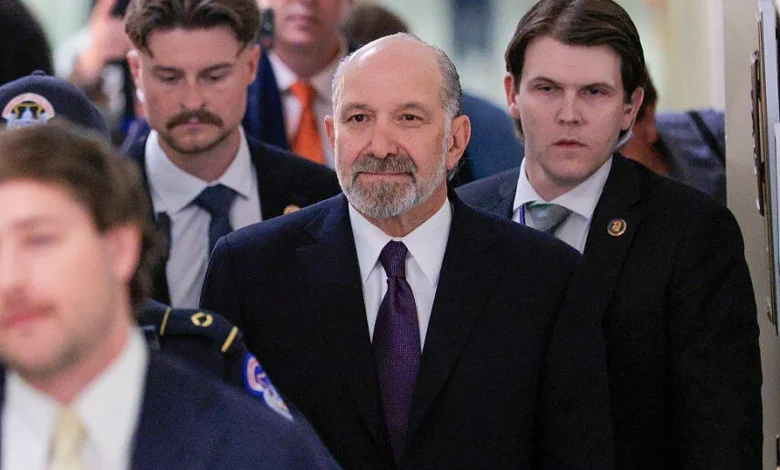
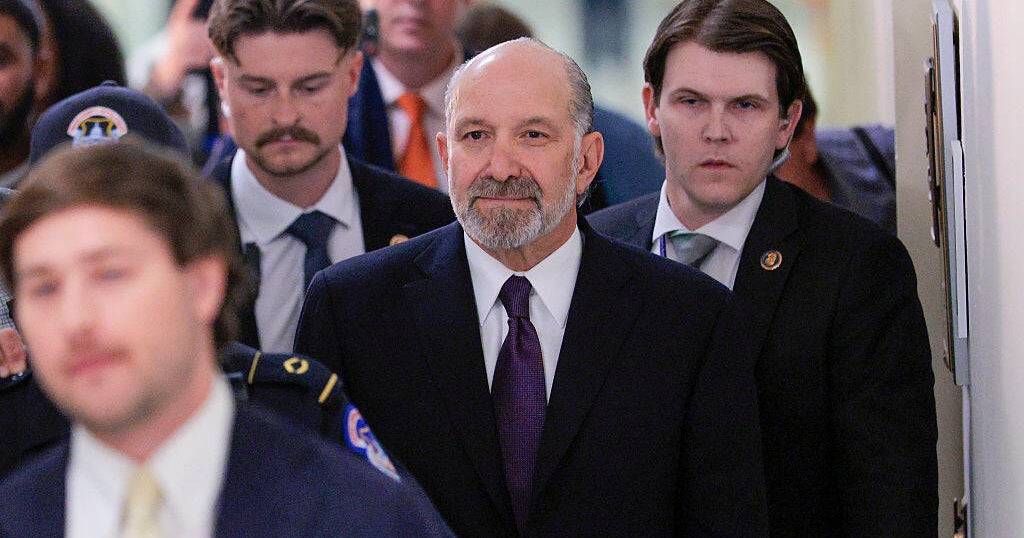
Washington D.C. – Commerce Secretary Howard Lutnick faced a barrage of questions and sharp criticism Wednesday during a closed-door deposition before the House Oversight Committee, part of its extensive investigation into the late financier and convicted sex offender Jeffrey Epstein. The session, which saw Democrats accuse Lutnick of misleading the public and changing his narrative regarding his relationship with Epstein, underscored the persistent and politically charged fallout from the Epstein scandal. Committee Democrats, visibly frustrated by Lutnick’s responses, went as far as to call for his resignation, signaling a deepening crisis for the Cabinet official.
A Volatile Hearing and Accusations of Deception
The atmosphere within the committee room was reportedly tense, with lawmakers expressing profound dissatisfaction with Secretary Lutnick’s testimony. California Democratic Representative Ro Khanna lambasted Lutnick during a break, stating he "made a farce of the English language" and accused him of "changing his story" as new, incriminating facts have come to light. This sentiment was echoed by Virginia Democrat Rep. Suhas Subramanyam, who characterized Lutnick as "evasive, nervous" and "dishonest," directly calling for his resignation. Subramanyam highlighted what he saw as glaring inconsistencies, remarking, "He somehow remembers going to the island after pictures surfaced of him being at the island, but he doesn’t remember why he went to the island."
Lutnick’s voluntary appearance before the committee marks the latest in a protracted series of interrogations involving powerful individuals whose names have surfaced in connection with Epstein. The probe has been fueled by the ongoing release of the "Epstein files," a trove of more than 3 million pages of records – including court documents, emails, flight logs, and witness testimonies – that continue to shed light on the financier’s vast network and illicit activities. These documents, unsealed over the past months and years, have revealed embarrassing and often damning revelations about those who associated with Epstein.
Prior to the commencement of the hearing, a spokesperson for the Commerce Department issued a statement affirming Lutnick’s readiness to cooperate. "The Secretary looks forward to addressing any questions on the record when he testifies voluntarily before the Oversight Committee," the statement read, adding, "He looks forward to putting to rest the inaccurate and baseless claims in the media designed to distract from his historic work underway at the Commerce Department." This preemptive defense, however, did little to quell the skepticism of committee members.
Unveiling a Complicated History: Business, Neighbors, and Island Visits
Central to the committee’s questioning were revelations from the Epstein files contradicting Lutnick’s previous public statements about the nature and duration of his contact with Epstein. The files unequivocally show that Epstein and Lutnick were actively involved in a business venture as recently as 2014, investing in a now-defunct advertising company named Adfin. This extended period of professional association stands in stark contrast to Lutnick’s earlier assertions that he had severed ties with Epstein years prior.
Further complicating Lutnick’s narrative was the undeniable evidence that he, his wife Allison, and their children visited Little St. James, Epstein’s infamous private Caribbean island, in 2012. This detail became a significant point of contention, especially given the island’s notorious reputation as a hub for Epstein’s sex trafficking operations.
During his testimony, Lutnick attempted to clarify his relationship with Epstein, painting a picture of largely incidental contact. He told the committee that he purchased the property adjacent to Epstein’s New York City home in 1997 but did not move in until renovations were completed in 2005. Crucially, Lutnick claimed that despite being neighbors for 14 years, they had neither a personal nor a professional relationship during that period. He also asserted that he never witnessed Epstein with any young women or observed anything inappropriate, a claim that committee Democrats met with profound doubt.
Lutnick recounted meeting Epstein on only three occasions. The first, he described, was a brief 10 to 15-minute encounter involving coffee and a tour of Epstein’s home, during which he noted the presence of a massage table. According to Lutnick, this brief interaction led him to decide then and there that he did not wish to pursue a relationship with Epstein.
The second meeting, Lutnick testified, occurred during a family vacation in the U.S. Virgin Islands when he and his family were unexpectedly invited to Epstein’s home for lunch. He expressed unease, stating he did not know how Epstein’s assistant became aware of their presence on the islands, finding the situation "unsettling." The third and final meeting, he said, was a brief discussion about scaffolding in Epstein’s foyer.
A Timeline of Contradictions and Scrutiny
The detailed chronology of Lutnick’s interactions with Epstein, as presented by the committee and pieced together from the Epstein files, highlights significant discrepancies with his public narrative:
- 1997: Lutnick purchases property next to Epstein’s New York City home.
- 2005: Lutnick moves into his renovated home. He claims to have decided against a relationship with Epstein after a brief meeting.
- 22008: Jeffrey Epstein pleads guilty to state prostitution charges in Florida, a widely publicized event. Lutnick previously maintained he cut off contact with Epstein before this date.
- 2012: Lutnick, his wife, and children visit Little St. James, Epstein’s private island, for lunch. This visit contradicts Lutnick’s previous downplaying of his association.
- 2014: The Epstein files reveal Lutnick and Epstein were business partners, investing in the advertising company Adfin, further debunking claims of severed ties.
- 2018: Emails exchanged between Lutnick and Epstein, just a year before Epstein’s death in jail, discuss Adfin and a planned museum expansion near their homes. This definitively proves contact well after Epstein’s 2008 conviction.
- 2019: Jeffrey Epstein is arrested on new federal sex trafficking charges and dies by suicide in jail awaiting trial.
- February 2026: Lutnick testifies before the Senate, stating he "barely had anything to do with that person," but acknowledges the 2012 island visit, claiming, "We had lunch on the island, that is true, for an hour. Then we left with all of my children, with my nannies and my wife all together. We were on family vacation. We were not apart. To suggest there was anything untoward about that in 2012, I don’t recall why we did it. But we did."
- May 6, 2026: Lutnick appears before the House Oversight Committee, facing intense questioning over these inconsistencies.
Political Fallout and Calls for Accountability
The Democratic members of the committee wasted no time in publicly questioning the veracity of Lutnick’s testimony. Virginia Rep. James Walkinshaw revealed that Lutnick had refused to answer whether he had discussed his testimony with President Trump, adding another layer of political intrigue to the already contentious hearing. This refusal sparked concerns about potential efforts to coordinate or influence his statements, given his high-ranking position within the current administration.
A previously undated photo from the Epstein files, showing Lutnick and Epstein among a group of men on Epstein’s island, has been a significant piece of evidence that has fueled the committee’s scrutiny and public outrage. This visual proof directly challenges Lutnick’s attempts to distance himself from Epstein.
Committee Chairman Rep. James Comer (R-KY), speaking to reporters before the interview, indicated his intent to press Lutnick on the island visit and the continued communications years after Epstein’s initial arrest. "I don’t know how many more questions there are," Comer said, but acknowledged, "at the end of the day, I haven’t seen wrongdoing in the email correspondence. But he wasn’t 100% truthful with whether or not he had been on the island, so we’ll see."
Comer also highlighted the unusual nature of the hearing, noting that it is rare for a chairman to summon a Cabinet secretary from their own party to testify before a panel like the Oversight Committee. "I’ve been on Oversight Committee 10 years and there’s never been a chairman bringing in Cabinet secretaries of their own party," Comer stated, underscoring the bipartisan commitment to uncovering the full truth surrounding Epstein’s network, regardless of political affiliation. This unprecedented move suggests the gravity of the allegations and the committee’s determination to pursue answers.
Broader Implications and Ongoing Investigations
The House Oversight Committee’s investigation is part of a broader effort to understand the full scope of Jeffrey Epstein’s illicit activities and to hold accountable those who may have facilitated, enabled, or turned a blind eye to his crimes. The public release of the Epstein files, initiated by court orders and ongoing journalistic efforts, has kept the scandal in the public eye, fueling demands for transparency and justice for Epstein’s victims.
Lutnick’s testimony follows that of other high-profile individuals. The committee recently announced that former Attorney General Pam Bondi has agreed to testify later this month, after her previously scheduled deposition was cancelled following her ousting from her post. Other prominent figures who have appeared before the panel include the executors of Epstein’s estate, former President Bill Clinton, former Secretary of State Hillary Clinton, and billionaire businessman Les Wexner. Each testimony adds another piece to the complex puzzle, revealing the extensive reach of Epstein’s influence and the unsettling breadth of his associations.
The implications of these revelations for Secretary Lutnick are substantial. Calls for his resignation from Democratic lawmakers indicate a serious challenge to his tenure and reputation. The ongoing scrutiny could hinder his ability to effectively lead the Commerce Department and could cast a shadow over the administration he serves. The committee’s persistent questioning and the documented evidence from the Epstein files suggest that the pursuit of truth regarding Epstein’s associates is far from over, and high-profile individuals like Lutnick will continue to face intense pressure to provide full and honest accounts of their connections to the disgraced financier. The public, through these ongoing investigations, seeks not just answers but also accountability, reinforcing the principle that no one, regardless of their position, is above scrutiny when it comes to the grave crimes perpetrated by Jeffrey Epstein.