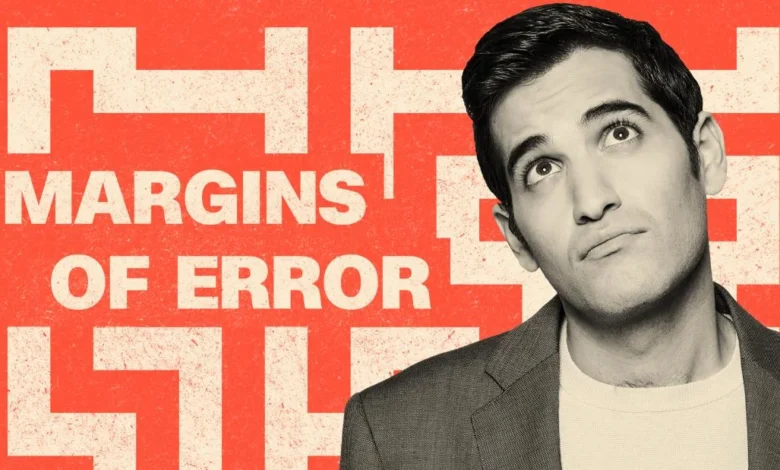
Harry Enten, widely recognized for his incisive political and social data analysis on CNN, brings his signature blend of statistical rigor and accessible storytelling to "Margins of Error." His mission is clear: to push past mere calculations and uncover the deeper narratives embedded in the data, providing a nuanced understanding of "who we are and what we believe." This approach transforms complex statistical information into compelling human stories, making the abstract tangible and the distant relatable. The podcast has carved out a distinct niche within the crowded audio landscape, offering a refreshing perspective that marries journalistic inquiry with scientific method.
The Genesis of "Margins of Error": Bridging Data and Daily Life
The podcast’s inception reflects a growing public appetite for data literacy and a desire to understand the forces shaping contemporary society. In an era saturated with information, the ability to critically interpret data has become paramount. "Margins of Error" addresses this need by making data analysis approachable and engaging, demonstrating how statistics underpin everything from personal preferences to global phenomena. Enten’s expertise, honed through years of dissecting polling numbers and demographic shifts for CNN, provides a solid foundation for the podcast’s ambitious scope. He tackles fundamental questions that resonate universally, such as the relationship between accents and geographical identity, the elusive financial threshold for happiness, and the perennial debate over the United States’ reluctance to adopt the metric system. Each topic, while seemingly disparate, is united by Enten’s methodical investigation into the underlying data and its implications for human experience.
A Deep Dive into Diverse Data-Driven Narratives
The podcast’s episodes, typically ranging from 30 to 45 minutes, serve as meticulously crafted explorations into these varied themes. Each installment features Enten engaging with experts, researchers, and individuals whose lives are directly impacted by the data under scrutiny, enriching the statistical narrative with personal anecdotes and professional insights.
Unpacking the Human Experience Through Data: Key Episodes and Insights
The series launched with a fascinating array of topics, immediately establishing its broad appeal and intellectual curiosity.
July 5, 2022: Pains, Trains and Automobiles – The Quest for Optimized Travel
In "Pains, Trains and Automobiles," Enten confronts the universal frustrations of travel. The episode delves into the psychological and logistical complexities that transform the excitement of a vacation into a stressful ordeal. Data consistently shows that travel-related stress factors, such as cramped seating, escalating fuel costs, and hidden service fees, are significant contributors to negative travel experiences. Enten explores innovative solutions, turning to "very smart people" dedicated to optimizing transportation. This includes discussions on how artificial intelligence can chart the most efficient road trips, drawing parallels to pioneering work like Randy Olson’s computational approach to optimal U.S. road trip routes (as referenced on his website, randalolson.com). The episode also investigates the science behind faster airplane boarding processes, a topic of perennial interest for airline efficiency and passenger satisfaction. Looking to the future, Enten even explores speculative, sustainable transportation solutions, such as the potential of kelp to power vehicles, highlighting the ongoing global search for environmentally friendly alternatives to fossil fuels. The global travel and tourism industry, valued in trillions of dollars annually, is constantly seeking efficiencies, with technological advancements like AI-driven logistics and sustainable energy research representing significant investment areas.
June 28, 2022: Why are Losers the Favorites? – The Psychology of the Underdog
This episode tackles a compelling aspect of human psychology: our inherent gravitation towards underdogs. Studies across various fields, from sports to politics, consistently demonstrate a societal preference for the underdog over the favorite. Enten, joined by FiveThirtyEight’s Neil Paine, underdog expert Nadav Goldschmied, and CNN’s own Coy Wire (a former Buffalo Bills player who understands being underestimated), explores the roots of this phenomenon. The discussion extends beyond mere competition, revealing how the underdog narrative taps into deeper human experiences of resilience, hope, and justice. The episode also playfully, yet analytically, debates the true identity of "America’s Team," challenging popular assumptions and underscoring how data can reframe cultural perceptions. The psychological underpinnings of this preference are often linked to empathy, a desire for fairness, and the satisfaction derived from witnessing unexpected triumphs against formidable odds, a sentiment that resonates deeply in both individual and collective consciousness.
June 21, 2022: Forecasting the Future of Weather – The Science of Prediction
"Forecasting the Future of Weather" acknowledges our collective reliance on weather predictions, often met with frustration when they prove inaccurate. However, Enten reveals a crucial truth: meteorological forecasting is more accurate than ever before, a testament to decades of scientific advancement and technological innovation. He uncovers the "secrets" to this improved accuracy, highlighting the sophisticated models, satellite technology, and vast data processing capabilities that underpin modern meteorology. Crucially, the episode also addresses the looming shadow of climate change, investigating how its escalating impacts—from extreme weather events to unpredictable patterns—could complicate future predictions, posing new challenges for scientists and policymakers alike. The economic implications of accurate weather forecasting are immense, influencing sectors from agriculture and transportation to disaster preparedness and insurance, with billions of dollars at stake globally.

June 14, 2022: The Mysterious Disappearance of Love, Sex and Romance – Societal Shifts in Intimacy
In a more intimate exploration, Enten investigates "The Mysterious Disappearance of Love, Sex and Romance." Despite the proliferation of romance-themed reality shows and media, statistical data suggests a potential decline in real-world romantic engagement—manifesting as lower rates of sexual activity, a growing number of singles, and a perceived decrease in traditional romantic gestures. Adopting a "Sherlock Harry" persona, Enten embarks on a quest to identify the culprits behind this trend. His investigation even takes him to a Bridgerton Ball, illustrating his willingness to immerse himself in cultural phenomena to understand the data. This episode touches on significant sociological trends, including evolving gender roles, the impact of digital communication and dating apps, economic pressures delaying marriage and family formation, and shifts in societal values regarding intimacy and relationships. Data from national surveys often points to a complex interplay of these factors.
June 7, 2022: Why Americans Won’t Give an Inch on Metric – A Cultural and Historical Stand
"Why Americans Won’t Give an Inch on Metric" delves into a long-standing peculiarity: the United States’ persistent adherence to the imperial system, making it one of the few nations globally not fully embracing the metric system. Enten goes the "extra yard" to uncover the deep-seated reasons behind this resistance. He reveals that the issue is far more complex than simple convenience, deeply entwined with national pride, historical precedents, and significant economic and political considerations. The costs of a full conversion are staggering, impacting industries from manufacturing to education, while the cultural inertia against such a change remains powerful. This episode highlights the profound influence of cultural identity and historical legacy on seemingly pragmatic decisions, demonstrating how deeply ingrained systems can resist even logical arguments for change.
May 31, 2022: When Did ‘Diet’ Become a Dirty Word? – The Evolution of Consumer Marketing
Enten’s personal affection for diet soda serves as the starting point for "When Did ‘Diet’ Become a Dirty Word?" He observes the gradual disappearance of the "diet" label from beverages, replaced by "zero sugar." This episode explores the marketing psychology and consumer trends driving this semantic shift. Enten investigates whether this is merely a "war of words" or if there are substantive differences between the two labels. The discussion extends into broader trends in health and wellness marketing, where perceptions of "diet" have shifted due to evolving nutritional science, public health campaigns, and changing consumer attitudes towards artificial sweeteners and processed foods. Data from market research firms often shows that "zero sugar" products are perceived as healthier or more natural by consumers, leading to significant rebranding efforts across the food and beverage industry.
May 24, 2022: Cashing in on Happiness – The Economics of Well-being
"Cashing in on Happiness" tackles one of humanity’s most enduring questions: the relationship between money and happiness. Enten seeks to quantify this elusive connection, asking how much money is truly needed for contentment. He consults Matt Killingsworth, who developed an app to track happiness in real-time, providing empirical data on daily emotional states. The episode explores the psychological research suggesting that while money can increase happiness up to a certain income threshold, its impact diminishes thereafter. Crucially, Enten learns that paying for experiences, rather than material possessions, may be a more potent pathway to joy. To test this theory, he embarks on a high-flying trapeze experience with Trapeze School New York, offering a firsthand account of the experiential pursuit of happiness. This episode engages with the field of behavioral economics and positive psychology, drawing on extensive research into subjective well-being.
May 17, 2022: Harry Makes a Spectacle of Himself – The Cultural Significance of Eyewear
In "Harry Makes a Spectacle of Himself," the podcast examines the changing perceptions of eyeglasses. While "four eyes" once carried a negative stereotype, eyewear has undergone a significant transformation, becoming a fashionable and even intellectual accessory. Enten traces the historical evolution of these stereotypes, questioning their origins and investigating whether there’s a statistical correlation between glasses-wearing and intelligence. He also uncovers the intriguing phenomenon of defense attorneys strategically using glasses to alter their clients’ courtroom appearance, highlighting the psychological power of visual cues. His visit to Dr. Craig Moskowitz of Moskowitz Eye Care provides a clinical perspective on the increasing need for vision correction and the advancements in optical technology. This episode blends cultural history, social psychology, and medical science to illuminate an everyday object.
May 10, 2022: Bursting the Bath Time Bubble – Re-evaluating Hygiene Norms
"Bursting the Bath Time Bubble" dives into a surprisingly contentious topic: how often we actually need to bathe. Enten reveals that common societal norms might dictate a frequency far greater than what is hygienically necessary. He explores the complex history of human cleanliness, from the communal baths of Ancient Rome to modern personal hygiene practices, highlighting how our understanding of health and sanitation has evolved. By consulting experts, Enten decodes the distinction between genuine hygienic necessity and ingrained societal expectations. In a memorable experiment, he even ventures into life without deodorant, offering a unique, if olfactory, perspective on our daily routines. This episode touches on public health, microbiology, and cultural anthropology, challenging listeners to reconsider their ingrained habits.
May 3, 2022: Do I Sound Funny to You? – The Shifting Landscape of American Accents
The inaugural episode, "Do I Sound Funny to You?", addresses the common belief that "no one thinks they have an accent"—a belief Enten quickly debunks, asserting that everyone possesses one. The central question of the episode is whether the distinct regional accents across the U.S. are gradually disappearing. If so, Enten ponders what cultural nuances and identities are being lost in the process. He embarks on a journey to investigate if increasing conformity, driven by national media exposure and increased mobility, is homogenizing American speech patterns. The episode culminates with Enten himself attempting an entirely new accent, providing a lighthearted yet insightful demonstration of linguistic adaptability and variation. This topic delves into sociolinguistics, cultural studies, and the broader impact of globalization on regional identities.
Broader Impact and Implications of "Margins of Error"
"Margins of Error" serves as more than just an entertaining podcast; it’s an educational tool that promotes data literacy and critical thinking. By consistently demonstrating how data can be used to understand and question the world around us, Harry Enten empowers his audience to engage more thoughtfully with the information they encounter daily. The podcast demystifies complex statistical concepts, making them accessible to a general audience without sacrificing intellectual rigor.
CNN’s commitment to "Margins of Error" underscores the network’s broader strategy to diversify its content offerings and engage with audiences through various platforms. It positions CNN Podcasts as a hub for intelligent, in-depth audio journalism that extends beyond breaking news, providing analytical context to the everyday human experience. The success of the podcast suggests a strong demand for content that combines serious inquiry with an engaging, often humorous, presentation style.
In essence, "Margins of Error" is a testament to the power of data to illuminate the human condition. It reminds listeners that behind every number lies a story, a trend, or a truth waiting to be uncovered, offering a fresh perspective on the intricate tapestry of modern life.