GameStop Launches Unsolicited $55.5 Billion Bid for eBay Amid Skepticism Over Financing and Strategic Fit

In a bold and unexpected move that has sent ripples through the e-commerce and retail sectors, GameStop, the struggling video game retailer, has launched an unsolicited offer to acquire the online marketplace giant eBay for approximately $55.5 billion. The proposal, revealed yesterday, positions GameStop Chairman and CEO Ryan Cohen at the forefront of a highly ambitious strategy to revitalize both companies by leveraging GameStop’s physical store network to enhance eBay’s operations, despite widespread skepticism regarding the financial viability and strategic synergy of such a massive undertaking.
Details of the Ambitious Proposal
GameStop’s offer translates to $125 per share for eBay, representing a substantial 46 percent premium over eBay’s closing price on February 4, the day GameStop reportedly began accumulating its current 5 percent stake in the company. The proposed acquisition structure involves a payment mix of half cash and half GameStop stock, a mechanism that immediately raised eyebrows given the significant disparity in market capitalization between the two entities. GameStop currently commands a market valuation of approximately $11 billion, dwarfed by eBay’s $48 billion.
The unsolicited nature of the bid was confirmed by eBay, which stated in a press release today that it had "no discussions with or outreach from GameStop prior to receiving the proposal." eBay’s board indicated it would review the offer with a primary focus on the value delivered to its shareholders, particularly scrutinizing the GameStop stock consideration and GameStop’s capacity to present a binding, actionable proposition.
GameStop’s Vision: Reinventing E-commerce Through Physical Presence
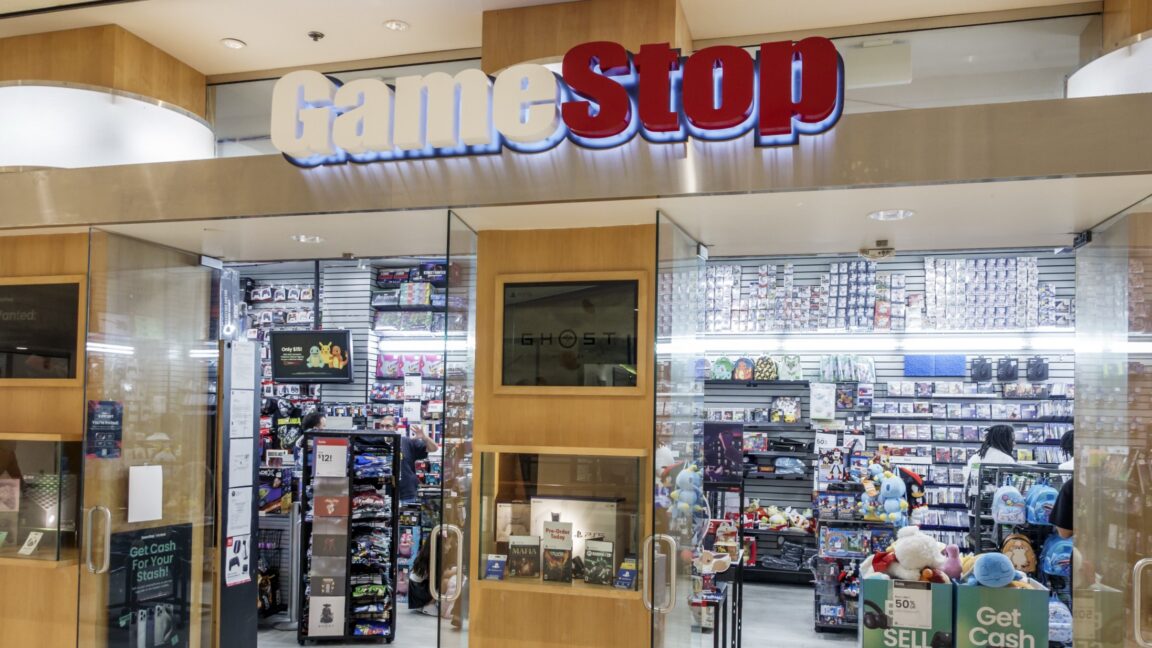
Ryan Cohen, the activist investor who became GameStop’s Chairman and CEO, articulated a vision centered on transforming eBay by integrating it with GameStop’s existing retail infrastructure. Cohen argued that eBay has been underperforming, burdened by excessive spending on sales and marketing, and that a combined entity could achieve greater strength through aggressive cost-cutting and a symbiotic relationship with GameStop’s approximately 1,600 U.S. physical locations.
In a letter addressed to eBay Chairman Paul Pressler, Cohen highlighted the potential for GameStop’s stores to serve as a "national network for authentication, intake, fulfillment, and live commerce." The proposal, dubbed "Project Sling," outlines a system where GameStop staff would inspect and verify items destined for eBay listings, a process GameStop claims its employees are already adept at through their daily handling of hardware and trading cards. This would allow sellers to bring items in, have them verified on the spot, and receive a "trust badge" for their listings, theoretically boosting buyer confidence.
Beyond authentication, GameStop envisions its stores functioning as "drop-off and shipping nodes," establishing a "national fulfillment network without incremental eBay capital expenditure." Furthermore, in a nod to emerging trends in online retail, GameStop proposed that its stores could "double as broadcasting studios," enabling eBay sellers to leverage livestreaming to promote their products, with eBay providing the inventory and buyer base, and GameStop supplying the physical space for this "live-commerce category."
Cohen, who reportedly owns approximately 9 percent of GameStop and foregoes traditional compensation, stated his intention to become CEO of the merged company, emphasizing that his compensation would be "solely based on the performance of the combined company." This commitment is presented as a testament to his belief in the transformative potential of the deal.
The Elephant in the Room: Financing Challenges
Despite GameStop’s bold claims, the primary hurdle for the proposed acquisition remains its financing. The significant valuation gap between the two companies has led to widespread skepticism from financial analysts and market observers. GameStop’s offer of $55.5 billion far exceeds its own market capitalization, raising immediate questions about how it intends to fund such a colossal transaction.
Cohen asserted that GameStop possessed approximately $9.4 billion in cash and liquid investments as of January 31, which would partially fund the cash component of the offer. He further stated that the remaining cash and equity portions would be secured through "third-party equity and debt financing." In support of this, Cohen’s letter mentioned a "highly-confident letter from TD Securities for up to $20 billion," implying that TD is optimistic about arranging the necessary debt financing, though the deal’s debt portion is not yet finalized.
The financial arithmetic was intensely scrutinized during Cohen’s appearance today on CNBC’s Squawk Box. Co-anchor Andrew Ross Sorkin directly challenged Cohen on the deal’s financial viability, noting that GameStop’s market capitalization, cash reserves, investments, and the potential TD financing collectively amounted to roughly $40 billion, leaving a substantial $16 billion gap to reach the $56 billion offer price. Cohen’s responses were notably vague, repeatedly stating, "We’ll see what happens," and reiterating, "it’s half cash, half stock," without providing a clear explanation for the missing funds. When pressed by Sorkin that "that math doesn’t get you to the price that you’re offering," Cohen responded, "I don’t understand your question. We’re offering half cash, half stock, and we have the ability to issue stock in order to get the deal done." This exchange did little to assuage financial market concerns.
GameStop’s Turbulent Trajectory and Quest for Reinvention
GameStop’s audacious bid comes against a backdrop of significant operational and financial challenges. The company has been navigating a difficult transition for years, grappling with the broader industry shift from physical game sales to digital downloads and the rise of dominant online retailers like Amazon. While it famously experienced a "meme-stock mania" in 2021, which briefly inflated its stock price and provided a substantial capital infusion, its underlying business fundamentals have continued to deteriorate.
Since the peak of the meme stock phenomenon, GameStop has embarked on a painful restructuring path marked by numerous store closures. The company reportedly shuttered approximately 470 stores in the U.S. at the beginning of 2026, following the closure of 590 U.S.-based stores in 2024. This downsizing reflects a broader strategy to cut costs and streamline operations, a strategy that Cohen now proposes to apply to eBay.
Financially, GameStop’s net sales have been in sharp decline, falling from $6 billion in fiscal year 2021 to $3.6 billion in fiscal year 2025. Although the company reported a net income of $418 million in fiscal year 2025, a significant improvement from a $381 million net loss in fiscal 2021, its most recent quarterly results show continued downward pressure. For Q4 2026, GameStop reported net sales of $1.1 billion, a decrease from $1.28 billion in the prior year’s fourth quarter. Net income for the quarter also fell year-over-year, from $131.3 million to $127.9 million. These figures underscore the challenging environment GameStop operates in and amplify the skepticism surrounding its capacity to absorb and revitalize a much larger entity like eBay.
eBay’s Resilience and Strategic Focus
In contrast to GameStop’s struggles, eBay has maintained a relatively stable, albeit competitive, position in the e-commerce landscape. The company operates primarily as a third-party (3P) e-commerce marketplace, connecting buyers and sellers without taking on inventory risk – a fundamentally different business model from GameStop’s traditional role as an in-store wholesaler.
eBay has been executing a focused strategy to drive sustainable growth and long-term shareholder value. Its recent financial performance reflects this, with Q1 2026 revenue reported at $3.1 billion, an impressive 19 percent increase year-over-year. GAAP net income for the quarter was $512 million, up 2 percent. These figures suggest a company that, while mature, is finding avenues for growth and profitability, contrary to GameStop’s assertion of underperformance.
Analyst Scrutiny: "Fundamentally Different" Business Models

The proposed merger has been met with significant doubt by financial analysts. A research note from Morgan Stanley, provided to Ars Technica, highlighted the "fundamentally different" business models of the two companies. "eBay is a 3P eCommerce marketplace that doesn’t take inventory risk while GameStop is primarily an in-store wholesaler," the note stated. This fundamental divergence leads analysts to "struggle to outline meaningful potential cross-sell synergies," arguing that most of GameStop’s inventory is already available on eBay, while eBay’s "long-tail inventory base isn’t well suited for in-store retail."
Morgan Stanley analysts also expressed skepticism regarding GameStop’s proposed cost savings. They argued that "physical and digital business require different cost bases, as do 3P marketplaces vs. 1P wholesalers." Furthermore, they noted that "GameStop has already undergone a series of large cost cuts," suggesting limited additional opportunities. The analysts underscored the immense financial challenge, questioning "how a deal would be financed given the material valuation gap," and speculated that if completed, it could become the largest leveraged buyout ever, potentially surpassing the $55 billion Electronic Arts transaction announced in September 2025.
Proposed Cost Cuts and Market Reaction
GameStop’s proposal includes aggressive cost-cutting measures for eBay. It claims that eBay spent $2.4 billion on sales and marketing in fiscal 2025, yet only added 1 million net active buyers, increasing the total from 134 million to 135 million. GameStop plans to slash $1.2 billion from eBay’s sales and marketing budget, contending that the current spending is inefficient for a brand with "near-universal brand recognition." Additionally, GameStop proposes cutting $300 million from eBay’s product development expenses and $500 million from general and administrative functions. The combined company would consolidate finance, HR, real estate, legal, IT, and professional services to achieve further savings.
The immediate market reaction to the announcement reflected the skepticism. GameStop’s stock price fell by about 2 percent today, indicating investor uncertainty about the feasibility and strategic wisdom of the bid. Conversely, eBay’s stock rose by approximately 5 percent, suggesting that investors see the offer as a potential catalyst for increased shareholder value, whether through a successful acquisition at a premium or a strategic review that could unlock value in other ways.
Conclusion and Outlook
GameStop’s unsolicited $55.5 billion offer for eBay marks a pivotal moment, not only for the two companies involved but also for the broader e-commerce and retail sectors. It represents an audacious attempt by a struggling brick-and-mortar retailer to reinvent itself by acquiring a major online marketplace, leveraging its physical footprint in a novel way.
However, the path forward is fraught with significant challenges. The financial viability of the deal, particularly the substantial funding gap and the reliance on unfinalized debt and equity financing, remains the most immediate and pressing concern. The strategic rationale, while articulated by GameStop, faces considerable doubt from market analysts who see fundamental incompatibilities between the business models.
As eBay’s board commences its review, the market will closely watch for concrete details on GameStop’s financing plan and a more compelling strategic vision that can bridge the chasm of skepticism. The unfolding drama will determine whether this bid is a stroke of genius that could redefine retail and e-commerce, or an overreach that underscores GameStop’s ongoing struggle for relevance in a rapidly evolving market.