Long Lake Management to Take Amex GBT Private in 6.3 Billion Dollar Acquisition Marking End of Decade Long Corporate Travel Transformation

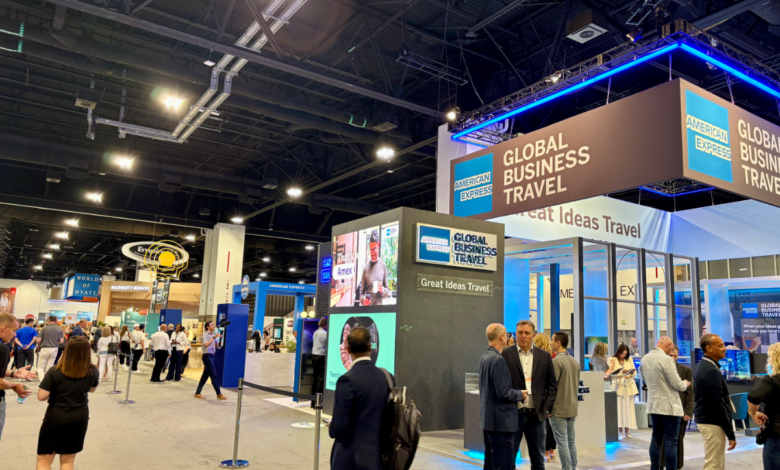
The landscape of the global corporate travel industry shifted significantly on Monday following the announcement that American Express Global Business Travel (Amex GBT), the world’s largest business travel management company, will be taken private in a $6.3 billion acquisition. The deal, led by Long Lake Management, represents the most substantial transaction in the corporate travel sector in recent years and concludes a decade-long saga of shifting ownership, public market experimentation, and strategic consolidation. This acquisition effectively removes Amex GBT from the New York Stock Exchange, where it has traded under the ticker GBTG since its debut via a special purpose acquisition company (SPAC) in 2022.
The transaction is the culmination of a complex corporate journey that began in 2014. At that time, American Express sought to de-risk its balance sheet by carving out its business travel division into a joint venture. That venture was formed with an investor consortium led by Greg O’Hara’s Certares, alongside the Qatar Investment Authority, BlackRock, and other institutional heavyweights. Over the subsequent ten years, the entity navigated a series of transformative events, including a failed multi-billion dollar recapitalization effort, a global pandemic that brought international travel to a standstill, and the recent acquisition of its primary rival, CWT.
The Financial Mechanics of the $6.3 Billion Buyout
The acquisition by Long Lake Management values Amex GBT at an enterprise value of approximately $6.3 billion. Long Lake Management is a relatively young entity, established only two years ago, yet it carries significant weight in the technology and finance sectors. The holding company is noted for its focus on artificial intelligence and is backed by a roster of investors who have also funded major AI pioneers, including Anthropic and OpenAI. This technological pedigree suggests that the future of Amex GBT will be heavily influenced by automated systems, predictive analytics, and AI-driven client interfaces.
For American Express, the deal represents a clean and highly profitable exit from its majority ownership stake. According to an 8-K filing submitted to the Securities and Exchange Commission (SEC) on Monday, American Express will receive approximately $1.5 billion in cash proceeds. The financial services giant confirmed a pre-tax gain of $975 million on the transaction. While Amex GBT will operate as a private entity under Long Lake Management, the "American Express Global Business Travel" brand is expected to remain in place through long-term licensing agreements, maintaining the prestige associated with the American Express name in the corporate world.
A Chronology of Ownership and Transformation
To understand the significance of this $6.3 billion deal, one must look back at the timeline of Amex GBT’s evolution from a legacy internal department to a tech-forward independent giant.
In 2014, American Express realized that the capital-intensive nature of a global travel management company (TMC) was at odds with its core focus on payments and card services. By spinning the division into a joint venture, it retained a 50% stake while bringing in $900 million in investment from the Certares-led group. This move was intended to provide the capital necessary for technological upgrades and acquisitions.
By 2019, the joint venture sought a $5 billion recapitalization to further fuel growth. However, the timing proved difficult as the global economy began to signal a slowdown. This was followed by the catastrophic impact of the COVID-19 pandemic in early 2020. With corporate travel plummeting by over 90% globally, Amex GBT was forced to navigate a period of extreme liquidity management and cost-cutting.
In 2021, as the world began to emerge from lockdowns, Amex GBT made a strategic play by acquiring Egencia, the corporate travel arm of Expedia Group. This deal was a "paper" transaction where Expedia took an equity stake in Amex GBT in exchange for Egencia. This move consolidated Amex GBT’s lead in the mid-market segment but, as later financial reports would show, resulted in significant paper losses for Expedia as Amex GBT’s public valuation fluctuated.
The company finally went public in May 2022 through a merger with Apollo Strategic Growth Capital, a SPAC. While the move provided a public currency for further acquisitions, the timing coincided with a broader cooling of the SPAC market and high interest rates, which often left the company’s stock price struggling to reflect its market dominance. The decision to go private now, just two years after its public debut, suggests that the management and its new backers believe the company can more effectively scale and integrate its recent acquisitions away from the scrutiny of quarterly earnings reports.
Analyzing the Winners and Losers
The "cap table" at the time of this exit provides a clear picture of which institutional players benefited most from the decade-long investment. American Express is the unambiguous winner. By spinning off the unit in 2014, it insulated itself from the volatility of the travel market during the pandemic while still benefiting from the recovery. The $1.5 billion cash infusion and the nearly $1 billion pre-tax gain solidify the move as a masterclass in corporate restructuring.
Conversely, Expedia Group’s involvement has been more fraught. When Expedia sold Egencia to Amex GBT in 2021, it received a stake that was valued significantly higher on paper than what was eventually realized. Reports indicate that Expedia faced a $326 million paper loss on its investment in the travel management company. While the strategic rationale—shedding a non-core business to focus on consumer travel—remained sound, the financial timing proved less than ideal.
The Certares-led consortium, headed by Greg O’Hara, also emerges as a successful architect of the company’s growth. O’Hara, who has served as the Chairman of the Board for Amex GBT, oversaw the transition from a legacy service provider to a technology-integrated platform. Under his guidance, the company successfully integrated multiple acquisitions, including HRG and CWT, effectively making it the "Amazon" of corporate travel.
The Role of Artificial Intelligence in the Acquisition
One of the most intriguing aspects of the deal is the identity of the buyer. Long Lake Management’s focus on artificial intelligence is not incidental. The corporate travel industry is currently undergoing a massive shift toward "New Distribution Capability" (NDC) and AI-driven personalization.
Modern corporate travel management is no longer just about booking flights and hotels; it is about data orchestration. Companies want to track carbon footprints, ensure "duty of care" for employee safety, and optimize spending through automated policy enforcement. By bringing in a parent company with deep ties to the developers of ChatGPT (OpenAI) and Claude (Anthropic), Amex GBT is positioning itself to lead the next generation of travel technology.
Industry analysts suggest that AI will be used to automate the complex "back-office" functions of travel management—such as re-fleeting, refund processing, and itinerary changes—which are currently labor-intensive. Furthermore, AI can provide predictive analytics to help corporate clients forecast travel budgets with greater accuracy in a volatile pricing environment.
The CWT Acquisition Context
The timing of the take-private deal is also linked to Amex GBT’s recent acquisition of CWT (formerly Carlson Wagonlit Travel). Announced earlier in 2024 for approximately $570 million, the CWT deal was a move to eliminate a major competitor and achieve massive economies of scale.
Integrating a company as large as CWT is a monumental task that often depresses earnings in the short term due to restructuring costs and systems integration. By going private now, Amex GBT can complete this integration behind closed doors. This allows the leadership team to focus on long-term synergy realization rather than defending temporary dips in profitability to public shareholders. The combined entity of Amex GBT and CWT creates a powerhouse with unparalleled negotiating leverage with airlines and hotel chains, a factor that likely increased the attractiveness of the company to Long Lake Management.
Broader Industry Implications and Future Outlook
The removal of the world’s largest TMC from the public markets marks a shift in how the travel industry is viewed by high-finance investors. It suggests that the most significant growth and transformation in business travel are currently found in private equity-backed technology plays rather than public equity.
This deal also sets a benchmark for the valuation of other players in the space. Companies like BCD Travel, which remains private, and newer, tech-native entrants like Navan (formerly TripActions) and TravelPerk, will be watching the integration of Amex GBT and Long Lake closely. If the infusion of AI capabilities allows Amex GBT to significantly lower its operating costs while improving the user experience, it could force a rapid wave of technological adoption across the entire sector.
The corporate travel market itself has shown remarkable resilience. Despite the rise of video conferencing, "bleisure" (the blending of business and leisure travel) and the return of large-scale international conferences have driven travel volumes back toward 2019 levels. However, the nature of the travel has changed; it is more expensive, more complex to manage, and more focused on sustainability.
As Amex GBT enters this new private chapter, the focus will shift from quarterly growth to structural evolution. With $6.3 billion in backing and a mandate to integrate cutting-edge AI, the company is no longer just a travel agency—it is a data and technology firm that happens to move people around the globe. The conclusion of this twelve-year ownership saga marks not just an end for the public shareholders, but a new beginning for a consolidated, AI-empowered corporate travel industry.