Stanley Tucci Searching for Italy Season Two Guide to Restaurants and Regional Cuisine

The second season of the critically acclaimed travel and food series Stanley Tucci: Searching for Italy continues the actor’s immersive journey through the diverse gastronomic landscapes of the Italian peninsula. Following the massive success of its debut season, which earned multiple Primetime Emmy Awards, the series serves as a cultural bridge, connecting global audiences with the intricate traditions, historical struggles, and resilient spirits of the Italian people. In this installment, Tucci explores regions ranging from the rugged cliffs of Liguria to the ancient cave dwellings of Basilicata and the sun-drenched "toe" of Italy, Calabria. The program transcends typical travelogues by highlighting the intersection of history, sociology, and culinary artistry, focusing on how regional ingredients tell the story of a nation that was only unified in 1861 and remains fiercely regional in its identity.
Liguria: Innovation Born of a Harsh Landscape
The Italian Riviera, stretching along the crescent-shaped region of Liguria, is renowned for its dramatic coastline and the iconic villages of Portofino and the Cinque Terre. However, beneath the glamorous veneer lies a geography defined by steep, unforgiving cliffs and a lack of arable flatland. This environment forced Ligurians to become masters of ingenuity, leading to the creation of world-famous staples like pesto and unique pasta shapes designed to cling to vibrant sauces.
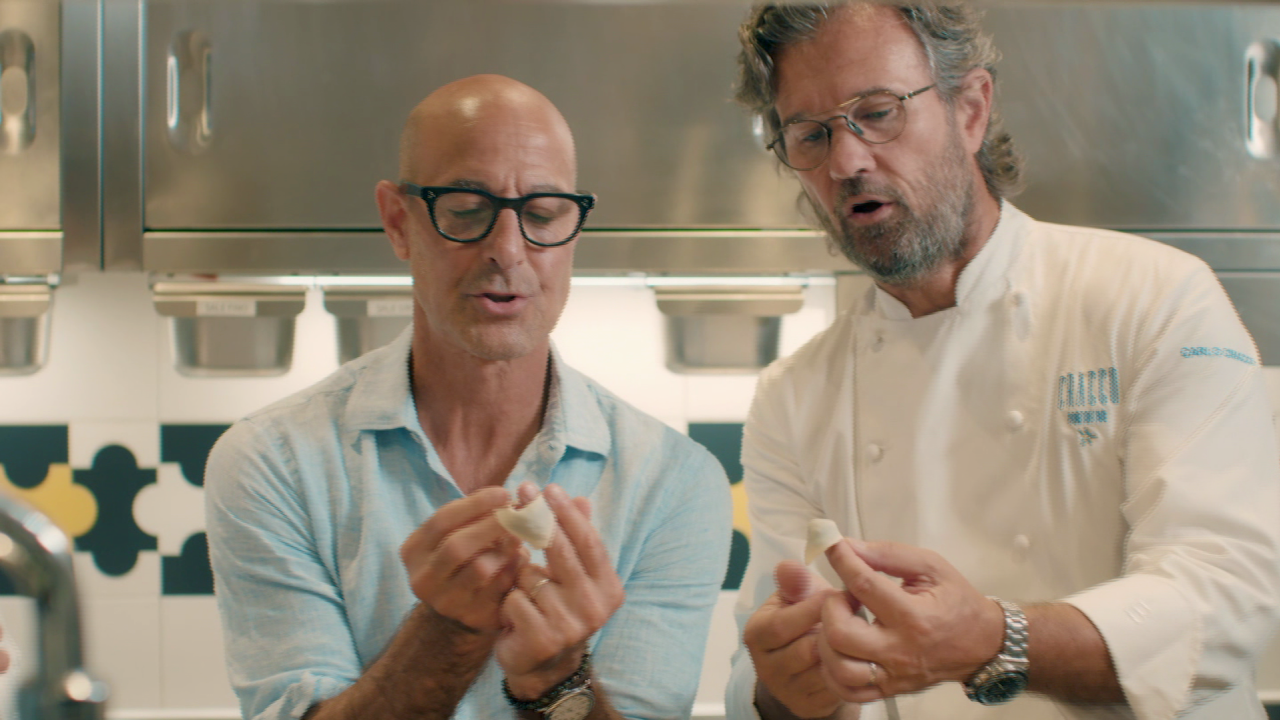
In Portofino, Tucci visited Cracco Portofino, helmed by the Michelin-starred chef Carlo Cracco. The establishment is a beacon of modern Italian fine dining, yet its menu remains tethered to the local terroir. Tucci sampled pansotti, a triangular ravioli stuffed with preboggion—a traditional mixture of wild herbs and greens foraged from the Ligurian hills—served with a rich walnut sauce. The complexity of the dish lies in the bitter notes of the herbs balanced by the creamy, earthy fats of the nuts.
The journey continued to Genoa, a historic maritime republic, where Tucci explored the roots of pesto at Il Genovese. Under the guidance of Roberto Panizza, often called the "King of Pesto," Tucci witnessed the traditional preparation of the sauce using an ancient marble mortar and wooden pestle. This method, which emulsifies basil, pine nuts, garlic, Parmigiano-Reggiano, Pecorino Sardo, and Ligurian olive oil, is considered a sacred ritual. To complete the experience, Tucci sampled the local street food staple, focaccia alla Genovese, at Antico Forno della Casana. Local tradition dictates eating the bread upside down so the salt crystals immediately hit the tongue, a practice Tucci enthusiastically adopted.
Puglia: The Rising Pride of the Italian South
Puglia, the "heel" of Italy’s boot, has historically been one of the country’s poorest regions, yet it is currently undergoing a culinary and economic renaissance. Known for producing 40% of Italy’s olive oil, the region’s cuisine is defined by "cucina povera"—the cooking of the poor—which utilizes simple, seasonal ingredients to create profound flavors.
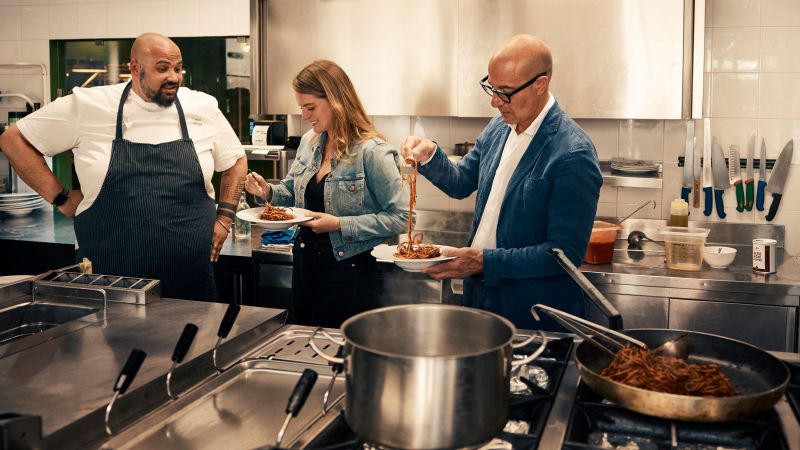
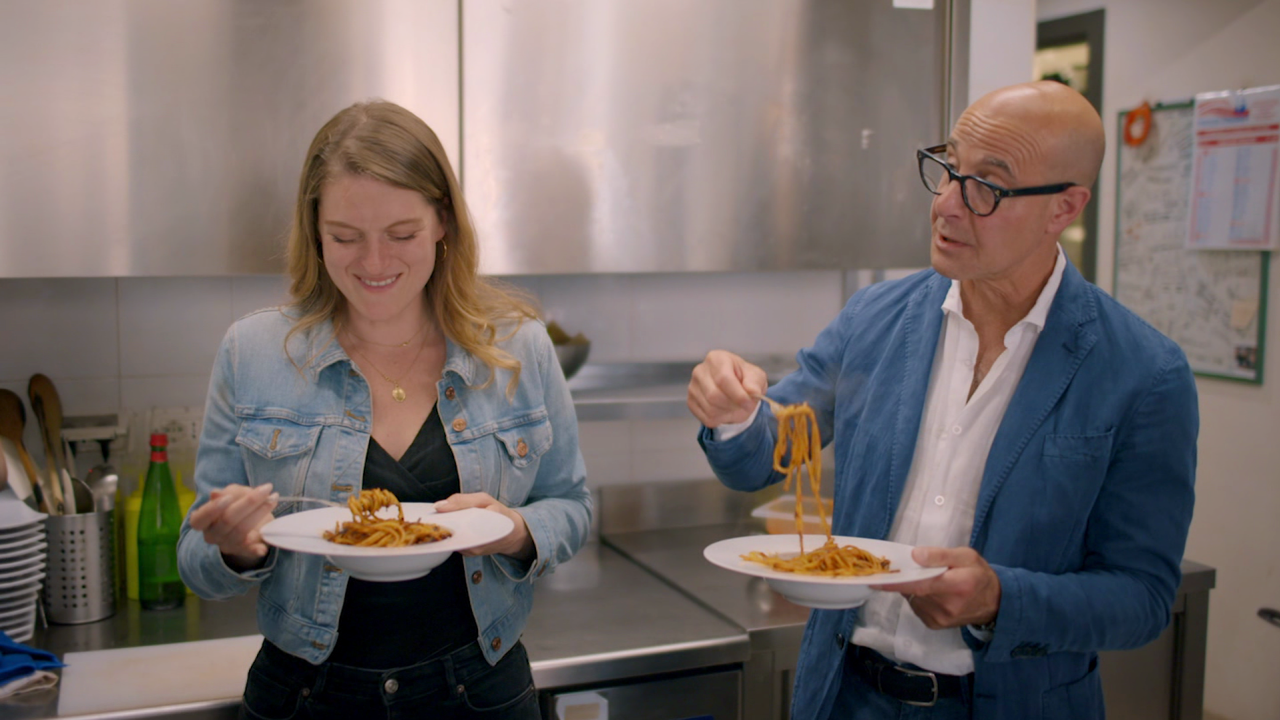
In the city of Bari, Tucci encountered a dish that challenges traditional Italian pasta rules: spaghetti all’assassina (Assassin’s Pasta). At Urban Bistrot, Chef Celso Laforgia demonstrated the "risotto method" of cooking pasta, where dry noodles are charred in a pan with olive oil and chili until crispy and burnt, rather than boiled in water. This spicy, smoky dish represents the rebellious spirit of Pugliese cooking.
The exploration of Puglia also took Tucci to the interior, specifically to Montegrosso, where Chef Pietro Zito at Antichi Sapori serves burnt grain orecchiette. This dish has deep historical roots; in the past, poor farmers would harvest the charred grains left over after landowners burnt the fields after the harvest. Today, this "peasant food" is a high-end delicacy. The region’s dairy innovation was highlighted at Caseificio Dicecca, a "cheese bar" where Vito Dicecca has developed dozens of varieties of Apulian blue cheese, a departure from the region’s traditional fresh cheeses like burrata.
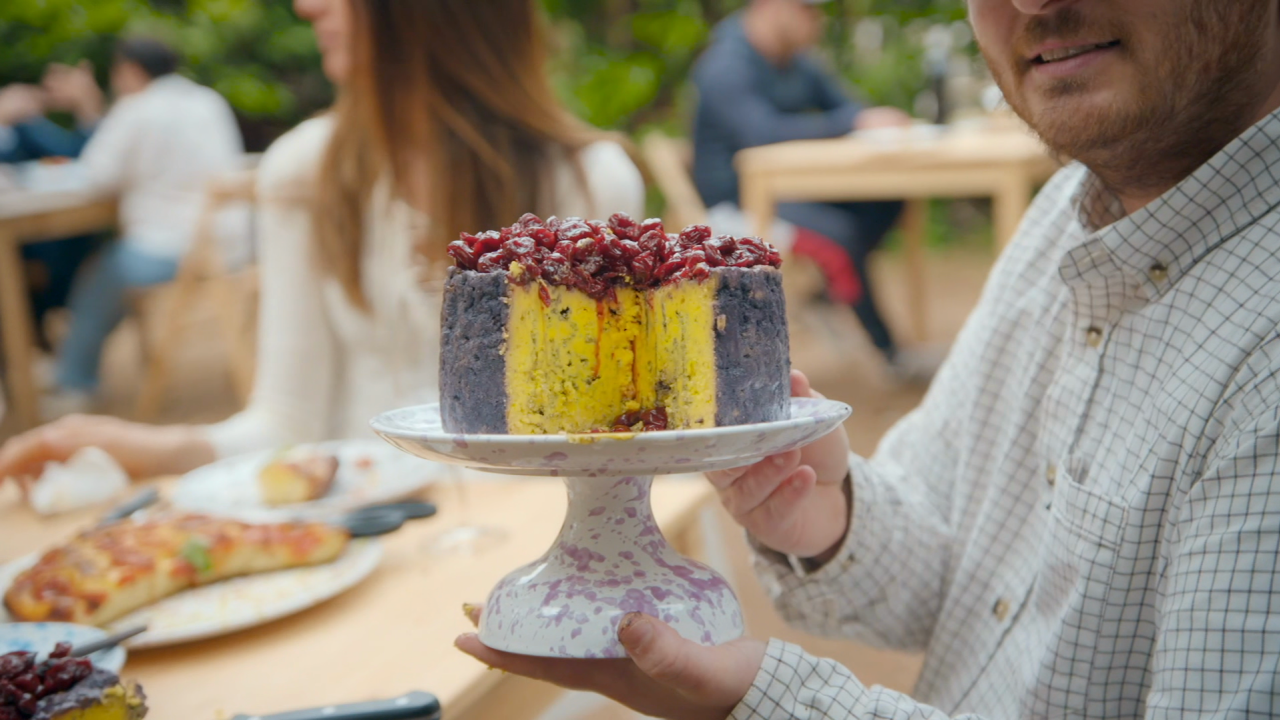
The episode culminated in Matera, located in the neighboring Basilicata region but culturally tied to Puglia. At the Michelin-starred Ristorante Vitantonio Lombardo, situated within an ancient cave dwelling (sassi), Tucci sampled "Poverty and Nobility," a dish of veal throat and filet covered in black breadcrumbs to mimic the appearance of a truffle, symbolizing the transition of the region from hardship to modern sophistication.
Sardinia: An Island of Ancient Traditions and Mediterranean Fusion
Sardinia’s isolation from the mainland has allowed it to preserve a culinary identity that is distinct from the rest of Italy. The island’s history is a mosaic of influences from the Phoenicians, Romans, Arabs, and Spaniards, all of whom left their mark on the local diet.
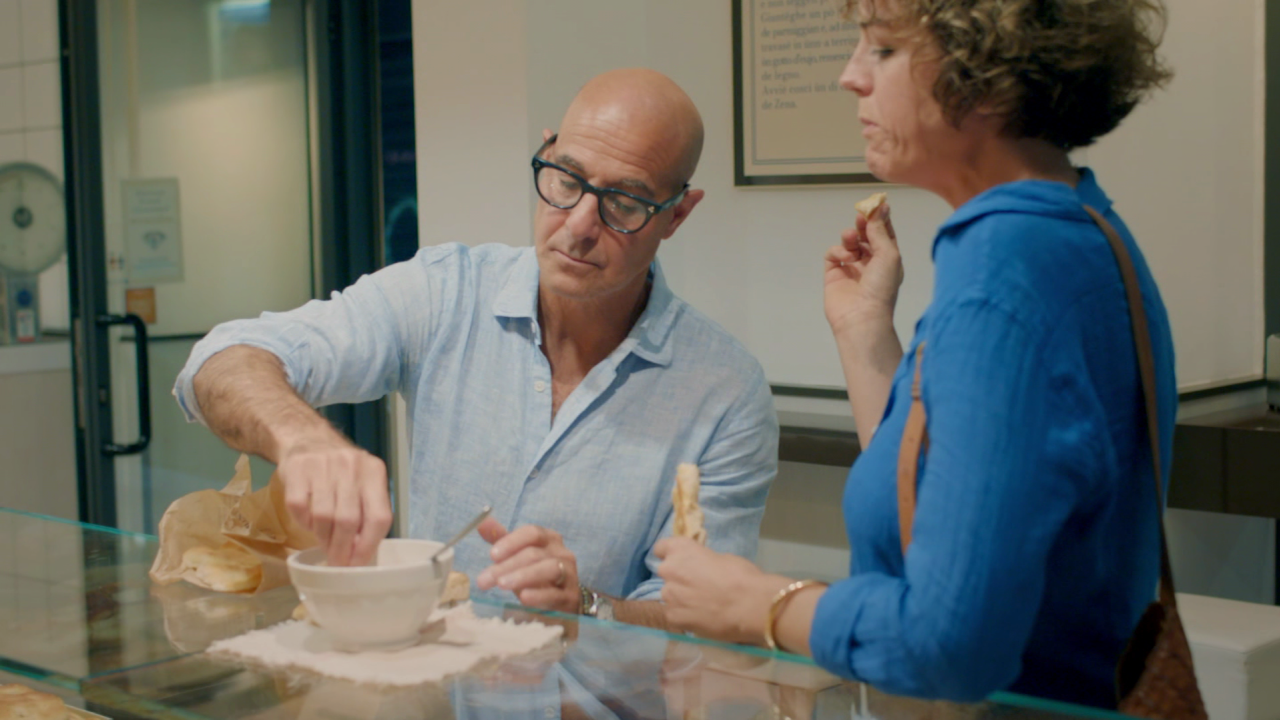
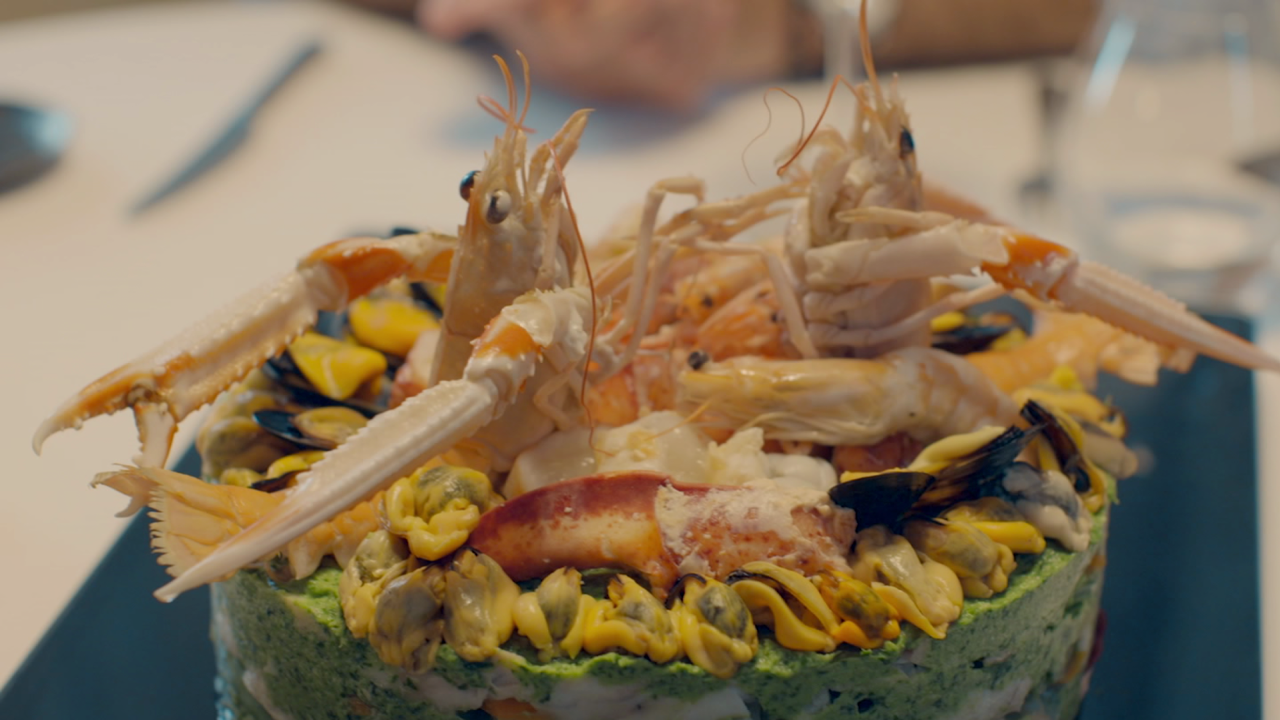
In the coastal town of Pula, Tucci visited Fradis Minoris, a restaurant that holds a Michelin Green Star for its commitment to sustainability. Here, he sampled fregola ai frutti di mare. Fregola, a toasted, semolina-based pasta similar to North African couscous, is a direct legacy of the island’s historical ties to the Maghreb. In Alghero, known as "Little Barcelona" due to its Catalan history, Tucci experienced the intersection of Spanish and Italian cultures. At the bakery Al Forno, he tried panada, a savory meat pie that shares a common ancestor with the Spanish empanada.
The Sardinian episode also highlighted the island’s status as a "Blue Zone," one of the few places in the world with a high concentration of centenarians. The diet, rich in whole grains like pane carasau (a thin, crispy flatbread) and local seafood, is credited with the residents’ longevity. At Mabrouk, Tucci tasted the world-renowned Alghero lobster, prepared "a la Catalana" with a sauce enriched by lobster eggs—a practice that provides a unique salty-sweet profile highly prized by local chefs.
Calabria: A Personal Homecoming to the Ancestral Toe
For Stanley Tucci, the visit to Calabria was the most personal segment of the season. As his ancestral homeland, the region represents the roots of his family’s identity. Calabria is a land of extremes, featuring rugged mountains and a coastline surrounded by water on three sides.
In the village of Marzi, Tucci and his parents visited Panificio Cuti to try pane di cuti, a sourdough bread made from a century-old yeast culture. The bakery also serves morsello, a portable bread bowl filled with sausage and broccoli rabe, originally designed for laborers to take into the fields. This dish underscores the utilitarian nature of Calabrian cuisine, where food must be both hearty and practical.
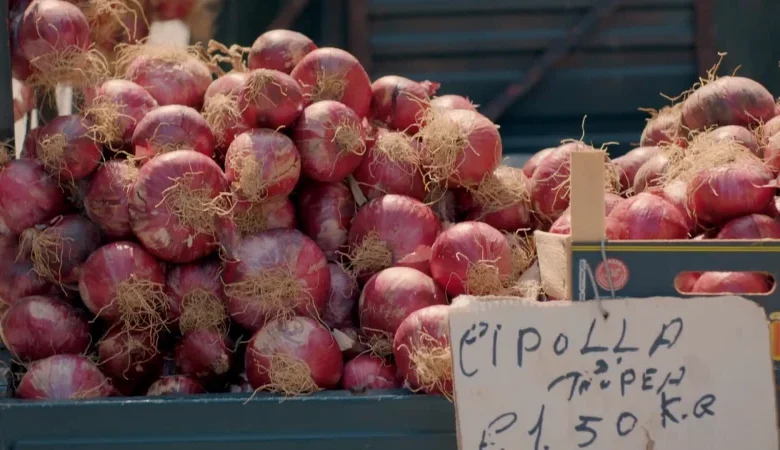
The region’s famous "Cipolla Rossa di Tropea" (Tropea red onions) were showcased at Osteria della Cipolla Rossa. These onions are so sweet due to the unique microclimate and sandy soil of the Calabrian coast that they are often eaten raw or turned into jam and ice cream. Tucci also explored the "Prince of the Sea," the swordfish, in the fishing village of Scilla. At Il Principe di Scilla, he sampled swordfish carpaccio and a rich swordfish ragu, noting that the texture and flavor of the fresh catch are unparalleled in the Mediterranean.
Chronology and Filming Context
The second season of Searching for Italy was filmed during a pivotal moment for the Italian tourism industry. Following the global lockdowns of 2020 and 2021, the series acted as a major catalyst for the "return to travel." Filming took place throughout late 2021 and early 2022, capturing the resilience of restaurant owners who had survived the economic downturn.
- September 2021: Production began in the southern regions, focusing on the harvest seasons in Puglia and Calabria.
- October – November 2021: Filming moved to the coastal regions of Liguria and Sardinia to capture the late-season seafood traditions.
- May 2022: The first half of Season Two premiered on CNN, focusing on Venice, Piedmont, and Umbria.
- October 2022: The remaining episodes, including the regions detailed in this guide, were released to global audiences.
Industry Impact and the "Tucci Effect"
The impact of the series on the featured establishments has been profound. Market analysts have noted a "Tucci Effect," where small, family-run trattorias mentioned in the show saw an immediate and sustained surge in international bookings. According to data from Italian tourism boards, interest in gastro-tourism in Puglia and Calabria rose by over 30% following the airing of the episodes.
Official responses from regional leaders have been overwhelmingly positive. The President of the Calabria Region stated that the show provided a "nuanced and beautiful" portrayal of a territory often misunderstood by outsiders. Similarly, culinary historians have praised the show for its accuracy in depicting the "DOP" (Protected Designation of Origin) status of Italian ingredients, which is crucial for the country’s agricultural economy.
Broader Implications for Global Gastronomy
Stanley Tucci: Searching for Italy does more than just showcase recipes; it highlights the global importance of preserving artisanal food traditions in the face of industrialization. By focusing on chefs like Roberto Panizza and Simonetta Bazzu, who dedicate their lives to ancient techniques, the show argues that food is the primary vessel for cultural memory.
As the series concludes its second season, it leaves behind a comprehensive map for travelers and food enthusiasts. It reinforces the idea that the "true" Italy is not found in a single dish, but in the thousands of regional variations that define the life of its people. Whether it is a Michelin-starred meal in a cave or a piece of charred pasta in a seaside alley, the culinary landscape of Italy remains a testament to the country’s enduring ability to find beauty and flavor in every corner of its territory.