A Comprehensive Guide to Traditional German Cuisine History Regional Diversity and the Evolution of Modern Culinary Staples

German cuisine is a complex tapestry of flavors, textures, and historical influences that extends far beyond the common international stereotypes of beer, sauerkraut, and sausage. While these items remain foundational to the national identity, the culinary landscape of Germany is defined by its regional diversity, its agricultural roots, and a centuries-long history of cultural exchange. From the seafaring traditions of the Baltic coast to the alpine influences of the south, German food is characterized by high-quality, locally sourced ingredients and a commitment to hearty, comfort-driven preparation. Today, the country’s gastronomy is a reflection of its status as a European crossroads, shaped by the integration of immigrant communities and a modern appreciation for both high-end dining and convenient, well-prepared street food.
The Historical Evolution of German Gastronomy
The development of German food cannot be viewed in isolation from the country’s political and social history. For centuries, Germany was a collection of sovereign states, each with its own micro-climate, soil quality, and trade access. This fragmentation led to the distinct regional specialties seen today. Furthermore, the post-World War II era brought significant changes to the German palate. The influx of "Gastarbeiter" (guest workers) from Turkey, Italy, and Greece in the 1960s and 1970s introduced new spices, techniques, and dishes that have since been adopted as national staples.
In the East, under the German Democratic Republic (GDR), culinary traditions were sometimes altered for political reasons. For instance, the famous Königsberger Klopse—meatballs in a creamy caper sauce—were renamed "Kochklopse" (boiled meatballs) by state officials to erase the reference to Königsberg, the former East Prussian capital that had been annexed by the Soviet Union. Since reunification, these traditional names have seen a resurgence, symbolizing a reclaimed cultural heritage.
The Meat and Sausage Traditions of the Heartland
No exploration of German food is complete without acknowledging the central role of meat, particularly the sausage. There are more than 1,500 varieties of sausage produced in Germany, ranging from fresh and smoked to cured and dried.
1. Bratwurst
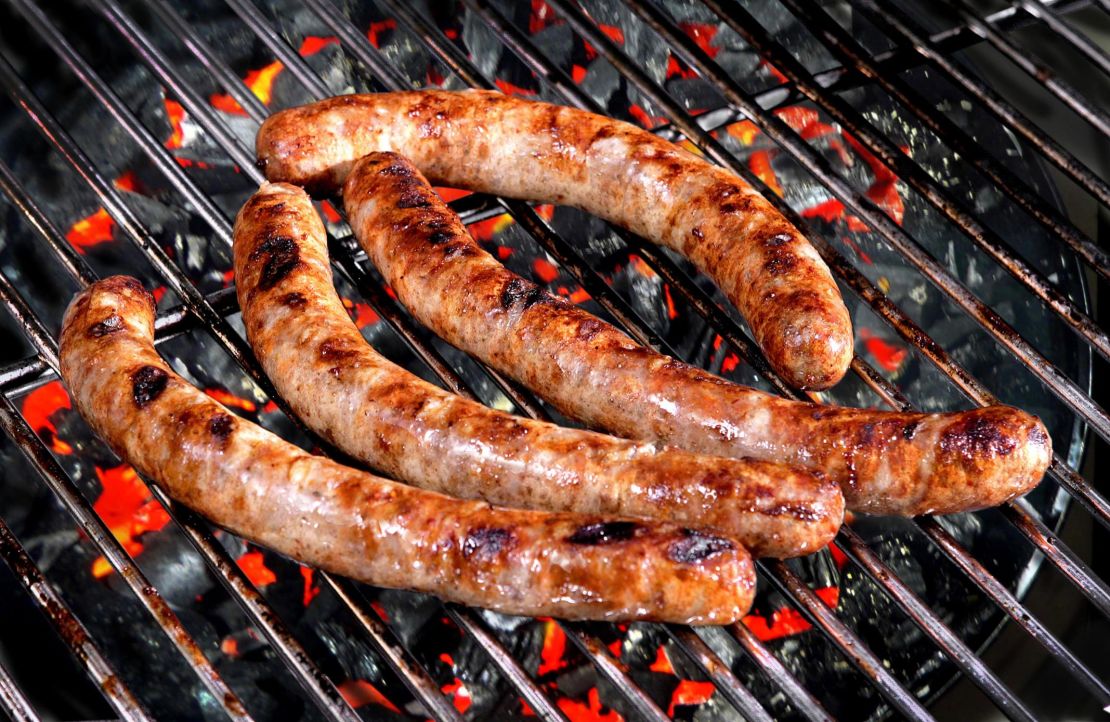
The Bratwurst is perhaps the most recognizable German export. With over 40 varieties, the dish is a testament to regional pride. The Fränkische Bratwurst from Franconia is distinguished by its use of marjoram, while the Nürnberger Rostbratwurst is famously small, often served in sets of six or twelve. Thuringia, home to the spicy Thüringer Rostbratwurst, even hosts the first German Bratwurst Museum, established in 2006 to preserve the 700-year history of the dish.
2. Currywurst
While Bratwurst is ancient, the Currywurst is a product of post-war necessity and ingenuity. Invented in 1949 by Herta Heuwer in Berlin, the dish was created when she obtained ketchup and curry powder from British soldiers. Today, it is an iconic street food, with an estimated 800 million servings consumed annually across Germany. It represents the democratization of German food—a filling, affordable snack enjoyed by office workers and tourists alike.
3. Schnitzel
Although often associated with Austria, the Schnitzel is a staple of German dining. While the "Wiener Schnitzel" must legally be made of veal, the German "Schnitzel Wiener Art" typically uses tenderized pork or turkey. Unlike the Austrian preference for serving it plain, Germans have developed a variety of toppings: Jägerschnitzel (with mushroom gravy), Zigeunerschnitzel (with bell pepper sauce), and Rahmschnitzel (with a cream sauce).
4. Rinderrouladen
A staple of Sunday family dinners, Rinderrouladen consists of thin slices of beef wrapped around bacon, onions, mustard, and pickles. This dish is particularly popular in the western Rhine region and is traditionally served with red wine gravy, potato dumplings, and pickled red cabbage. It exemplifies the "slow food" tradition of German home cooking.
5. Sauerbraten
Considered one of Germany’s national dishes, Sauerbraten is a pot roast that requires days of preparation. The meat—historically horse, but now primarily beef or venison—is marinated for up to a week in a mixture of vinegar, wine, and spices. The resulting sour-and-savory flavor is balanced by a dark gravy often sweetened with gingerbread or beet sugar.
Regional Specialties: The North-South Divide
Germany’s geography creates a stark contrast between the coastal flavors of the north and the dough-based comfort foods of the south.
6. Labskaus
In the northern port cities of Hamburg, Bremen, and Kiel, Labskaus represents the seafaring heritage of the 18th and 19th centuries. Originally a dish for sailors who needed preserved rations, it is a mash of salted beef, potatoes, onions, and pickled beetroot. While its pink appearance may be unconventional, it remains a beloved local delicacy and a popular "hangover cure."
7. Rollmops
Another northern classic, Rollmops are pickled herring fillets rolled around a gherkin or onion. They gained popularity in the 19th century with the advent of the railway, which allowed pickled seafood to be transported from the coast to the interior. Like Labskaus, they are a fundamental part of the "Katerfrühstück" (hangover breakfast).
8. Maultaschen
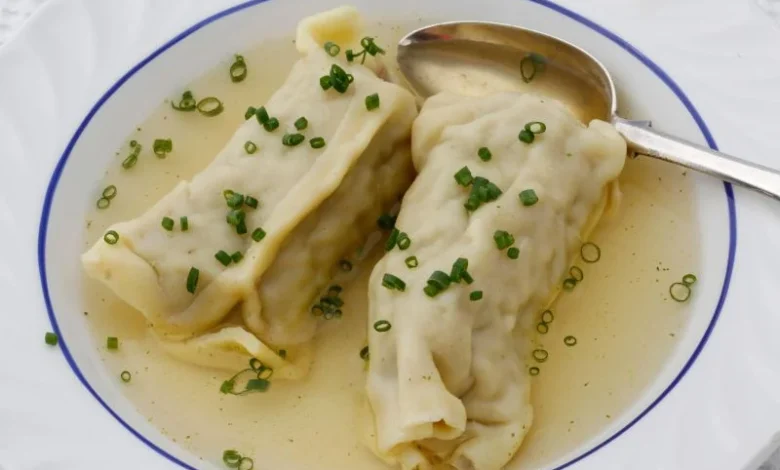
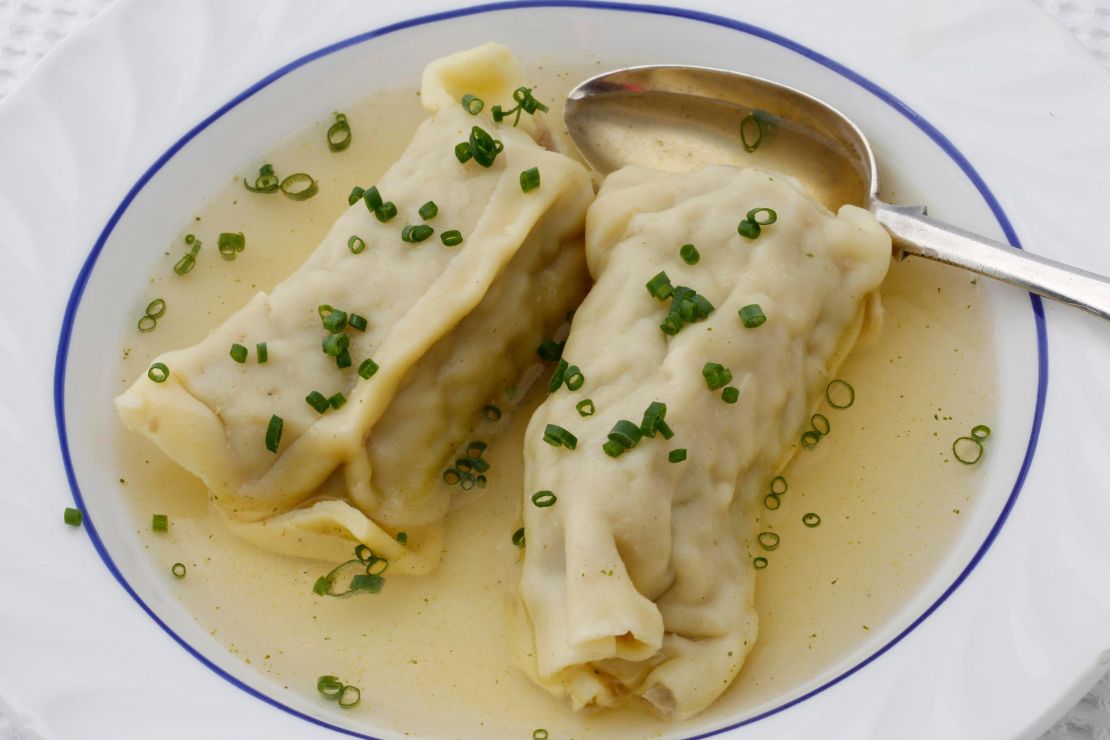
In the southwestern region of Swabia, Maultaschen are the local answer to ravioli. These large dough pockets are filled with meat, spinach, and onions. Legend suggests they were invented by Cistercian monks who wanted to hide meat from the sight of God during Lent, earning them the nickname "Herrgottsbescheißerle" (little God-cheaters). In 2009, the European Union granted Maultaschen protected status as a regional specialty.
9. Spätzle and Käsepätzle
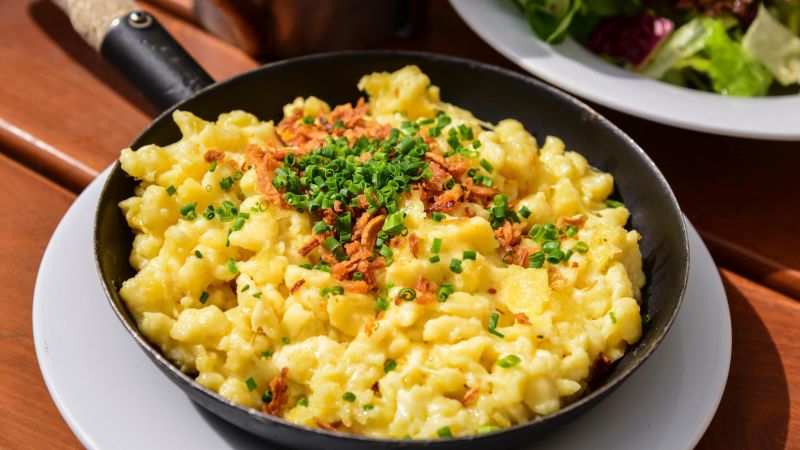
Spätzle are soft egg noodles that serve as the foundation of southern German cuisine. When layered with mountain cheese and topped with fried onions, they become Käsepätzle—a vegetarian powerhouse found in every Bavarian beer garden and alpine hut.
10. Himmel und Erde
Translating to "Heaven and Earth," this dish from the Rhineland combines mashed potatoes (from the earth) with apple sauce (from the sky/trees). Usually served with black pudding and fried onions, it has been a staple of Cologne’s brewery culture since the 18th century.
Seasonal Obsessions and Agricultural Heritage
German eating habits are strictly tied to the agricultural calendar, leading to "seasons" where a single ingredient dominates menus nationwide.
11. Spargel (White Asparagus)
The obsession with white asparagus, known as "Spargelzeit," begins in mid-April and ends abruptly on June 24 (St. John’s Day). During this window, Germans consume over 70,000 tons of the "white gold." The vegetable is celebrated with festivals, "Asparagus Routes," and specialized peeling machines in supermarkets. It is traditionally served simply with hollandaise sauce and melted butter to highlight its delicate flavor.
12. Zwiebelkuchen and Federweisser
In October, particularly along the Mosel and Rhine rivers, the wine harvest is celebrated with Zwiebelkuchen (onion tart) and Federweisser (young, partially fermented wine). Federweisser is a seasonal rarity; because it is still fermenting, it cannot be bottled in airtight containers and must be consumed locally within days of production.
13. Pinkel mit Grünkohl
In the northwest, winter is marked by the "Grünkohlfahrt"—a brisk hike followed by a feast of kale and "Pinkel" sausage. The sausage is a hearty mix of bacon, groats, and suet, providing the necessary calories for the cold Baltic winters.
The Immigrant Legacy and Modern Staples
The integration of foreign culinary traditions has created some of Germany’s most popular contemporary dishes.
14. Döner Kebab
Introduced by Turkish immigrants like Kadir Nurman in West Berlin during the early 1970s, the Döner Kebab has evolved from a simple meat-and-onion sandwich into a complex meal featuring fresh salads and various sauces. It is now arguably the most popular fast food in the country, surpassing even the Bratwurst in daily sales.
15. Spaghettieis
A whimsical creation of the late 1960s, Spaghetti Ice Cream was invented by Dario Fontanella, the son of an Italian immigrant in Mannheim. By pressing vanilla ice cream through a potato ricer and topping it with strawberry sauce (to mimic tomato sauce) and white chocolate shavings (to mimic Parmesan), he created a dessert that has become a staple of every German ice cream parlor.
Culinary Diplomacy and Political Symbolism
Food in Germany often carries political weight. A prime example is Saumagen (16), or "sow’s stomach." This dish of pork, potatoes, and spices encased in a pig’s stomach was the favorite of former Chancellor Helmut Kohl. He famously used Saumagen as a tool of "culinary diplomacy," serving it to world leaders including Margaret Thatcher, Mikhail Gorbachev, Ronald Reagan, and Bill Clinton.
Other historical staples include Königsberger Klopse (17), which remain a favorite in Berlin and Brandenburg, and Reibekuchen (18) (potato pancakes). Known by over 40 different regional names, Reibekuchen are a fixture of German Christmas markets, where they are served with apple sauce or treacle.
The Sweet Traditions of the German Bakery
Baking is a cornerstone of German culture, particularly the ritual of "Kaffee und Kuchen" (coffee and cake) on Sunday afternoons.
19. Schwarzwälder Kirschtorte (Black Forest Gateau)
This world-famous cake is named not after the forest itself, but after "Kirschwasser," a cherry schnapps produced in the region. Consisting of chocolate sponge, whipped cream, and tart cherries, it became a global sensation following World War II and remains the gold standard of German confectionery.
20. Käsekuchen (German Cheesecake)
Unlike the American version made with cream cheese, German Käsekuchen utilizes "Quark"—a low-fat, curd-like dairy product. This results in a lighter, fluffier texture, often enhanced with lemon zest and vanilla. It is a ubiquitous presence in German bakeries, representing the country’s preference for balanced, less-sugary desserts.
Analysis of Implications and Broader Impact
The state of German cuisine today reflects a broader European trend toward reconciling tradition with modernity. While the 20 dishes listed above remain culturally significant, there is a growing movement toward "Neu-Deutsche Küche" (New German Cuisine), which emphasizes seasonal, sustainable, and often plant-based interpretations of these classics.
The economic impact of these traditions is substantial. The "Spargel" industry and the "Biergarten" culture contribute billions to the national economy and support thousands of local producers. Furthermore, the European Union’s "Protected Designation of Origin" (PDO) and "Protected Geographical Indication" (PGI) statuses for items like Maultaschen and various Bratwursts have ensured that regional identities are preserved in an increasingly globalized market.
Ultimately, German food is a narrative of resilience and adaptation. Whether it is a sailor’s meal from the 1700s, a post-war street snack, or a dessert created by the child of an immigrant, each dish tells a story of a nation that finds its identity at the dinner table. As Germany continues to evolve, its culinary traditions serve as a reliable anchor, providing comfort and a sense of "Heimat" (home) to its citizens and visitors alike.