The Legacy of Wendell Berry: Farmer, Philosopher, and Prophet of the Localized Earth


The death of Wendell Berry at the age of 92 marks the passing of one of America’s most singular and uncompromising cultural voices. Operating primarily from his family farm in Henry County, Kentucky, Berry spent decades crafting a literary and philosophical corpus that defied easy political categorization while challenging the foundational assumptions of modern industrial society. As an essayist, poet, novelist, environmental activist, and practicing farmer, Berry lived a life deeply integrated with the land he wrote about. He rejected computers and smartphones, preferring pencil and paper, and built a philosophy centered on stewardship, local communities, and the radical act of paying attention to the immediate physical world. His passing closes a chapter on a life that inspired generations of environmentalists, agriculturalists, and writers to rethink humanity’s relationship with the natural world.
From Henry County to the National Stage: A Chronology of Advocacy and Resistance
Berry’s life was defined by a rare consistency between his written philosophy and his public actions. Born in 1934 in Pleasureville, Kentucky, he earned degrees from the University of Kentucky before embarking on a teaching career that included a stint at Stanford University. However, the pull of his native soil proved irresistible, and in 1965, he returned to Kentucky to farm and write full-time.
Throughout the decades that followed, Berry’s opposition to industrial exploitation manifested not only in his essays and poetry, but also in direct civil disobedience. In 1979, he was arrested for protesting a nuclear power plant in Indiana, signaling an early willingness to put his body on the line for his environmental convictions.
His activism extended well into the 21st century. In 2011, at the age of 77, Berry participated in a high-profile sit-in inside Kentucky state government offices to protest mountaintop removal coal mining—a destructive extraction practice that had ravaged vast swaths of Appalachia. Throughout the 2010s, he remained a visible figure in climate protests, helping to block the gates of a coal-fired power plant in Washington, D.C. His principled stands also carried professional costs; in a dramatic gesture of protest in the mid-2010s, Berry pulled his personal papers from the University of Kentucky after the institution accepted a $7 million donation from Alliance Coal, signaling that his academic legacy could not be decoupled from his environmental ethics.
The Philosophy of "Think Little": Rejecting Industrial Alienation
Central to Berry’s worldview was the conviction that large-scale political movements often faltered because they ignored the moral and practical responsibilities of individual daily life. In his seminal 1972 essay, Think Little, written as the modern environmental movement was gaining momentum, Berry argued that public crises are fundamentally rooted in private choices.
"There is no public crisis that is not also private," Berry wrote, emphasizing that systemic ecological healing requires an overhaul of modern lifestyle habits rather than mere lobbying of political elites.
This philosophy informed his famous 1987 Harper’s Magazine essay, Why I am not Going to Buy a Computer. While detractors frequently dismissed him as a Luddite or a curmudgeon, scholars note that Berry’s resistance to digital technology was philosophically aligned with the early 19th-century Luddite movement—textile workers who destroyed industrial machinery not out of an anti-technology animus, but to protect the dignity and autonomy of human labor. Berry sought to insulate his creative process and agricultural work from technological mediations that he believed alienated human beings from the physical consequences of their labor.
Beyond Left and Right: A Political Outlier
Berry’s political identity resisted simple mapping onto the traditional American left-right spectrum. He was deeply conservative in his reverence for agrarian traditions, family structures, and local community cohesion, yet fiercely radical in his critique of corporate capitalism, industrial agriculture, and environmental degradation.
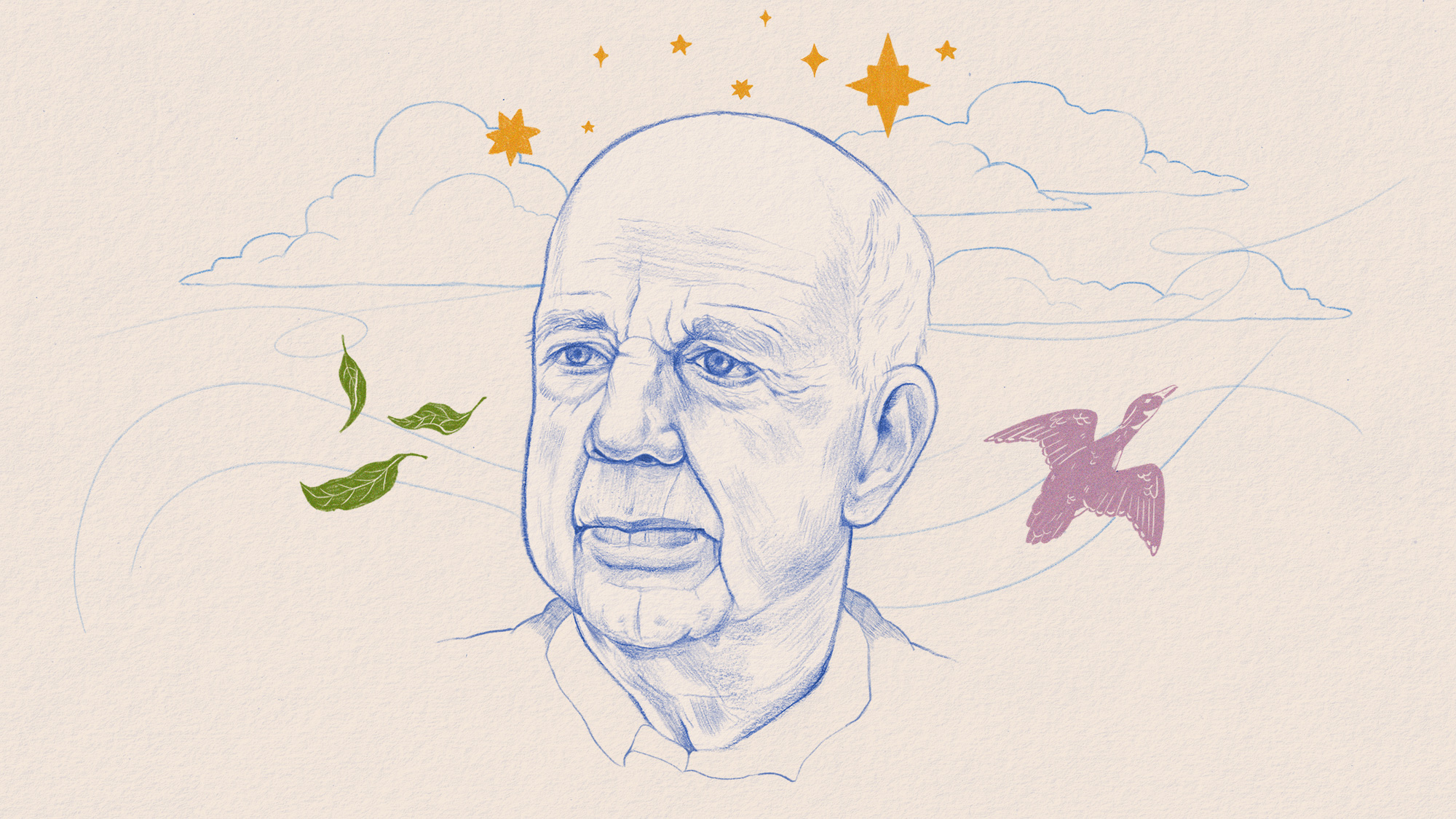
He viewed government overreach with deep suspicion, arguing that institutions had no legitimate authority to legislate private morality, yet he championed robust collective responsibility toward the commons. His religious worldview was similarly unorthodox; while deeply conversant with biblical literature and Christian theology, he described himself as a "bad weather church-goer," preferring to spend tranquil Sunday mornings walking through the Kentucky woods.
Jeffrey Bilbro, an English professor at Grove City College in Pennsylvania and author of multiple books on Berry, noted that the writer’s aversion to dualisms—such as the artificial separation between humanity and nature, or body and soul—allowed him to resonate with a remarkably broad audience.
"For an uncompromising person or a person of convictions, I think he recognized the need in a fallen world," Bilbro observed. "Our hands are all dirty, and we’re making these compromises, and it’s better to be honest about the necessity to do so and try to do what we can to live right, even if we can’t attain the purity that we might wish."
The Economics of the Land and the Myth of Endless Growth
Berry’s critiques of industrial agriculture and modern economics were formulated across more than 50 books of poetry, fiction, and essays. He argued that corporate farming had transformed the American landscape into a factory floor, replacing sustainable, multi-generational stewardship with extractive monoculture. In works like The Unsettling of America (1977), he detailed how the depopulation of rural communities mirrored the ecological depletion of the soil, asserting that a society cannot exploit its land without ultimately exploiting and eroding its people.
Unlike many contemporary environmentalists who framed the ecological crisis in terms of impending apocalyptic doom, Berry viewed time through a cyclical lens of death and rebirth. In poems such as Manifesto: Mad Farmer Liberation Front and A Discipline, he wrestled with the reality of ecological collapse while urging readers to maintain long-range hope.
"Invest in the millennium," Berry wrote in Manifesto. "Plant sequoias. / Say that your main crop is the forest / that you did not plant."
Implications and Contemporary Relevance
As contemporary society grapples with compounding climate change, biodiversity loss, and the psychological alienation wrought by the digital age, Berry’s work offers a rigorous counter-narrative. His insistence on localized economies, agrarian literacy, and intimate knowledge of one’s immediate watershed has heavily influenced the modern local food movement, urban farming initiatives, and bioregionalism.
While mainstream political discourse remains largely tethered to paradigms of perpetual economic growth and technological solutionism, Berry’s legacy stands as a persistent reminder of the limits of industrial modernity. His passing does not conclude his relevance; rather, it elevates his body of work as a permanent touchstone for those seeking a more grounded, ethical, and sustainable mode of human habitation on Earth.
In Berry’s estimation, the path toward planetary healing does not begin in corporate boardrooms or international climate summits, but in the patient, humble labor of tending a single patch of earth—recognizing, in the process, that the land and the human being are ultimately bound by a shared destiny.