Saving the Climate Record: Global Scientific Institutions Launch Data Resilience Operations Against Political Erasure

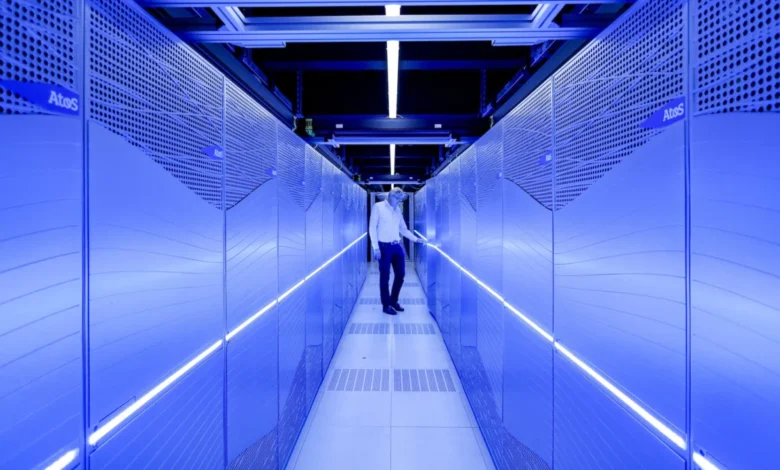
Inside a nondescript, five-story facility in the heart of Hamburg, Germany, a quiet technological revolution is underway. The German Climate Computing Center (DKRZ) is currently expanding its physical footprint, installing high-capacity server racks to accommodate an influx of climate data originating thousands of miles away. This expansion, while seemingly routine in the world of high-performance computing, represents a desperate, high-stakes effort to preserve the integrity of global climate science. As the United States government continues to dismantle its internal climate research infrastructure, international partners have mobilized to treat American scientific data as a fragile, at-risk asset that requires a safe harbor.
The DKRZ is preparing to ingest approximately 5 petabytes of climate simulation data, adding to its existing 254-petabyte archive. In the specialized parlance of data management, this is an immense undertaking; one petabyte represents the storage equivalent of roughly 200 million high-resolution images. This initiative, however, is not merely a standard backup procedure. It is a preemptive strike against the systematic suppression of scientific research by the Trump administration, which has, over the past two years, curtailed funding, shuttered climate studies, and scrubbed federal websites of references to anthropogenic climate change.
A Chronology of Scientific Erosion
The degradation of the American climate research apparatus has been rapid and multifaceted. Since early 2025, the trajectory of U.S. science policy has shifted from collaborative inquiry to active obstruction.
- January 2025: The United States officially withdraws from the UN Intergovernmental Panel on Climate Change (IPCC) and the UN Framework Convention on Climate Change, signaling a formal break from international climate governance.
- April 2025: Personnel from the Department of Government Efficiency (DOGE) abruptly purge over 300 datasets from NASA’s Socioeconomic Data and Applications Center (SEDAC). These files, built over decades, provided critical bridges between earth science and human demographics.
- June 2025: Independent reports confirm the cancellation of over 100 federally funded climate studies, while satellites dedicated to tracking atmospheric carbon and sea-level rise face severe operational restrictions.
- September 2025: The German Research Foundation (DFG) allocates a $35 million emergency fund to establish a "Data Resilience" program, designed to mirror and protect American public-domain climate data from potential deletion or manipulation.
This sequence of events has shattered the long-held assumption that scientific data, once published and publicly funded, remains permanently accessible in the archives of its host nation.
The Vulnerability of Digital Infrastructure
For decades, the standard for scientific data storage has been localized, decentralized, and relatively informal. Research institutions typically housed their own datasets on proprietary servers or magnetic tapes. This "siloed" model functioned adequately in a stable political climate but has proven disastrously vulnerable in an era of authoritarian interference and geopolitical volatility.
The physical nature of data storage—often dismissed in the era of "the cloud"—is a critical factor. When datasets reach the scale of petabytes, they cannot simply be uploaded via the internet. Transferring such volumes requires the "sneakernet"—the physical transport of hard drives and magnetic tape arrays by sea, air, or land. The cost and logistical complexity of these transfers are significant, yet for many international researchers, they are now viewed as a mandatory operational cost to ensure the survival of the 2029 U.N. climate assessment.
"The data repositories, digital asset management services, and preservation systems that ensure research data remains open and accessible are often overlooked until they disappear," note data experts Jennifer Gibson and Kaitlin Thaney. The incident at NASA’s SEDAC serves as a primary case study in this fragility. When the datasets were suddenly removed, it took a desperate, last-minute effort by third-party institutions to "scrape" the information from servers while they were still live, eventually migrating the data to the Harvard Dataverse Repository.
Global Reactions and Defensive Measures
The international scientific community’s response has been one of professional alarm followed by strategic fortification. The American Geophysical Union (AGU), representing 60,000 scientists globally, has transitioned from a professional society into an active defensive organization. During a March 2026 summit in Berlin, nearly 100 experts from the U.S. and Europe convened to codify "data resilience" protocols.
The consensus among these leaders is that science is currently at an inflection point. The AGU’s newly formed US Academic Alliance for the IPCC successfully nominated nearly 300 U.S. scientists to participate in upcoming global assessments, bypassing the Trump administration’s refusal to provide official U.S. government representatives.
"We have engaged in triage efforts to ensure data remains usable and accessible," said AGU president-elect Ben Zaitchik during the Berlin summit. "But we clearly now have arrived at a moment where we must fundamentally reimagine data organization and maintenance for long-term viability and growth."
The Multi-Front Threat: War and Cyber-Sabotage
The efforts in Hamburg and Frankfurt are part of a broader, global movement to protect knowledge from diverse threats. While the U.S. situation is unique in its bureaucratic nature, researchers in other regions face even more existential dangers.
In Ukraine, the threat to science is physical. Since the onset of the Russian invasion, research universities have been targeted by direct bombardments, resulting in the total loss of laboratories and archives. Anastasiia Lutsenko of the Max Planck Institute notes that the destruction of scientific infrastructure is a calculated strategy by aggressors to cripple a nation’s future. In response, international collaborations have prioritized the digitizing of historical meteorological records—some dating back to 1808—and transferring them to servers in Germany. Similar protective measures have been initiated by the Senckenberg Natural History Museum to secure biodiversity data from Yemen.
Furthermore, the rise of sophisticated, state-sponsored cyberattacks targeting research centers in Croatia and Germany highlights the digital insecurity of modern science. When hackers compromise a research facility, the primary goal is often the encryption of datasets for ransom, which can lead to the permanent loss of historical records if the victims cannot pay or restore from backups.
Implications for the Future of Empirical Science
The ongoing "data migration" has profound implications for how science will be conducted in the coming decades. Frank Oliver Glöckner, a professor at the University of Bremen and head of the Pangaea repository, suggests that the current political climate may have unintentionally accelerated necessary reforms.
"President Trump has, to a certain extent, done science a favor by making it clear how important it is to not just hoard data in one place but to truly share it with the global scientific community," Glöckner stated.
The goal for the future is the creation of a global, interconnected network of "digital pipelines." This would allow scientists to "flip a switch" and mirror data across international jurisdictions at the first sign of local political instability or infrastructure failure. However, this vision is not without its own risks. As DKRZ’s researchers point out, political volatility is not confined to the United States. With the rise of nationalist, anti-science movements in various European nations—including Germany itself—the scientific community is increasingly aware that no country, regardless of its current commitment to liberal inquiry, is immune to shifts that could jeopardize the integrity of the historical record.
Ultimately, the effort to preserve climate data is an admission that the global scientific commons is under siege. As the international community prepares for the 2029 U.N. assessments, the focus has shifted from the mere collection of new findings to the urgent, logistical, and often dangerous work of ensuring that the findings we already have do not vanish into the void of political erasure. The "gray metal casings" in Hamburg now serve as a physical monument to a new era: one where the survival of scientific knowledge requires as much diplomatic and tactical planning as the research itself.
Related posts: