The Digital Ark: Global Science Community Moves to Safeguard Climate Data Amidst Political Volatility

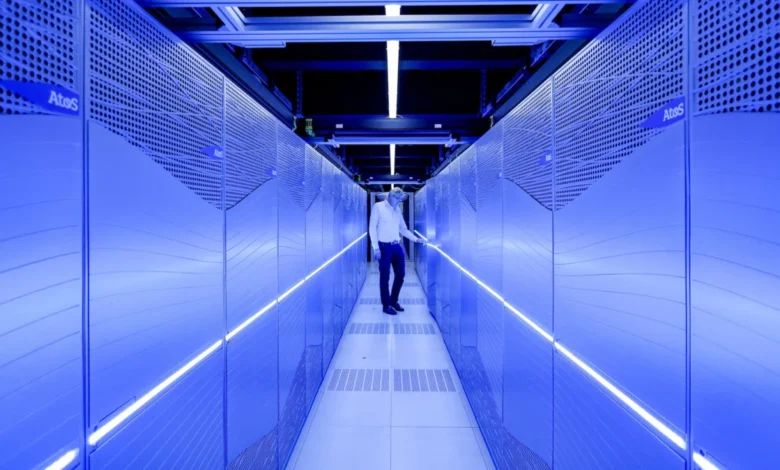
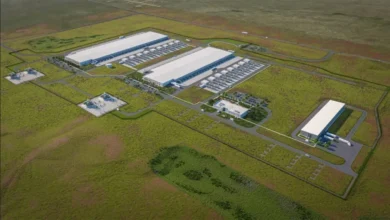
In a nondescript, five-story facility in the heart of Hamburg, Germany, a critical operation is underway that represents a profound shift in how the international scientific community views the sanctity of its data. Technicians at the German Climate Computing Center (DKRZ) are currently installing massive new server racks, expanding the facility’s capacity by an additional 5 petabytes. While the DKRZ has long served as a primary hub for European climate modeling, this latest expansion is not merely for local research; it is designed to house a digital repository of United States climate simulations, acting as a strategic insurance policy against the systemic erosion of scientific infrastructure within the American federal government.
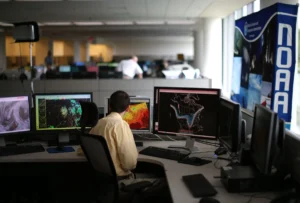
The urgency of this initiative stems from a series of policy decisions in Washington that have sent shockwaves through the global research community. Since early 2025, the administration of President Donald Trump has initiated a broad campaign to reorganize, defund, or eliminate various climate-focused research programs. From the removal of references to anthropogenic climate change on government websites to the attempted defunding of the Mauna Loa Observatory—a cornerstone of global atmospheric monitoring—the current US administration has fostered an environment where scientific record-keeping is increasingly viewed as a target for political obstruction.
A Chronology of Scientific Retrenchment
The erosion of trust in US federal data management can be traced to several key events over the past eighteen months. Following the inauguration in early 2025, the administration’s focus on the Department of Government Efficiency (DOGE) resulted in the swift removal of over 300 datasets maintained by NASA’s Socioeconomic Data and Applications Center (SEDAC). These datasets, which bridged the gap between remote sensing technology and critical social metrics such as poverty rates and infrastructure development, were wiped from federal servers with little public notice.
The reaction from the scientific community was immediate and frantic. Recognizing the permanent loss of historical context, researchers from various international institutions mobilized in a "data-scraping" effort to save what remained of these files before they were scrubbed from active servers. The saved information was eventually migrated to the Harvard Dataverse Repository, yet the incident set a precedent: the assumption that US government agencies would remain reliable custodians of public research had been shattered.
By January 2026, the situation deteriorated further when the US government officially withdrew from both the UN Intergovernmental Panel on Climate Change (IPCC) and the UN Framework Convention on Climate Change. This departure signaled a formal decoupling of US research from international consensus-building efforts, forcing organizations like the American Geophysical Union (AGU) to step into the void.
The Economics of Data Resilience
The logistical challenge of this "digital rescue" is immense. Data at this scale—measured in petabytes—cannot simply be "uploaded" to a cloud server overnight. The process requires either months of high-speed fiber-optic bandwidth or the use of "sneakernets," where physical hard drives are transported via air, sea, or land to secure data centers.
The German Research Foundation (DFG) has recognized the financial burden of this endeavor, allocating $35 million in late 2025 to establish a program specifically aimed at creating a "safe haven" for US-based public data. This funding covers not only the hardware and electricity required to store the massive datasets but also the administrative costs of ensuring that the metadata remains organized and, crucially, that the proprietary or specialized software required to read these files is preserved alongside the raw data.
Global Perspectives on Data Security
The concern is not limited to the United States. While the current focus is on the US political climate, the international scientific community is increasingly aware that data vulnerability is a global phenomenon. In recent years, researchers in Croatia and Germany have faced sophisticated cyber-attacks, with hostile actors holding scientific datasets for ransom.
The war in Ukraine has provided a stark, physical example of what happens when scientific records are not decentralized. The destruction of research universities and the targeting of meteorological stations during the Russian invasion forced a rapid, collaborative effort to digitize and migrate decades of Ukrainian historical climate records to the University of Giessen in Germany. This effort ensured that, despite the destruction of physical facilities, the historical continuity of regional environmental data remained intact.
Anastasiia Lutsenko, a researcher at the Max Planck Institute, notes that the destruction of scientific infrastructure is a tactical choice by aggressors. By erasing a country’s data, they disrupt its ability to plan for the future, whether in agriculture, disaster management, or environmental policy. This recognition has transformed the concept of "data storage" from a mundane IT requirement into a core pillar of geopolitical resilience.
Institutional Responses and the AGU’s Role
In response to these multi-faceted threats, the American Geophysical Union (AGU) has taken on a role that transcends its traditional academic scope. Representing over 60,000 Earth and space scientists, the AGU has coordinated the US Academic Alliance for the IPCC, effectively acting as an intermediary to ensure that US-based scientists can continue to contribute to global climate assessments despite the federal government’s withdrawal.
During the March 2026 meeting in Berlin, nearly 100 experts from across the globe gathered to formalize what they call the "Data Resilience Project." The primary objective is to create a decentralized network of data repositories that function regardless of the political or environmental stability of any single nation. The consensus at the summit was clear: the era of "hoarding" data in singular, nationally-controlled silos is over.
Implications for the Future of Empirical Science
The shift toward decentralized data management has profound implications for the future of scientific inquiry. First, it democratizes access to information, ensuring that even if a host country turns hostile toward scientific findings, the global community retains the tools to continue the research. Second, it creates a standard for "data portability," where datasets are formatted and stored in ways that are easily readable by international systems, preventing the reliance on proprietary software that could be locked behind a paywall or deleted by a future administration.
However, the cost of this resilience is high. The energy consumption required to maintain these massive, redundant data centers—often referred to as "cold storage"—is non-trivial. Furthermore, the intellectual property and legal frameworks surrounding data sovereignty remain complex. While the datasets in question are largely from the public domain, the legal status of international backups is a burgeoning field of study for legal scholars specializing in digital rights and scientific freedom.
Looking ahead, researchers like Frank Oliver Glöckner of the University of Bremen believe that this period of instability may ultimately improve the quality of scientific collaboration. By forcing the community to prioritize the open and global distribution of data, the current political volatility has accelerated a transition that many argued was already overdue.
"President Trump has, to a certain extent, done science a favor," Glöckner remarked. "By making it clear how dangerous it is to rely on one place for our foundational data, he has accelerated the movement toward a truly global, interconnected, and resilient scientific infrastructure."
As the DKRZ in Hamburg completes its latest round of server installations, the facility serves as a silent, blinking monument to a new reality. In a world where political shifts can happen with the stroke of a pen, and where infrastructure is increasingly vulnerable to both cyber-warfare and physical destruction, the scientists of today are building a "digital ark." They are not just protecting climate models; they are safeguarding the empirical record of the human experience on Earth, ensuring that the knowledge necessary to navigate the challenges of the next century survives the volatility of the present one.