Indigenous Leaders Demand Global Action with 12-Point United Nations Reform Plan Amid Funding Crises and Human Rights Stagnation

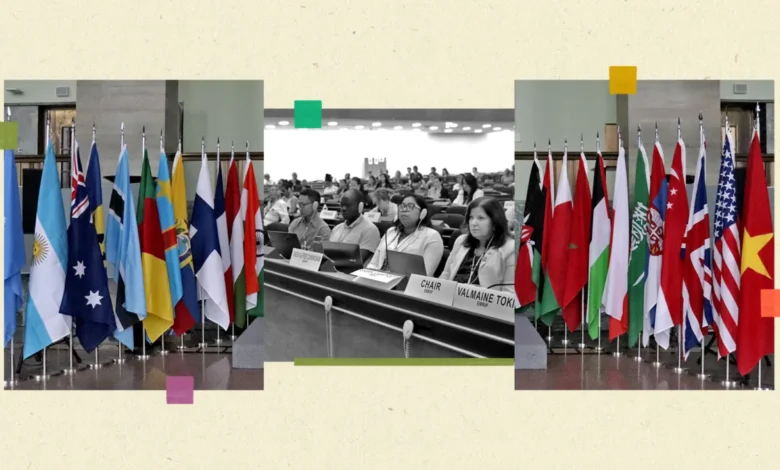
Indigenous communities across the globe are currently navigating a volatile landscape of intersecting crises, ranging from the immediate physical threats of climate change and localized violence to emerging technological challenges such as the rapid rise of artificial intelligence. In response to these mounting pressures, Indigenous leaders have formally presented a comprehensive 12-point plan to the United Nations, demanding a fundamental shift from symbolic recognition to substantive, enforceable global action. The proposal, finalized by the seven Indigenous members of the United Nations Expert Mechanism on the Rights of Indigenous Peoples (EMRIP), serves as a strategic roadmap for the U.N. Human Rights Council and member states to safeguard the lands, cultures, and lives of the world’s approximately 476 million Indigenous people.
The urgency of this mandate was underscored by Cora McGuire-Cyrette, a member of the Bingwi Neyaashi Anishinaabek and a representative for the Ontario Native Women’s Association. Speaking on behalf of those whose lives are most directly impacted by policy delays, McGuire-Cyrette emphasized that the time for rhetoric has passed. She noted that women, children, and families within these communities possess an inherent right to action—a right that is currently being neglected on the international stage. This sentiment reflects a growing frustration among Indigenous delegates who see a widening gap between the promises made in international forums and the lived realities of their constituents.
A Comprehensive Framework for Indigenous Rights
The 12-point plan is designed to address both historical grievances and 21st-century threats. At its core, the proposal calls for the full and immediate implementation of the United Nations Declaration on the Rights of Indigenous Peoples (UNDRIP), which was adopted by the General Assembly in 2007. While UNDRIP established a universal framework of minimum standards for the survival, dignity, and well-being of Indigenous peoples, its application has been inconsistent, and many states have yet to codify its principles into domestic law.
One of the more specialized recommendations within the plan focuses on the protection of remote Indigenous peoples living in voluntary isolation or initial contact. These groups are among the most vulnerable on the planet, facing existential threats from illegal logging, mining, and the transmission of diseases to which they have no immunity. By calling for specific protections for these populations, EMRIP is highlighting the need for "no-go" zones and the legal recognition of territories that must remain undisturbed by industrial expansion.
The plan also addresses the digital frontier, specifically emphasizing the importance of data sovereignty. In an era where data is often described as the "new oil," Indigenous leaders are concerned that traditional knowledge and genetic resources are being harvested by corporations and research institutions without consent. Data sovereignty ensures that Indigenous nations have the right to govern the collection, ownership, and application of data about their peoples, lands, and resources. This is closely linked to the group’s concerns regarding artificial intelligence, where algorithmic biases and the unauthorized use of Indigenous cultural heritage in AI training models pose new risks to cultural integrity.
The Stagnation and Regression of Human Rights
The presentation of this 12-point plan comes at a precarious moment for international human rights. Albert Barume, the U.N. Special Rapporteur on the rights of Indigenous peoples and former chairperson of EMRIP, provided a sobering assessment of the current global climate. Barume identified a trend of "stagnation and regression," noting that in recent years, very few states have introduced new measures to protect Indigenous rights. More concerningly, he pointed out that several states with existing legal and policy frameworks are actively dismantling those protections.
This regression is often driven by economic interests, particularly in the extractive industries. As the global demand for "green" minerals—such as lithium, cobalt, and copper—increases to fuel the energy transition, Indigenous lands are increasingly targeted for mining. In many cases, the "green transition" is being used as a justification to bypass the principle of Free, Prior, and Informed Consent (FPIC), leading to a new wave of land dispossession.
Macy Duxfield, representing the Māori people of the Ngaa Rauru, Te Ātihaunui-a-Papārangi, and Ngāi Tahu nations, echoed these concerns regarding her home country of Aotearoa New Zealand. She described current national policies as regressive, reflecting a broader global retreat from the progress made in the early 2010s. Duxfield framed the current struggle as part of a multi-generational continuum, stating that the work inherited from ancestors must be maintained and passed down to future descendants, regardless of the political headwinds.
Financial Fragility of International Indigenous Platforms
While the 12-point plan sets an ambitious agenda, the very mechanisms designed to facilitate these discussions are facing an existential financial crisis. EMRIP is one of three primary U.N. bodies dedicated to Indigenous issues, alongside the Permanent Forum on Indigenous Issues and the Special Rapporteur on the Rights of Indigenous Peoples. All three are currently operating under a cloud of fiscal uncertainty due to a lack of voluntary contributions from U.N. member states.
A critical component of Indigenous participation is the U.N. Voluntary Fund for Indigenous Peoples. Established in 1985, this fund provides financial assistance to Indigenous representatives so they can travel to Geneva or New York to participate in U.N. sessions. Without this support, the international stage would be accessible only to those from wealthy nations or well-funded organizations, effectively silencing the voices of those from the Global South and remote regions.
The data regarding these funds is startling. Currently, only eight countries contribute to the Voluntary Fund for Indigenous Peoples, which operates on a budget of less than $2 million annually. Even more precarious is the U.N. Trust Fund for Indigenous Peoples, which has seen contributions from only three countries. Notably, the United States, despite its significant influence and large Indigenous population, does not contribute to either fund. Marjolaine Étienne, an Innu representative from the Pekuakamiulnuatsh community in Quebec, warned that the number of representatives the fund can support has reached a perilously low level. If state contributions do not increase, the "sidelining" of Indigenous voices from global governance will become a permanent reality.
The Role of Indigenous Women and Data-Driven Advocacy
A significant portion of the 12-point plan is dedicated to the empowerment of Indigenous women and girls. McGuire-Cyrette argued that Indigenous women must be central to all decision-making processes that impact their nations. This is not merely a matter of equity but of efficacy; research consistently shows that Indigenous women play a crucial role in resource management, cultural preservation, and community resilience.
In Canada and elsewhere, the crisis of Missing and Murdered Indigenous Women and Girls (MMIWG) serves as a grim backdrop to these demands. Leaders argue that violence against Indigenous women is inextricably linked to the violation of land rights and the lack of political autonomy. By demanding a seat at every table—from climate negotiations to tech policy forums—Indigenous women are seeking to dismantle the systemic vulnerabilities that lead to violence.
Furthermore, the call for language preservation is viewed as a security and health issue as much as a cultural one. The U.N. has designated 2022–2032 as the International Decade of Indigenous Languages. Statistics indicate that at least 40% of the world’s 7,000 languages are at risk of disappearing, the vast majority of which are Indigenous. The 12-point plan insists that linguistic rights are human rights, as the loss of language often results in the loss of traditional ecological knowledge that is vital for biodiversity conservation.
Analysis of Implications: The UN80 Reform and the Future
The current crisis within the U.N.’s Indigenous mechanisms is occurring during a broader period of organizational transformation known as "UN80." This initiative aims to reform the United Nations to make it more efficient and responsive to modern challenges as it approaches its 80th anniversary. However, for Indigenous groups, "efficiency" is often a code word for budget cuts and the consolidation of specialized mandates.
Sheryl Lightfoot, the Anishinaabe expert for EMRIP’s North America region, acknowledged the high level of uncertainty surrounding these reforms. While the goal of the U.N. is to streamline operations, there is a significant risk that Indigenous-specific mechanisms could be diluted or absorbed into broader human rights categories. Indigenous leaders argue that their rights are distinct and collective, and therefore require specialized bodies that understand the unique legal status of Indigenous nations.
The implications of failing to support these mechanisms are global in scale. Indigenous peoples occupy or have tenure rights over approximately 25% of the Earth’s land surface, yet these areas hold 80% of the planet’s remaining biodiversity. As the world seeks to meet the goals of the Paris Agreement and the Kunming-Montreal Global Biodiversity Framework, the exclusion of Indigenous peoples from global decision-making is not just a human rights failure—it is a logistical impossibility for environmental success.
The 12-point plan presented to the Human Rights Council is more than a list of requests; it is a challenge to the legitimacy of the international rules-based order. If the U.N. and its member states cannot find the resources to fund the participation of Indigenous peoples, or the political will to halt the regression of their rights, the gap between international law and ground-level reality will continue to grow. As the "liquidity crisis" threatens to mute these voices, the resolve of leaders like McGuire-Cyrette and Lightfoot remains firm: they are not looking for more forums for discussion, but for a tangible, funded, and legally protected "right to action."