Tribal Nations and Environmental Groups File Legal Challenges Against Trump Administration Rule Stripping Endangered Species Habitat Protections

A coalition of environmental advocacy groups and Native American tribes has initiated a series of federal lawsuits against the Trump administration, challenging a newly finalized rule that rescinds critical habitat protections for the nation’s most vulnerable wildlife. The legal action, filed in the U.S. District Court for Western Washington and other jurisdictions, seeks to overturn a regulation that experts describe as the most significant roll-back of the Endangered Species Act (ESA) since the landmark environmental law was enacted in 1973. At the heart of the dispute is the administration’s decision to eliminate the longstanding regulatory definition of "harm," a move that plaintiffs argue will accelerate extinction rates by allowing industrial development on lands essential for species survival.
The finalized rule, which is set to take effect on September 14, 2026, removes the regulatory interpretation that has, for five decades, defined "harm" to include significant habitat modification or degradation. Under the previous framework, any activity that significantly impaired essential behavioral patterns—such as breeding, feeding, or sheltering—was considered a prohibited "take" of an endangered species. By rescinding this definition, the Department of the Interior has effectively signaled that habitat destruction will no longer be prosecuted as a violation of the ESA, provided it does not result in the immediate, direct killing of an animal.
The Evolution of the "Harm" Definition and the 1995 Supreme Court Precedent
To understand the magnitude of the current legal battle, it is necessary to examine the historical application of the Endangered Species Act. When Congress passed the ESA in 1973, it prohibited the "take" of listed species, defining the term broadly to include actions that "harass, harm, pursue, hunt, shoot, wound, kill, trap, capture, or collect." In 1975, the U.S. Fish and Wildlife Service (FWS) clarified that "harm" included "significant habitat modification or degradation where it actually kills or injures wildlife by significantly impairing essential behavioral patterns."
This interpretation became the bedrock of federal wildlife protection, particularly on non-federal lands. It was famously tested in the 1995 Supreme Court case Babbitt v. Sweet Home Chapter of Communities for a Great Oregon. In that case, a group of small landowners and logging companies challenged the "harm" definition, arguing that Congress intended the ESA to only prohibit the direct application of force against animals. However, in a 6-3 decision, the Supreme Court upheld the FWS definition, with Justice John Paul Stevens writing that the "extraordinary laws" passed by Congress were intended to provide comprehensive protection, which must logically include the preservation of the ecosystems upon which species depend.
The Trump administration’s current rescission of this rule represents a direct challenge to that precedent. Interior Secretary Doug Burgum argued in a recent statement that the 1975 definition constituted an "unlawful regulatory intrusion" that burdened private property owners and small businesses. The administration maintains that by returning to a narrower interpretation of the law, they are correcting a decades-old "regulatory trap" and aligning the ESA with what they characterize as the original intent of Congress.
Chronology of the 2025-2026 Policy Shift
The path toward the current legal confrontation began shortly after President Trump’s return to office, as part of a broader "energy dominance" agenda.
- April 17, 2025: The Department of the Interior and the U.S. Fish and Wildlife Service formally proposed the rescission of the "harm" definition. The proposal argued that the existing rule created "unnecessary permitting" and "compliance costs" for energy producers, farmers, and ranchers.
- May 2025: A 30-day public comment period drew a massive response. Approximately 358,000 comments were filed. While industry groups like the Forest Landowners Association supported the move, the vast majority of comments from conservationists and scientific bodies warned of catastrophic consequences for biodiversity.
- March 2026: In a related move, the "God Squad"—a rarely convened committee of high-level officials with the power to exempt projects from the ESA—voted to exempt oil and gas activities in the Gulf of Mexico from certain wildlife protections. This signaled the administration’s readiness to prioritize industrial output over species preservation.
- July 10, 2026: The Department of the Interior issued a press release finalizing the rescission of the "harm" rule, claiming it would "restore clear ESA enforcement" and eliminate confusion for local governments and private landowners.
- July 15-18, 2026: Two separate lawsuits were filed. One, led by Earthjustice on behalf of groups like the Sierra Club and the Center for Biological Diversity, and another filed by the Swinomish Indian Tribal Community and the Squaxin Island Tribe.
Supporting Data: The Link Between Habitat and Extinction
The scientific community has reacted with alarm to the administration’s policy change, citing a wealth of data that identifies habitat loss as the primary threat to global biodiversity. A 2019 study published in the journal Conservation Science and Practice analyzed species listed under the ESA from 1975 to 2017. The researchers found that 81 percent of these species were listed due to habitat loss and degradation, while only a small fraction were listed due to direct threats like over-hunting or intentional killing.
The importance of habitat protection on private land cannot be overstated. According to federal data, more than two-thirds of all species listed under the ESA depend on private property for at least a portion of their life cycle. Furthermore, approximately 10 percent of listed species reside exclusively on private lands. By removing the "harm" definition, the federal government loses its primary mechanism for requiring private developers to mitigate their impact on these species.
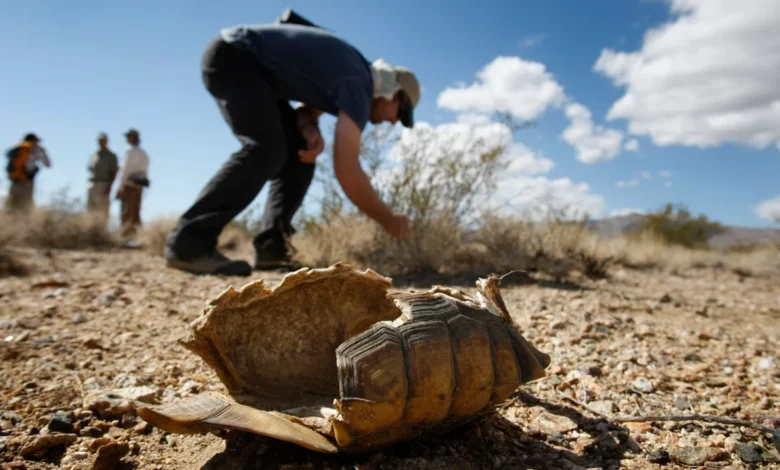
In practice, the "harm" rule did not typically block projects entirely. Instead, it functioned as a negotiation tool. For instance, a developer might be required to delay construction during the nesting season of a migratory bird or to shift the path of a road to avoid bisecting a critical wildlife corridor. Without this requirement, experts warn that species such as the desert tortoise in the Southwest and the manatee in Florida will face unmitigated environmental pressures that could lead to localized or total extinction.
Tribal Sovereignty and the Fight for the Salmon
The lawsuits filed by the Swinomish and Squaxin Island Tribes highlight a unique and critical dimension of the ESA: the federal government’s trust responsibility to Native American nations. For these tribes, the protection of the salmon is not merely an environmental concern but a matter of cultural and spiritual survival.
Tandy Wilbur, a Swinomish senator and fisheries manager, emphasized that the health of the salmon stocks is inextricably linked to the health of the tribal community. The tribes argue that the administration failed to adequately consult with them before finalizing a rule that directly impacts their treaty-protected resources. "Because salmon is both food and spiritual nourishment for Swinomish Community members, I fear for the health of our people and our cultural lifeways," Wilbur stated.
The tribes submitted thousands of pages of scientific evidence during the rulemaking process, detailing how even minor modifications to riparian habitats—such as the removal of shade-providing trees or increased sedimentation from construction—can raise water temperatures to levels lethal for salmon spawning. Under the new rule, such habitat modifications might no longer be considered "harm," leaving the tribes with few legal avenues to protect their ancestral waters.
Industry Perspectives and Economic Justifications
Conversely, the Trump administration and its supporters in the industrial sector argue that the ESA has been "weaponized" to stall economic progress. Interior Secretary Doug Burgum’s statement reflected a sentiment long held by the American Petroleum Institute and various agricultural lobbies: that the "harm" rule allowed the federal government to exert control over private land use far beyond the scope of protecting wildlife.
Supporters of the rescission argue that the previous definition created a "regulatory trap," where landowners were afraid to manage their properties for fear of accidentally violating the ESA. The Forest Landowners Association, in its public comments, suggested that the change would "create efficiencies" and reduce the administrative burden on the "regulated community." They argue that conservation is better achieved through voluntary incentives and partnerships rather than through what they describe as "federal overreach."
Analysis of Legal and Environmental Implications
The outcome of these lawsuits will likely hinge on the judiciary’s interpretation of the word "harm" within the statutory text of the ESA. Ben Levitan, a senior attorney at Earthjustice, asserts that the administration’s move is a "transparent attempt to ignore the law." He notes that the Supreme Court has already ruled that habitat protection is a necessary component of the prohibition against "taking" a species.
However, legal analysts suggest that the current judicial landscape is significantly different than it was in 1995. The U.S. Supreme Court has trended toward a more conservative, "originalist" interpretation of statutes, and has recently moved to limit the power of federal agencies to interpret laws (notably through the overturning of the Chevron deference). Dave Owen, a professor at the University of California College of the Law, San Francisco, warns that bringing this case before the current Supreme Court could result in a ruling that permanently narrows the ESA in a way that a future administration could not easily reverse.
If the rule change stands, the implications for American wildlife are profound. Beyond the immediate threat of habitat destruction, the rule weakens the ability of federal agencies to address the impacts of climate change. Many species are currently being forced to migrate to new habitats as temperatures rise and sea levels change. Without the "harm" rule to protect these "future" habitats or corridors, the ESA may become a reactive tool that can only document the decline of species rather than prevent it.
As the September 14 effective date approaches, the legal battle in Washington and other federal courts remains the final hurdle for a policy that could redefine the relationship between American industry and the natural world for generations to come. The plaintiffs are expected to seek a preliminary injunction to halt the rule’s implementation while the cases proceed through the court system.