
Category International Relations Page 2
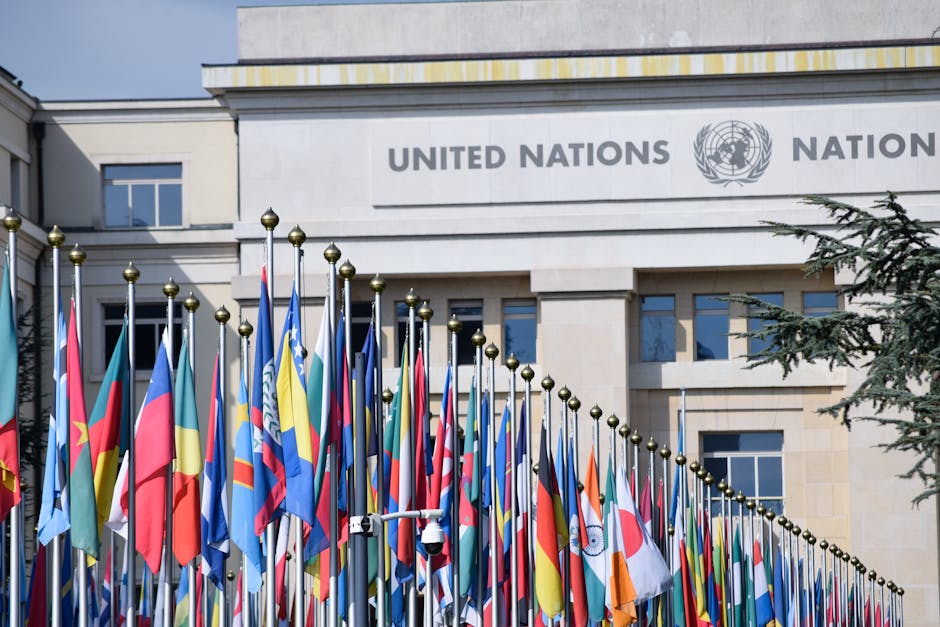
Navigating the Complexities of Global Governance: Key Dynamics in International Relations – Page 2
The ongoing evolution of international relations is fundamentally shaped by the intricate interplay of power, interests, and ideologies among states and non-state actors. Beyond the foundational concepts of sovereignty and the Westphalian system, a deeper dive into page 2 of international relations reveals the sophisticated mechanisms through which global governance is attempted, the persistent challenges to its efficacy, and the emerging trends that are reshaping the international landscape. Understanding these dynamics is crucial for comprehending contemporary global challenges, from interstate conflict and economic interdependence to transnational issues like climate change and cybersecurity. The concept of interdependence, often contrasted with absolute notions of state autonomy, signifies the mutual reliance and interconnectedness that characterize modern international interactions. This interdependence manifests in various forms, including economic (trade, finance, investment), social (migration, cultural exchange), and environmental (shared ecosystems, pollution). While interdependence can foster cooperation and shared prosperity, it also creates vulnerabilities. A disruption in one part of the global system, whether a financial crisis or a supply chain breakdown, can have ripple effects worldwide, highlighting the fragility and complexity of interconnectedness. This realization has fueled the development of international regimes, which are sets of implicit or explicit principles, norms, rules, and decision-making procedures that govern the interactions of states in a particular issue area. Examples range from the World Trade Organization (WTO) governing global trade to the Paris Agreement addressing climate change. These regimes aim to reduce uncertainty, promote cooperation, and manage shared problems by establishing predictable frameworks and mechanisms for collective action. However, the effectiveness of these regimes is frequently tested by the inherent power politics that continue to define international relations. States, driven by their national interests, often seek to maximize their relative gains, leading to competition and potential conflict even within cooperative frameworks. The pursuit of hegemony, the dominance of one state over others, remains a recurring theme, though its nature and manifestations have shifted over time. Contemporary debates often revolve around the rise of new powers and the potential for a multipolar world, challenging the unipolar or bipolar orders of previous eras. This shift in power distribution has significant implications for global governance, as rising powers often seek to revise existing rules and institutions to better reflect their growing influence and interests.
The study of international relations also delves into the diverse theoretical perspectives that offer different lenses through which to analyze global phenomena. Realism, with its emphasis on power, self-interest, and anarchy, continues to be a dominant framework, explaining interstate conflict and the perpetual struggle for security. Liberalism, on the other hand, highlights the potential for cooperation through institutions, democracy, and economic interdependence, arguing that these factors can mitigate the effects of anarchy. Constructivism offers a distinct approach, focusing on the role of ideas, norms, and identities in shaping state behavior and international structures. It argues that the international system is not solely determined by material power but also by shared understandings and social constructions. Each of these perspectives, and others like critical theory and feminism, offers valuable insights, and a comprehensive understanding of international relations often involves drawing upon multiple theoretical frameworks to capture the multifaceted nature of global interactions. The proliferation of non-state actors further complicates the international landscape. International organizations (IOs) like the United Nations (UN), regional organizations (ROs) like the European Union (EU) and ASEAN, and non-governmental organizations (NGOs) like Amnesty International and the World Wildlife Fund (WWF) play increasingly significant roles in shaping global agendas, advocating for policy changes, and delivering services. Multinational corporations (MNCs) wield considerable economic power and influence global markets and labor practices. Terrorist networks and other transnational criminal organizations pose significant security challenges, operating beyond the confines of state borders. The influence of these actors challenges traditional notions of state-centric international relations, necessitating an analysis that incorporates their diverse motivations, strategies, and impacts.
The management of global security remains a paramount concern within international relations. This encompasses not only traditional military security and interstate warfare but also the evolving threats of terrorism, cyber warfare, and weapons of mass destruction. The concept of collective security, embodied by institutions like the UN Security Council, aims to deter aggression by presenting a united front against any state that violates international peace. However, the effectiveness of collective security is often hampered by the veto power of permanent members of the Security Council and the varying national interests of member states. The proliferation of non-conventional threats has necessitated a broader understanding of security, leading to the development of concepts like human security, which prioritizes the safety and well-being of individuals from threats such as poverty, disease, and environmental degradation, alongside traditional state-centric security concerns. The dynamics of armed conflict are continuously studied, examining the causes of war, the conduct of hostilities, and the prospects for peacebuilding and post-conflict reconstruction. The evolution of warfare, from conventional state-on-state conflicts to asymmetric warfare and proxy conflicts, demands ongoing theoretical and practical adaptation.
Economic factors are intrinsically linked to international security and governance. International political economy (IPE) examines the complex relationship between politics and economics in the global arena. Key issues include the dynamics of global trade, the role of international financial institutions like the International Monetary Fund (IMF) and the World Bank, and the impact of globalization on national economies and social inequalities. The pursuit of economic development and the management of global economic crises are central to maintaining stability and fostering cooperation. Debates surrounding fair trade, economic sanctions, and development aid highlight the normative and political dimensions of economic interactions. The uneven distribution of wealth and resources globally fuels tensions and can contribute to political instability, making economic diplomacy a critical component of international relations. Furthermore, the rise of economic nationalism and protectionist policies in various parts of the world presents new challenges to the liberal international economic order that has prevailed for decades.
The pursuit of international justice and human rights has gained increasing prominence in the field of international relations. The development of international human rights law, exemplified by the Universal Declaration of Human Rights, and the establishment of international tribunals like the International Criminal Court (ICC) reflect a growing normative commitment to holding individuals accountable for egregious violations of human rights. However, the enforcement of these norms remains a significant challenge, often subject to political considerations and the principle of state sovereignty. Debates surrounding interventionism, the responsibility to protect (R2P), and the balance between state sovereignty and humanitarian concerns are central to this area of study. The efficacy of international institutions in promoting and protecting human rights is continuously evaluated, with ongoing discussions about their limitations and potential reforms. The intersection of human rights with issues of gender, race, and ethnicity further enriches the complexity of these discussions.
Examining the dynamics of international environmental politics reveals another crucial dimension of contemporary global governance. Issues such as climate change, biodiversity loss, and resource scarcity transcend national borders and necessitate international cooperation for effective management. The challenges lie in aligning national interests with global environmental imperatives, overcoming the collective action problem, and developing equitable solutions that address the differentiated responsibilities of states. International environmental agreements, while significant, often face difficulties in implementation and enforcement. The role of scientific expertise, public opinion, and the influence of powerful economic interests in shaping environmental policy are also critical areas of study. The emergence of climate refugees and the impact of environmental degradation on geopolitical stability are increasingly recognized as significant challenges that require coordinated international responses.
The pervasive influence of information technology and communication has profoundly altered the landscape of international relations. The internet, social media, and the rapid flow of information have facilitated new forms of diplomacy, transnational activism, and the spread of both accurate and false information. Cybersecurity has emerged as a critical area of concern, with states and non-state actors engaging in cyber espionage, cyber warfare, and the manipulation of information to achieve political objectives. The challenges of establishing international norms and governance frameworks for cyberspace are ongoing. The digital divide, the unequal access to technology and information, also exacerbates existing inequalities and presents new challenges for global development and participation. The rise of disinformation campaigns and their impact on democratic processes and international stability are critical areas of ongoing research and policy development. The constant evolution of technology necessitates a dynamic and adaptive approach to understanding its implications for international relations, from the weaponization of algorithms to the impact of artificial intelligence on warfare and diplomacy. The ongoing exploration of these interconnected domains—power, interdependence, theoretical frameworks, non-state actors, security, economics, justice, environment, and technology—forms the core of contemporary international relations, offering a vital lens through which to understand and navigate the complexities of our interconnected world. The continuous interplay of these factors shapes the global order, presents enduring challenges, and offers opportunities for cooperation and progress. The ongoing evolution of these dynamics ensures that international relations remains a vibrant and critically important field of study.
