Majority of US Voters Link Extreme Weather to Climate Crisis as Support for Worker Heat Protections Surges

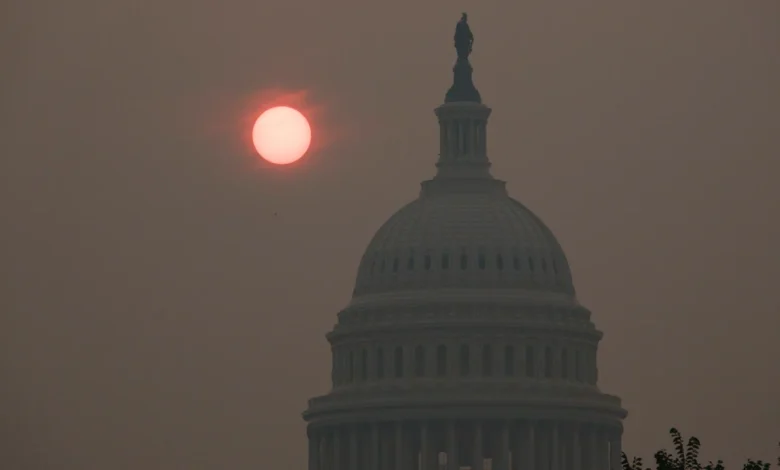
Despite persistent efforts by the executive branch to characterize global heating as a "hoax" and a "con job," a significant majority of the American electorate now directly attributes the increasing frequency of extreme weather events to the climate crisis. According to new data released in July 2026 by the progressive polling firm Data for Progress, the lived experience of record-breaking heatwaves, prolonged droughts, and catastrophic flooding has created a disconnect between official White House rhetoric and the perceptions of the voting public. This shift in sentiment suggests that the polarization of climate science may be reaching a plateau as the physical realities of a changing environment become impossible for many citizens to ignore.
The survey, which was shared exclusively with the Guardian and reproduced through the Climate Desk collaboration, arrives in the wake of a summer defined by meteorological extremes. From the water crisis at Lake Powell to deadly flooding in Kentucky and record-shattering heat domes across the Southwest, the summer of 2026 has served as a grim backdrop for a nation grappling with its environmental future. The findings indicate that 61 percent of likely American voters believe that extreme weather events have become more frequent over the past five years—a period marked by several of the hottest years in recorded history.
A Growing Bipartisan Consensus on Extreme Weather
The polling data reveals a surprising degree of cross-party alignment, even as the political leadership remains deeply divided. While 72 percent of Democrats and 63 percent of Independents acknowledge an increase in extreme weather, nearly half of all Republicans—46 percent—now agree. This near-parity among the Republican base suggests that the "climate-hushing" tactics often employed by conservative politicians are losing their efficacy.
Grace Adcox, a senior climate strategist at Data for Progress, noted that the firm began its inquiry by asking whether extreme weather events were increasing to find a baseline for bipartisan conversation. "If we can find consensus on that, that can be an entry point to being able to have a more bipartisan conversation about climate and climate intervention," Adcox stated. The data suggests that extreme heat, in particular, serves as a universal entry point. Unlike hurricanes or wildfires, which are regional, extreme heat has a nearly universal footprint across the United States.
Senator Sheldon Whitehouse of Rhode Island, a vocal critic of what he terms "climate-hushing," argued that the data confirms the public is far ahead of the political establishment. "Climate hushers who ignore this righteous fight should take note," Whitehouse said, emphasizing that the "mountain of evidence" regarding public concern can no longer be dismissed by those in power.
Categorizing the Crisis: Heatwaves as the Primary Driver
The study further investigated which specific types of weather events voters linked to climate change. The results showed that majorities across the board connect the following to the climate crisis:
- Heatwaves: 67 percent
- Wildfires: 64 percent
- Droughts: 63 percent
- Flooding and flash flooding: 62 percent
- Hurricanes: 59 percent
- Severe thunderstorms and hailstorms: 59 percent
The fact that heatwaves topped the list is statistically significant. Among Republicans, 48 percent linked heatwaves to climate change, the highest percentage for any weather category surveyed. This perception aligns with public health data; high temperatures are consistently the deadliest weather-related phenomenon in the United States, killing more people annually than hurricanes, tornadoes, and floods combined. Because nearly every American has experienced "unusually hot" days or weeks in the last few years, the abstract concept of global warming has transitioned into a tangible, physical experience.
The Gap Between Awareness and Understanding
Despite the growing recognition of extreme weather patterns, researchers at the Yale Program on Climate Change Communication point to a persistent gap in public understanding regarding the cause of these changes. Anthony Leiserowitz, director of the Yale program, noted that while his team’s surveys show Americans increasingly link weather to climate, many still harbor misconceptions about the drivers of global warming.
Jennifer Marlon, a senior research scientist at Yale, highlighted that approximately 27 percent of Americans still believe that current warming trends are the result of natural cycles rather than human activity. "This is probably the biggest misconception out there," Marlon explained. "Many Americans still think the warming is due to some kind of natural cycle. But it isn’t." This discrepancy suggests that while the "what" of climate change is becoming accepted through personal experience, the "why"—specifically the role of fossil fuel emissions—remains a point of successful obfuscation for those opposing climate policy.
Chronology of Climate Events Influencing Public Opinion (2021–2026)
To understand the shift in voter sentiment, one must look at the timeline of environmental disasters that have dominated the headlines over the last five years:
- 2021–2022: The Megadrought and Wildfire Surge. The American West faced its driest period in 1,200 years, leading to critical water shortages in the Colorado River basin and record-breaking wildfire seasons in California and the Pacific Northwest.
- 2023: The Year of Global Heat Records. 2023 was officially declared the hottest year on record globally, with the U.S. experiencing a series of "heat domes" that kept temperatures above 110 degrees Fahrenheit for weeks in cities like Phoenix.
- 2024: Urban Flooding and Infrastructure Failure. Intense "thousand-year" rain events caused catastrophic flash flooding in inland states like Kentucky and Vermont, highlighting the vulnerability of infrastructure not designed for current precipitation levels.
- 2025: The Lake Powell Crisis. Water levels at Lake Powell hit historic lows, threatening hydroelectric power generation for millions and forcing unprecedented federal interventions in water rights.
- 2026: The Current Summer of Extremes. The current season has seen a confluence of these factors, with the 250th anniversary of the United States being marked by dangerous heatwaves that have disrupted major public events and strained the national power grid.
Universal Support for Worker Protections
One of the most striking findings of the Data for Progress survey is the overwhelming, non-partisan support for climate justice measures, specifically regarding worker safety. As temperatures rise, outdoor laborers—including construction workers, farmworkers, and roofers—face escalating risks of heatstroke and death. Indoor workers in warehouses and commercial kitchens without adequate cooling are similarly vulnerable.
The poll found that 88 percent of likely voters favor state policies requiring employers to provide basic heat protections, such as:
- Access to clean drinking water
- Mandatory rest breaks in shaded or cooled areas
- Air conditioning in indoor workspaces
- Heat-safety training for supervisors and staff
Only 7 percent of voters opposed such measures. This 88 percent approval rating represents a rare moment of near-total consensus in American politics. Jessica E. Martinez, executive director of the National Council for Occupational Safety and Health (National COSH), stated that these findings send a "powerful message" to lawmakers. "When 88 percent of likely voters support requiring employers to provide basic, lifesaving heat protections, it’s clear the public expects every worker to be protected," Martinez said.
Policy Stagnation and Federal Responses
The broad public support for heat protections stands in stark contrast to recent federal actions. Under the Trump administration, progress on a federal heat standard has largely stalled. While workers’ rights organizations have demanded a permanent Occupational Safety and Health Administration (OSHA) standard for heat for years, the current administration has moved in the opposite direction.
In April 2026, the administration allowed a nationwide OSHA enforcement initiative focused on heat illness to expire. While a revised program was later issued, critics and labor advocates have described it as "vastly weakened," lacking the enforcement teeth necessary to compel compliance from large-scale employers. The survey results suggest that the public would likely support a much more aggressive federal intervention than what is currently being offered.
Implications for the Future Political Landscape
The shifting tide of public opinion has profound implications for future election cycles. If nearly half of the Republican electorate acknowledges the increase in extreme weather, the traditional GOP platform of climate denialism may become a political liability in swing districts. Grace Adcox suggests that framing climate policy through the lens of "working people first"—focusing on heat protections and public health rather than abstract carbon targets—could be the key to breaking the legislative deadlock.
As the U.S. continues to endure a summer of "dangerous heat," the Data for Progress survey serves as a reminder that personal experience is a powerful antidote to political rhetoric. While the executive branch may continue to label the climate crisis a "hoax," the voters experiencing the heat, the floods, and the droughts are increasingly drawing their own, scientifically grounded conclusions. The challenge for the coming years will be whether this public consensus can be translated into the robust federal protections and climate interventions that the majority of Americans now say they want.