Tesla Accelerates Cybercab Rollout Plan Despite Looming Federal Safety Investigations And Unresolved Regulatory Hurdles

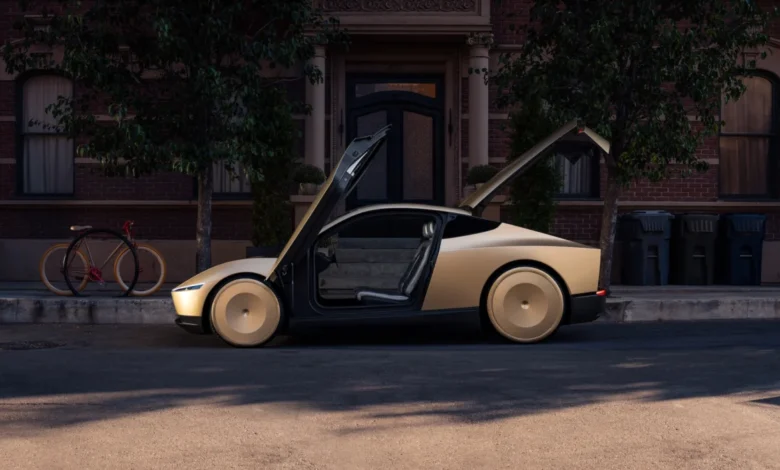
Tesla has announced its intention to begin selling its specialized, autonomous Cybercab to third-party customers by the end of the year, marking a significant strategic evolution in the company’s approach to commercializing self-driving technology. This aggressive timeline comes even as federal safety regulators actively investigate whether the unconventional vehicle complies with established motor vehicle safety standards. The gold-hued, two-seat autonomous vehicle represents a radical departure from traditional automotive design, lacking a steering wheel, brake pedals, and other conventional manual controls.
The announcement, delivered during Tesla’s third-quarter earnings call by Vice President of Engineering Lars Moravy and Chief Executive Officer Elon Musk, signals a shift in how the company envisions the future of urban transport. While the initial batch of manufactured Cybercabs is slated to populate Tesla’s proprietary robotaxi fleet, the automaker plans to gradually pivot toward fulfilling external orders. By starting small and scaling methodically as it gains operational experience in delivery, ownership structures, and fleet management, Tesla aims to establish a foothold in the burgeoning market for autonomous transport-as-a-service.
A Strategic Evolution in Autonomous Deployment
Tesla’s pivot toward selling dedicated robotaxis to third parties was first hinted at during a high-profile Cybercab launch event in Austin, Texas, where the company solicited expressions of interest through online forms. However, industry analysts initially questioned whether the proposal would materialize into a concrete business model or remain a speculative concept. The recent statements from corporate leadership confirm that the company intends to commercialize the vehicle directly to external fleet operators, albeit with a phased delivery schedule.
For years, Elon Musk’s vision of a massive, low-cost robotaxi network relied heavily on an incremental retrofit model. Under this long-standing strategy, millions of privately owned Tesla vehicles already on the road were expected to achieve full autonomy via over-the-air software updates, transforming personal cars into revenue-generating robotaxis when not in use by their owners.
That specific paradigm, however, has faced persistent technological and regulatory roadblocks. Today, standard Tesla owners rely on Full Self-Driving (Supervised), an advanced driver-assistance system that automates steering, acceleration, and braking under specific conditions, but legally mandates continuous human oversight. Despite regular software iterations intended to enhance system capabilities, drivers remain legally responsible for the vehicle at all times.
During the third-quarter earnings call, Musk stated that an unsupervised version of the Full Self-Driving software would finally roll out to consumer vehicles in the second quarter of next year. This projection introduces yet another delay for retail consumers who purchased or subscribed to the autonomy package years in advance, anticipating a much earlier deployment of unsupervised capabilities.
The Chronology of the Cybercab Initiative
The roadmap for Tesla’s autonomous fleet operations has accelerated rapidly over the past several months, culminating in a complex intersection of product releases, regulatory scrutiny, and shifting corporate priorities:
- Mid-2024 to Early 2025: Tesla pivots internal engineering resources heavily toward dedicated autonomous platforms, moving away from exclusive reliance on retrofitted consumer models.
- September 2025: Tesla hosts its flagship Cybercab unveiling event in Austin, Texas, displaying the steering-wheel-free prototype and introducing interest forms for potential third-party fleet operators.
- June 2026: The Department of Transportation proposes regulatory amendments aimed at eliminating traditional brake pedal requirements for purpose-built autonomous vehicles, offering a potential lifeline to manufacturers of driverless pods.
- September 2026: Cybercab units begin limited operations on public streets in Austin. Hours after the rollout, the National Highway Traffic Safety Administration (NHTSA) announces a formal investigation into the vehicle’s safety self-certification process.
- Late 2026 (Projected): Tesla plans to initiate commercial deliveries of the Cybercab to early third-party fleet buyers while expanding its proprietary robotaxi network.
- Second Quarter 2027 (Projected): Tesla anticipates deploying unsupervised Full Self-Driving capabilities to consumer vehicles, subject to ongoing software validation and regulatory approval.
Divergent Paths for Ownership and Mobility
The concurrent timelines introduce a striking paradox: if both current corporate projections hold true, external fleet customers may be permitted to purchase and operate the autonomous Cybercab commercially before standard Tesla owners gain access to equivalent unsupervised autonomous software in their own passenger vehicles.
Addressing this dichotomy, Musk clarified that the Cybercab is fundamentally engineered as a dedicated ride-hailing utility rather than a personal asset. During the earnings call, the CEO emphasized that the vehicle is intended exclusively for transport-as-a-service models, contrasting it sharply with Tesla’s broader consumer lineup.
"Cybercab is primarily going to be something that is offered as like transport as a service, whereas our other cars would be more, you know, the cars that you’d want to own, like the Model 3 and the Model Y and whatnot, and the Roadster, obviously," Musk stated. "The vast majority of the Cybercab footprint will be essentially Tesla-owned and operated as a service, though available to specific fleet partners."
This distinction underlines a broader philosophical shift within the company. Rather than prioritizing private ownership of robotaxis—where individual owners dispatch their personal cars to earn passive income—Tesla is increasingly leaning toward centralized, corporate-managed or partner-managed fleet ecosystems reminiscent of traditional commercial transit networks.
Regulatory Roadblocks and NHTSA Investigations
Despite the enthusiasm surrounding the impending commercial rollout, Tesla faces a formidable regulatory hurdle that threatens to derail its timeline. The National Highway Traffic Safety Administration launched an official investigation into the Cybercab immediately following its deployment on public roadways in Austin.
Federal Motor Vehicle Safety Standards (FMVSS) historically mandate the inclusion of physical driver controls, such as manual steering linkages, foot-operated brake pedals, and traditional rearview and side-view mirror configurations. Under longstanding federal policy, automotive manufacturers are permitted to self-certify that their production vehicles comply with these safety standards before commercial distribution. Tesla applied this self-certification process to the Cybercab, concluding that the vehicle met applicable safety thresholds under prevailing interpretations.
However, existing federal regulations do not structurally accommodate motor vehicles entirely devoid of manual driver interfaces. Recognizing this regulatory gap, the Department of Transportation under the recent federal administration proposed policy changes designed to strip away legacy brake pedal mandates for dedicated autonomous vehicles—a move widely interpreted as a regulatory tailwind for companies like Tesla, Waymo, and Zoox.
Notwithstanding proposed administrative adjustments, the NHTSA investigation focuses directly on the integrity of Tesla’s self-certification data. Regulators intend to scrutinize the technical evidence, testing protocols, and engineering justifications upon which Tesla relied when declaring the steering-wheel-free vehicle compliant with federal standards.
Implications of Regulatory Scrutiny on Market Adoption
The outcome of the federal inquiry carries profound implications not only for Tesla’s immediate commercialization strategy but for the broader autonomous vehicle industry in the United States. An adverse ruling or a stringent enforcement action by NHTSA could temporarily halt the deployment of vehicles lacking manual controls, forcing Tesla to either redesign the interior cabin to incorporate removable physical controls or await formal regulatory modernization.
Conversely, if Tesla successfully navigates the federal review, it could establish a legal and operational precedent for the mass production of steering-wheel-free vehicles nationwide. Such a decision would accelerate the transition from human-supervised driver-assistance systems to fully autonomous commercial fleets, fundamentally reshaping urban mobility, public transit economics, and the automotive manufacturing landscape.
As the end-of-year delivery target approaches, stakeholders across the technology and transportation sectors are closely monitoring how Tesla balances its aggressive commercial ambitions against the tightening scrutiny of federal safety authorities. The convergence of hardware innovation, regulatory policy, and software deployment will ultimately dictate whether the Cybercab transitions from a futuristic prototype into a ubiquitous fixture of modern metropolitan transport.
Related posts: