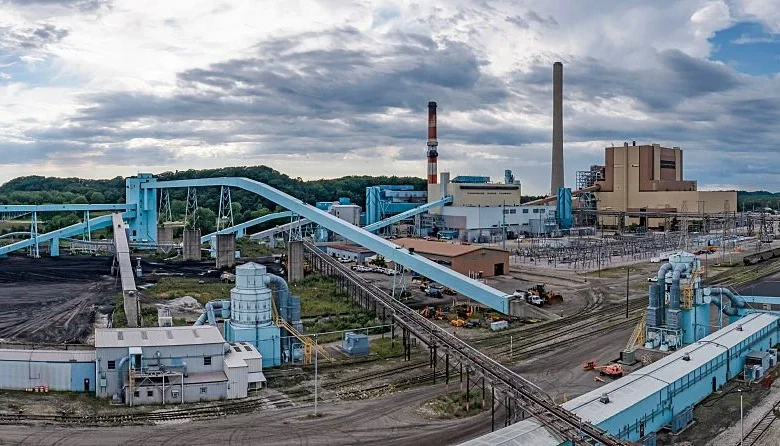
A landmark judicial decision has struck down a Department of Energy (DOE) emergency order aimed at preventing the closure of a coal-fired power plant in Michigan, signaling a significant shift in the balance of power between federal regulators and state-level energy authorities. The ruling, which centers on the interpretation of the Federal Power Act (FPA), underscores a long-standing legal boundary that limits federal intervention in the electricity generation sector. By declaring that the DOE’s reliance on "emergency" authority to mandate plant operations was an overreach, the court has effectively curtailed the federal government’s ability to unilaterally force the continued operation of aging fossil fuel infrastructure under the guise of grid reliability.
The Legal Framework and the Federal Power Act
At the heart of the dispute is the Federal Power Act, the foundational legislation that has governed the U.S. electric grid since 1935. For decades, the regulatory architecture of the American energy landscape has relied on a distinct division of labor: states hold primary jurisdiction over the siting and operation of power generation facilities, while the Federal Energy Regulatory Commission (FERC) focuses on interstate transmission and wholesale market operations.
The recent court ruling emphasized that the FPA explicitly denies the DOE and FERC the authority to regulate generation facilities directly. The court’s analysis suggests that Congress intended for federal intervention in this sphere to be an extraordinary measure, reserved only for acute, localized crises where an immediate shortfall threatens national security or systemic grid integrity. In its decision, the court noted that historical applications of this authority have been remarkably rare, typically involving physical disasters or immediate, unforeseen systemic failures.
"Indeterminate assertions of summer electricity shortfalls are not what Congress meant by ’emergency,’" the judges wrote, effectively rejecting the DOE’s broad application of its emergency powers. The court reasoned that if the DOE were permitted to invoke emergency powers whenever a plant closure was announced—regardless of whether a resource adequacy plan was already in place—the statutory constraints established by Congress would be rendered meaningless.
Chronology of the Michigan Dispute
The legal battle in Michigan serves as a case study for the friction between state-led decarbonization initiatives and federal attempts to maintain the status quo of the energy mix.
- Initial Planning Phase: Utility companies in Michigan had conducted years of long-term resource planning, coordinating with state regulators to transition from coal-fired power to a mix of natural gas and renewable energy sources. This transition was designed to ensure that capacity would remain stable as aging coal assets were retired.
- The Federal Intervention: Faced with a scheduled plant closure, the DOE issued an emergency order under Section 202(c) of the FPA, claiming that the retirement of the facility would jeopardize grid reliability. This order forced the plant to remain operational at a significant cost to local ratepayers.
- The Litigation: Local stakeholders and utility providers challenged the order, arguing that the closure was not an emergency but a carefully managed transition supported by the construction of newer, more efficient generating facilities.
- The Judicial Ruling: The court voided the order, concluding that because the state’s resource planning process had already accounted for the plant’s absence, there was no "emergency" that warranted the federal government overriding local regulatory authority.
Data Trends: The Surge in Emergency Orders
The implications of this ruling are magnified by the unprecedented uptick in federal emergency declarations issued in recent years. According to data provided by the DOE’s Office of Cybersecurity, Energy Security, and Emergency Response (CESER), the federal government issued over 55 emergency orders in 2026 alone.
This figure represents a dramatic departure from historical norms. Between 2000 and 2025, the total number of such orders issued was less than half of the volume recorded in 2026. This trend suggests that the DOE had increasingly viewed Section 202(c) not as a last-resort tool for genuine catastrophes, but as a proactive instrument of policy to prevent the retirement of coal-fired generation capacity across the United States.
Critics of the DOE’s recent strategy, including environmental groups and state utility commissions, have argued that these orders distort competitive energy markets. By forcing the continued operation of plants that may no longer be economically or environmentally viable, the orders impose additional costs on consumers and complicate the long-term planning efforts of regional grid operators.
Reactions and Stakeholder Perspectives
While the DOE has yet to formally announce an appeal, the energy sector is bracing for the fallout. Industry analysts suggest that the ruling provides a clear precedent that could be used to challenge similar orders currently in place across the country.
"The court has essentially reminded the federal government that the grid is not a monolith to be managed from Washington," noted one energy policy expert familiar with the litigation. "When states have done their due diligence and created robust resource plans, the federal government cannot simply step in and demand the continuation of legacy infrastructure because it prefers a specific energy mix."
Conversely, proponents of the DOE’s previous strategy—often advocates for traditional energy security—argue that the rapid retirement of baseload coal plants poses an existential risk to grid stability during periods of extreme weather. They warn that relying on new, less-proven renewable technologies could lead to power shortages during peak demand cycles, such as heatwaves or polar vortex events. However, the court’s ruling suggests that if the DOE wishes to maintain grid reliability, it must do so through the established, formal channels of regulatory cooperation rather than through the unilateral, expedited use of emergency orders.
Broader Implications for the U.S. Energy Transition
The long-term significance of this decision extends far beyond a single plant in Michigan. If this judicial logic holds—or if it is upheld upon inevitable appeals—it essentially strips the federal government of one of its most potent tools for influencing the composition of the U.S. generation fleet.
For state public utility commissions (PUCs), this ruling is a victory for sovereignty. It validates the legitimacy of state-led Integrated Resource Plans (IRPs), which serve as the primary roadmap for utility transitions. By reinforcing the boundaries of the FPA, the court has made it more difficult for the federal government to impose a national energy agenda that conflicts with the specific economic and environmental goals of individual states.
Moreover, the decision creates a legal roadmap for other entities currently subject to DOE mandates. With over 50 orders issued in 2026, the potential for a wave of litigation is high. If these orders are systematically challenged and overturned, the federal government may be forced to recalibrate its approach to grid reliability, shifting from a strategy of "mandatory retention" to one of "collaborative planning."
Fact-Based Analysis: What Comes Next?
The voiding of the Michigan order serves as a corrective measure against the encroachment of federal executive authority into state-regulated territory. However, the complexity of the modern grid means that the tension between state and federal oversight is unlikely to disappear.
- Market Certainty: For utilities, the ruling provides much-needed legal clarity. Being caught between state-mandated retirement schedules and federal mandates to stay open creates significant operational uncertainty. A more predictable legal environment allows for better capital allocation.
- Regulatory Efficiency: If the DOE is forced to abandon the broad use of emergency orders, it may be compelled to engage more deeply with FERC and regional transmission organizations (RTOs) to address reliability concerns through market-based mechanisms, such as capacity auctions and reliability-must-run contracts, which are more transparent than executive orders.
- The Appeals Process: The DOE’s next steps will be critical. If the administration chooses to appeal, the case could move to a higher court, potentially setting a precedent that will define the limits of the FPA for the coming decade. If the DOE accepts the ruling, it may signal a quiet withdrawal from its aggressive use of 2026-era emergency powers.
Ultimately, the court’s decision is a reaffirmation of the principle that in the American federalist system, the power to regulate energy generation remains a primary responsibility of the states. As the nation continues its transition toward a cleaner and more diversified grid, the legal parameters established by this case will serve as a foundational guide for how that transition is managed, negotiated, and legally contested. The era of "emergency" interventions as a standard policy tool appears to be facing a significant, and perhaps permanent, legislative and judicial blockade.