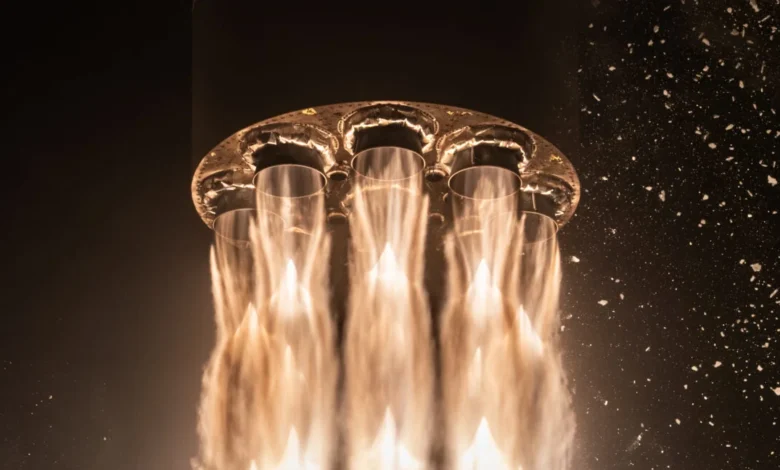
The landscape of space transportation is undergoing a structural shift, moving away from the era of total reliance on singular, high-capacity launch providers toward a more fragmented, specialized market. This transition was underscored earlier this month when German space startup Isar Aerospace successfully reached orbit with its Spectrum rocket. Launching from a spaceport in northern Norway, the mission marked a pivotal achievement for the European aerospace industry, which has long sought to reclaim its independence in the orbital launch sector. By successfully delivering a payload of CubeSats to low-Earth orbit, Isar Aerospace has transitioned from a development-focused startup to a commercial operator, providing a much-needed alternative for satellite companies that require specific orbital insertions that larger, mass-market launch vehicles often cannot accommodate.
This milestone comes at a time of significant industry anxiety. While SpaceX has revolutionized the cost and cadence of access to space, the recent decision to scale back the Falcon 9 program, coupled with the ongoing development timelines for the heavy-lift Starship, has created a "launch crunch." Satellite operators, particularly those in the burgeoning sector of on-orbit servicing and space debris mitigation, are finding that the "rideshare" model—where smaller satellites are secondary passengers on massive launches—is increasingly insufficient for their precise mission requirements.

The Rise of Boutique Launch Providers
For companies like Astroscale, the Japanese-headquartered firm specializing in satellite life-extension and debris removal, the success of Isar Aerospace is not merely a technical triumph; it is a vital business imperative. Astroscale’s mission profile requires more than just getting to space; it requires reaching a specific altitude, inclination, and phase in orbit to rendezvous with defunct hardware. These requirements often necessitate a dedicated launch, where the payload is the primary customer and the trajectory is tailored to the mission’s needs.
Astroscale has already committed to two major missions on Isar’s Spectrum vehicle: the ELSA-M mission, which aims to demonstrate the end-of-life servicing of a OneWeb satellite, and the ADRAS-J2 mission, a sophisticated follow-up to its previous debris inspection success that will attempt to capture a defunct Japanese rocket body. These contracts represent a high-stakes bet on a new player, reflecting the limited options currently available in the 500-kilogram to 1-ton payload class.
Chronology of European Launch Ambitions
The path to this success has been arduous. The European space sector has been historically dominated by Arianespace and the Italian-led Avio, which rely on larger, state-backed rocket programs. However, the emergence of "New Space" companies like Isar Aerospace, Rocket Factory Augsburg (RFA), and Spain’s PLD Space signals a shift toward agile, commercial, and privately funded development.

- 2023: Isar Aerospace conducts its first test flight of the Spectrum rocket. The mission ends in failure, providing the company with critical, albeit costly, data regarding flight dynamics and engine performance.
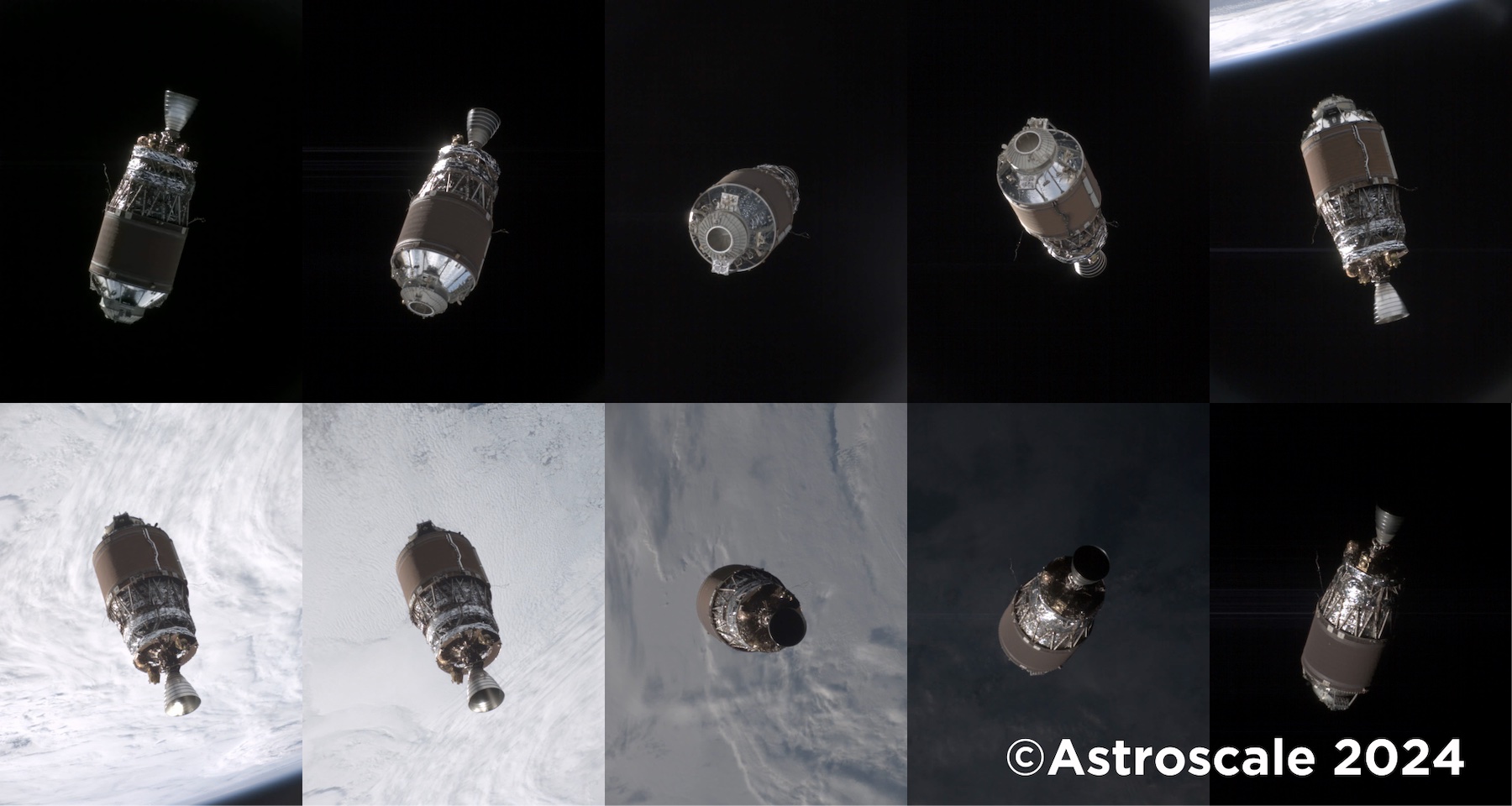
- Early 2024: Astroscale cements its presence in the market, with its ADRAS-J mission successfully conducting a flyaround of a Japanese H-IIA rocket stage, proving the viability of proximity operations.
- June 2024: Astroscale holds its listing ceremony at the Tokyo Stock Exchange, highlighting the commercial maturation of the space-servicing industry.
- September 2026: Isar Aerospace achieves its first successful orbital insertion from Norway, validating the Spectrum rocket’s architecture and propane-fueled engine design.
This sequence of events illustrates the rapid maturation of the European launch ecosystem. While incumbents struggle with legacy costs and long lead times, startups are leveraging modular, scalable designs to attract private capital and government-backed contracts from the European Space Agency (ESA) and the European Union.
The Economics of Dedicated Missions
The rationale for selecting a provider like Isar over a proven commodity like Rocket Lab’s Electron or the upcoming Neutron rests on a "Venn diagram" of requirements: payload capacity, orbital precision, and cost. While Rocket Lab has been the industry standard for small-satellite launches, its current Electron vehicle is optimized for payloads smaller than those required by the next generation of servicing satellites.
Chris Blackerby, Chief Operating Officer of Astroscale, notes that while the industry often discusses a "glut" of launch capacity, the reality for specialized operators is more constrained. "We looked at the options, and when you factor in the size of our payloads, the need for a dedicated orbit, and our budget, the list of providers shrinks rapidly," Blackerby explained. He added that the due diligence conducted on Isar—including on-site manufacturing inspections and rigorous technical audits—was essential to mitigating the inherent risks of choosing a launch provider that has only recently proven its operational capabilities.

Implications for Space Sustainability
The technical challenges inherent in Astroscale’s missions are substantial. Unlike traditional satellite launches, which involve deploying a satellite into a stable orbit and communicating via ground stations, Astroscale’s missions require autonomous Rendezvous and Proximity Operations (RPO). This involves advanced guidance, navigation, and control systems capable of identifying and latching onto "unprepared" objects—debris that may be tumbling or possess irregular geometry.
The data gathered from the ADRAS-J mission has been instrumental. By capturing high-resolution imagery of a defunct rocket stage, Astroscale confirmed the object’s orientation and structural integrity, allowing engineers to refine the docking mechanisms for the ADRAS-J2 mission. This iterative process, moving from simple observation to complex capture, is fundamental to creating a "servicing ecosystem."
Beyond debris removal, the U.S. military’s interest in refueling and inspection missions—as evidenced by the "Provisioner" contract—suggests that the market for these technologies is expanding beyond environmental sustainability into the realm of national security. The ability to dock with a satellite to refuel it or inspect a potential threat requires the same foundational RPO technology that Astroscale is currently perfecting.
Market Outlook and Future Challenges
The broader implication of Isar’s success is the diversification of the launch market. If Europe can establish a reliable, high-cadence launch capability through multiple commercial providers, it will decrease the region’s dependence on international partners and provide a hedge against the volatility of the global launch schedule.
However, challenges remain. The "small-launch" market is notoriously difficult to sustain. Companies like Relativity Space and Astra previously attempted to capture this segment before pivoting or exiting the space launch business entirely. The survivors will be those that can successfully manage the transition from "test-flight" to "mass production," achieving a level of consistency that allows customers to book launches years in advance with the same confidence they currently place in SpaceX.
As the early 2030s approach, the industry expects to see the first commercially repeatable servicing missions. This will require not just reliable rockets, but a regulatory and financial framework that supports the routine movement of hardware in orbit. For now, the successful ignition of the Spectrum rocket in Norway stands as a testament to the fact that the hunger for boutique, dedicated launch services is far from sated. As Astroscale and other satellite operators continue to push the boundaries of what is possible in orbit, the need for a diverse, competitive, and resilient launch sector will only continue to grow, ensuring that space remains a viable domain for both commercial innovation and environmental stewardship.